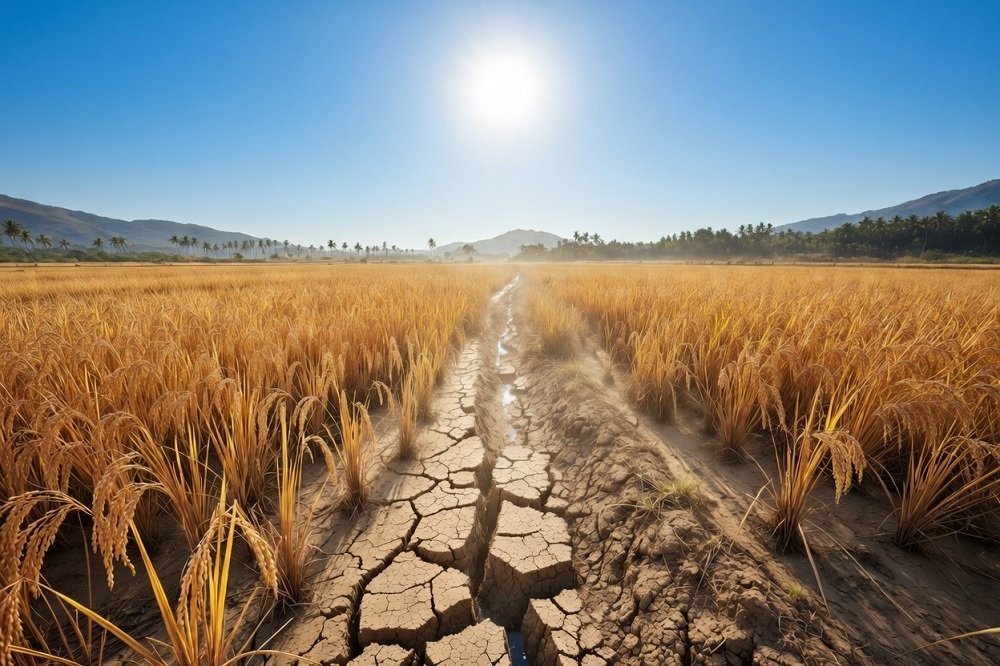
EN.malanginspirasi.com – East Java is currently experiencing paradoxical weather conditions. While some areas continue to deal with the impacts of flooding, the threat of extreme drought caused by the El Niño phenomenon is beginning to loom large.
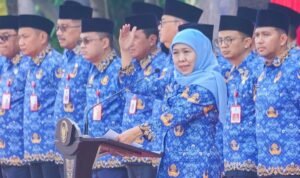
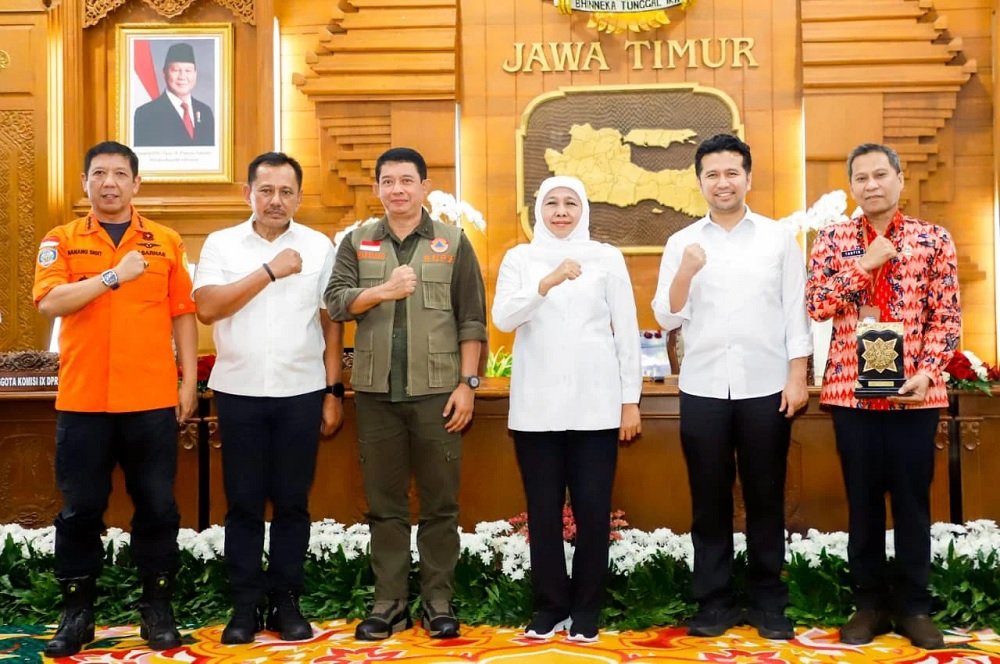
Governor of East Java, Khofifah Indar Parawansa, responded swiftly to the situation. On Friday, 27 March 2026, she convened a strategic Coordination Meeting (Rakor) with Head of the National Disaster Management Agency (BNPB), Lieutenant General TNI Suharyanto, at Gedung Negara Grahadi in Surabaya. The meeting aimed to map drought risks ahead of the 2026 dry season, which is expected to have widespread impacts on communities and the agricultural sector.
In her directive, Khofifah stressed the importance of early vigilance. According to projections from the Meteorology, Climatology, and Geophysics Agency (BMKG) Juanda Meteorological Station, the drought phase is predicted to begin entering East Java in April 2026, intensify in May, and reach its peak in August 2026.

“Even while floods are still occurring, we must also prepare. In fact, today in Tuban, some areas are already experiencing drought,” Khofifah said, as quoted in her official statement.
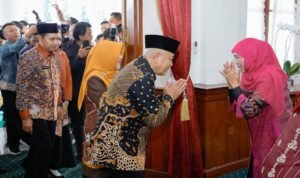
The coordination meeting was attended by Deputy Governor Emil Elestianto Dardak, Member of the House of Representatives Heru Tjahjono, Head of BMKG Juanda Taufiq Hermawan, and East Java Regional SAR Agency Head Nanang.
The presence of these officials is expected to ensure that disaster management coordination is centralized and more effective.
Safeguarding National Food Production
One of the main focuses of the meeting was the protection of the agricultural sector. As the nation’s food barn, East Java is required to maintain Indonesia’s rice stocks. Khofifah emphasized that the Rice Planting Index (IP) must not decline significantly.
“We aim to maximize the rice planting index so it does not drop. In September, during the next planting season, we hope East Java’s average IP will reach 2.7, with regions like Ngawi potentially achieving 3.5,” she explained.
Read Also:
BMKG Warns Malang Regency of Drier, Longer 2026 Dry Season Driven by El Niño
To achieve this target, the East Java Agriculture and Food Security Agency has mapped 10 primary rice production centers. Physical interventions, such as the construction of deep wells and the provision of pumped irrigation systems, will be prioritized in these areas to ensure water supply remains stable even as surface water levels decrease.
Anticipating Fires and Weather Modification
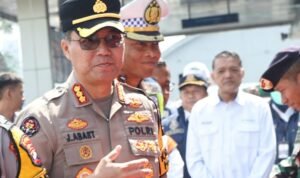
BNPB Head Lieutenant General TNI Suharyanto issued a serious warning, drawing lessons from forest and land fires (karhutla) that have already occurred in Riau and Natuna. He stressed that drought management must not be carried out in isolation but should be fully integrated.
Several concrete actions agreed upon between the East Java Provincial Government and BNPB include:
- Deployment of Aerial Assets — Two water-bombing helicopters will be placed on standby at strategic locations, such as Iswahyudi Airbase in Madiun and Juanda Airport in Surabaya, to accelerate fire suppression if needed.
- Weather Modification — Cloud seeding operations (Technology Modification Cuaca/TMC) will be conducted when conditions become critical to fill reservoirs and water retention ponds.
- Strengthening Ground Task Forces — Readiness roll calls will be immediately held across all regencies and cities to ensure equipment and personnel are fully prepared.
The provincial government’s strategy is divided into two main categories: meeting daily water consumption needs for communities and supplying water for agricultural land. In addition to the Agriculture Agency, the Social Affairs Agency has been instructed to remain on alert during emergencies, providing direct protection to the most severely affected populations.
With a comprehensive risk map from BNPB and detailed action plans, East Java is working to minimize the impacts of the 2026 dry season. These measures are expected not only to protect farmers’ productivity but also the broader welfare of society amid extreme weather threats.