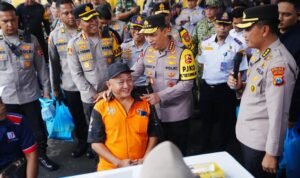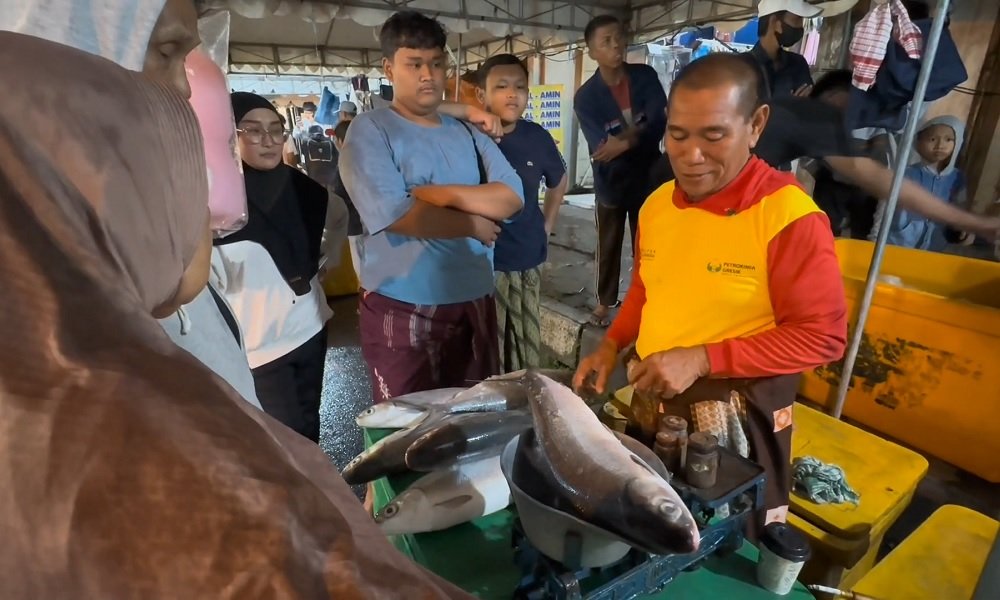
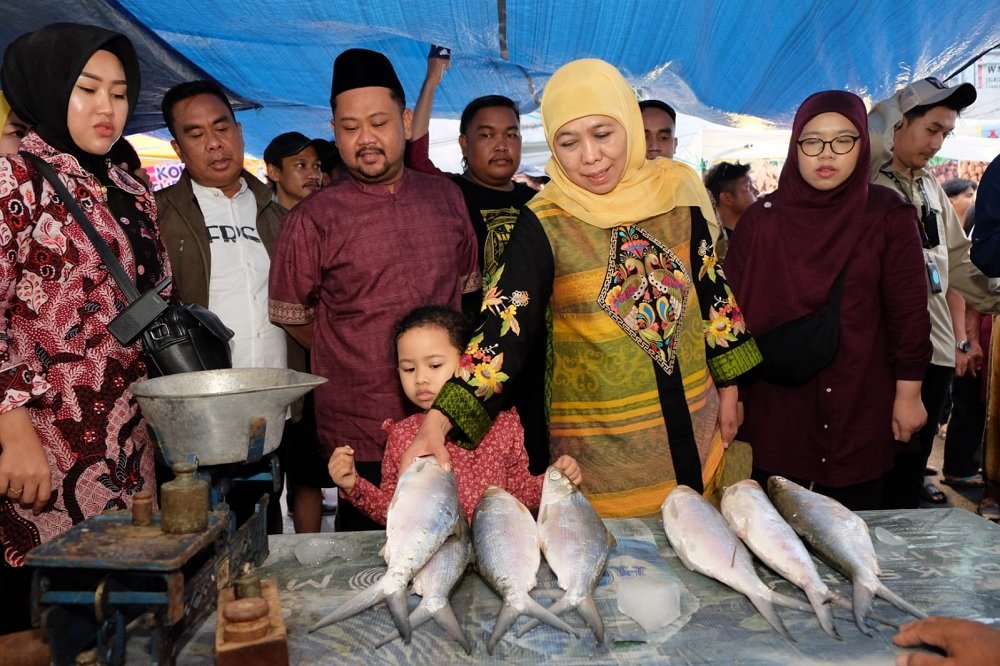
EN.malanginspirasi.com – The night of Songolikur, or the 29th night of Ramadan 1447 H, marked the peak of excitement at the iconic Pasar Bandeng (Milkfish Market) in Gresik Regency, East Java. Thousands of local residents and visitors from across regions crowded the central city area, particularly along Jalan Samanhudi and around Pasar Gresik (also known as Pasar Kawak), to witness and take part in this centuries-old annual tradition.
The Pasar Bandeng festival is held over the final two or three nights of Ramadan, reaching its climax on the 29th night — locally called Songolikur (Javanese for “twenty-nine”) — just before the takbiran evening and Eid al-Fitr celebrations.
In 2026, the series of events ran from March 16–18, with the highlight being the grand contest and auction of bandeng kawak (jumbo milkfish) at the Bandar Grissee tourist area on Jalan Basuki Rahmat.
Far more than a simple fish market, Pasar Bandeng is a vibrant cultural festival that blends economic vitality, spiritual reflection, and social bonding. Fishermen from various sub-districts — including Mengare, Balongpanggang, Manyar, Sidayu, and Ujungpangkah — brought thousands of fresh milkfish, including oversized bandeng kawak specimens.
In the 2026 contest, the heaviest fish weighed a record-breaking 19 kilograms, caught by farmer Syaifullah Mahdi from Desa Pangkahwetan, Ujungpangkah. The champion fish was later auctioned for Rp50 million to PT Petrokimia Gresik, sparking cheers and euphoria among thousands of spectators.
Roots in the 15th Century
The tradition traces its origins to the 15th century during the era of Sunan Giri (Raden Paku), one of the nine Wali Songo saints, who established his center at Giri Kedaton. As a major trading port and fishpond hub, Gresik leveraged its abundant milkfish resources.
Sunan Giri is believed to have promoted the market to:
- Boost the coastal economy and support local fish farmers.
- Provide signature souvenirs for santri (Islamic students) returning home for Eid.
- Strengthen community bonds and celebrate the end of Ramadan as an expression of gratitude for successful fasting.
Initially, santri from across the Nusantara archipelago — Java, Makassar, Ambon, Sumatra, Kalimantan, and Maluku — would carry whole or processed milkfish as gifts. Over time, the custom evolved into a large-scale market.
In the modern era, the Gresik Regency Government (Pemkab Gresik) has formalized it as an official festival featuring cultural parades, free milkfish distributions (such as 1,000 fish in 2026), and an UMKM bazaar.
The tradition was officially recognized as Indonesia’s Intangible Cultural Heritage (Warisan Budaya Tak Benda) in 2025, alongside other local gems like Malam Selawe, Kupat Keteg, Pencak Macan, and Rebo Wekasan.
Main Attractions and Activities
- Contest and Auction of Bandeng Kawak The most prestigious event, where the largest and heaviest milkfish are crowned champions. Auction prices frequently reach tens of millions of rupiah, drawing major sponsors and corporations.
- Sales of Fresh and Processed Milkfish Beyond raw fish, vendors offer a wide array of products including presto, smoked, pepes, otak-otak, nuggets, bakso, and snacks — all popular Eid souvenirs.
- Night Market and Entertainment Stalls sell children’s toys, clothing, takjil snacks, handicrafts, and traditional performances such as rebana music, dangdut, and cultural parades. The Songolikur night glows with colorful lights, the aroma of grilled or fried milkfish, and the echoes of takbir.
- Economic and Social Impact The market drives the local economy for fish farmers (Gresik has approximately 17,000 hectares of ponds and produces tens of thousands of tons annually) and small-medium enterprises. Thousands of visitors from Surabaya, Lamongan, and beyond turn it into a major cultural tourism destination.
The Songolikur night creates a unique transition from fasting to victory: the bustle of auctions mingles with takbir chants, children buying toys, and families shopping for Eid dishes (milkfish often features as the star ingredient in opor or family feasts).
Pemkab Gresik continues to preserve the tradition with contemporary touches — zero-waste initiatives, tourism promotion, and community economic integration — as encouraged by the local MUI.
While the exact schedule may shift depending on whether Ramadan lasts 29 or 30 days, the peak consistently falls on the final night before Eid al-Fitr.