EN.Malanginspirasi.com – Through Government Regulation No. 17 of 2025 on the Governance of Electronic Systems for Child Protection — widely known as PP TUNAS — the state is sending a clear message: innovation and economic growth must never come at the expense of young people’s safety.
Minister of Communication and Digital Affairs (Menkomdigi) Meutya Hafid described the policy as a deliberate strategic choice, even as some industry players worry that tighter rules could slow the rapid expansion of Indonesia’s digital sector.
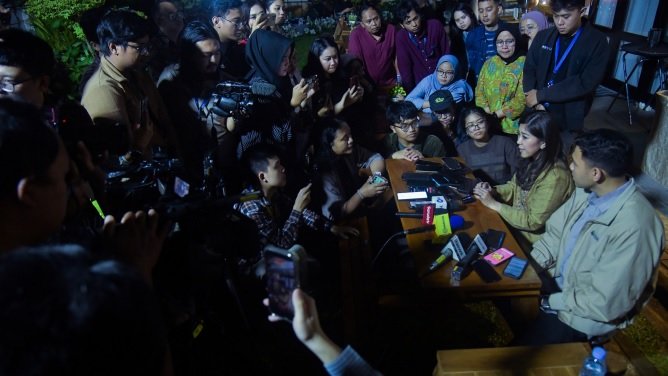
“There is no innovation and no digital economy that deliberately targets crimes against children. If any stakeholders are impacted because we are strengthening child protection, that is a policy decision we, as a nation, are fully prepared to make,” Meutya stated emphatically in Jakarta on Friday, 27 February 2026.
She was directly addressing concerns from parts of the tech and digital industry that enhanced child-protection requirements might hinder the pace of economic progress.
A Policy Adopted by Many Countries
The government, she explained, has closely examined international practices and found that child protection has become a global policy trend.
Countries such as Australia have introduced age-restriction measures and strengthened digital safeguards, while the European Union has rolled out multiple regulatory initiatives with similar goals.
Importantly, Meutya noted there is no credible evidence showing that these policies cause significant negative economic effects.
“So far, there are no documented records of meaningful economic impacts from age-related restrictions in the digital space. Claims suggesting otherwise are one-sided assertions that have yet to be proven,” she said.
At the same time, the minister stressed that the government is not shutting the door on dialogue. Platform classification systems, operational procedures, and oversight mechanisms were all designed after considering input from multiple stakeholders, while remaining anchored in the non-negotiable principle that child safety comes first.
“Of course we will record and respond to those inputs, and we will be very careful when finalising the classifications,” she assured.
Meutya confirmed that PP TUNAS is scheduled to become fully effective March 2026. The supporting ministerial regulations are currently in the final internal stage at the Ministry of Communication and Digital Affairs, following harmonisation with the Ministry of Law and Human Rights.
“Insya Allah, we begin next month. We hope every platform will support and comply with these rules, because this regulation exists solely to protect Indonesian children in the digital environment,” she concluded.