EN.malanginspirasi.com – The Indonesian government will begin deactivating social media accounts belonging to children under 16 from 28 March 2026. The policy, issued by the Ministry of Communication and Digital (Komdigi), aims to protect young users from online dangers including inappropriate content, cyberbullying, scams and digital addiction.
Popular platforms such as YouTube, TikTok, Instagram, Facebook, Threads, X, Bigo Live and Roblox will be required to gradually disable accounts once users are identified as under 16.
Minister Meutya Hafid announced the regulation on Friday (6 March 2026). The rules are contained in Ministerial Regulation No. 9 of 2026, which implements the Government Regulation (PP) Tunas on child protection in the digital space.
“The government is stepping in so parents no longer have to fight alone against the algorithm giants,” Meutya said in an official press release.
Not a Total Internet Ban
This is not a blanket ban on the internet or apps. Children can still use smartphones and access educational websites or learning games. What is prohibited is creating or owning personal accounts on high-risk platforms.
Platforms will be required to implement stricter age verification (using ID cards, parental consent, or advanced technology). Any account detected as belonging to someone under 16 will be deactivated. The rollout will be gradual to avoid sudden disruption.
For example, a Grade 8 student who uses TikTok to watch dance videos or learn new skills will no longer be able to log into their personal account. However, they can still watch videos in guest mode or use a parent’s supervised account.
Why Now? A “Digital Emergency”
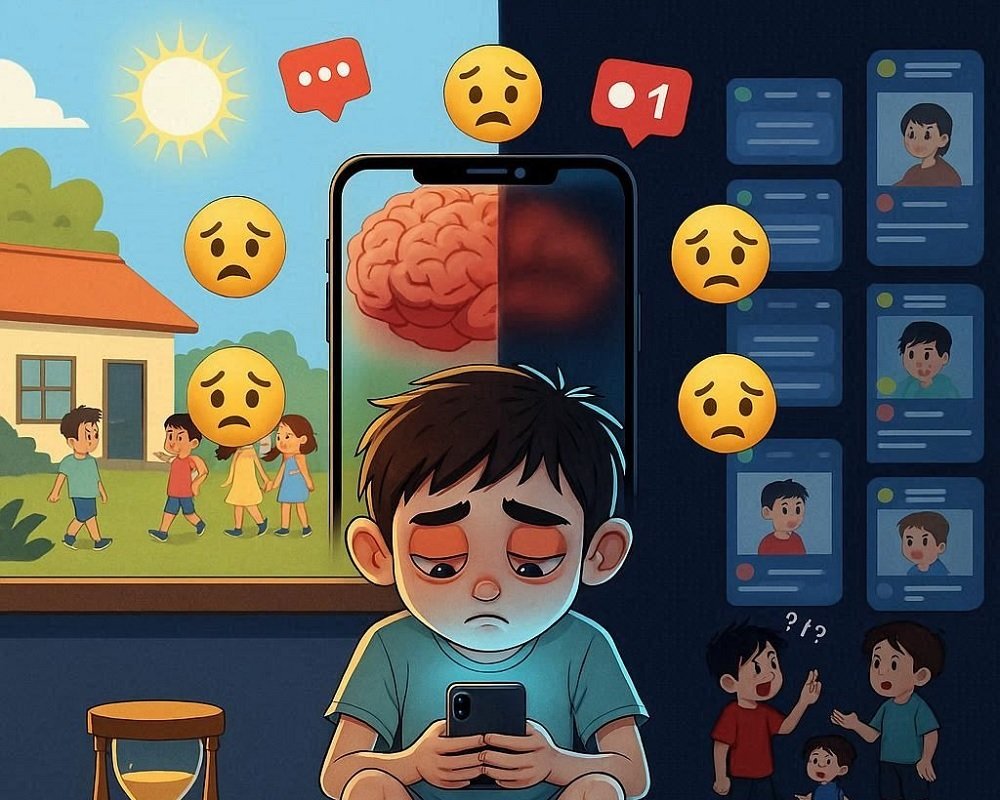
The government says Indonesian children are facing a “digital emergency.” Many are exposed to pornography, become victims of online bullying, fall for scams, or spend hours mindlessly scrolling.
“Our children are facing increasingly real threats,” Meutya stated.
The policy is designed to support parents who struggle to monitor usage on their own. Indonesia is also positioning itself as one of the first non-Western countries to take such decisive action, similar to measures already implemented in Australia.
The implementation of this policy will be carried out in stages. Among other measures, all platforms must achieve full compliance within several months from the date the policy officially takes effect on 28 March 2026. Social media platforms are required to upgrade their systems, including re-verifying existing older accounts.
Penalties for non-compliant platforms may include fines or operational restrictions. Parents and children will not face any penalties.
Read Also:
Positive Impact and Challenges
On the positive side, children will be safer, mental health will be protected, and parents can feel more at ease. The policy may also encourage outdoor play, offline learning, and the use of child-friendly platforms such as YouTube Kids.
“We want technology to humanize humans, not to sacrifice our children’s childhood,” Meutya added.
Challenges are expected in the early stages. Children may feel upset about losing contact with online friends or entertainment. Parents might face confusion, especially if social media is used for school assignments or communities. Young creators under 16 who earn money from content will also be affected. Concerns about data privacy during age verification have also been raised.
The government acknowledges the policy will be “bitter at first,” but insists it is the best long-term step for the nation’s future.
The regulation is still new and may evolve. At its core, the government wants the internet to be a safe space for children and not a dangerous one.