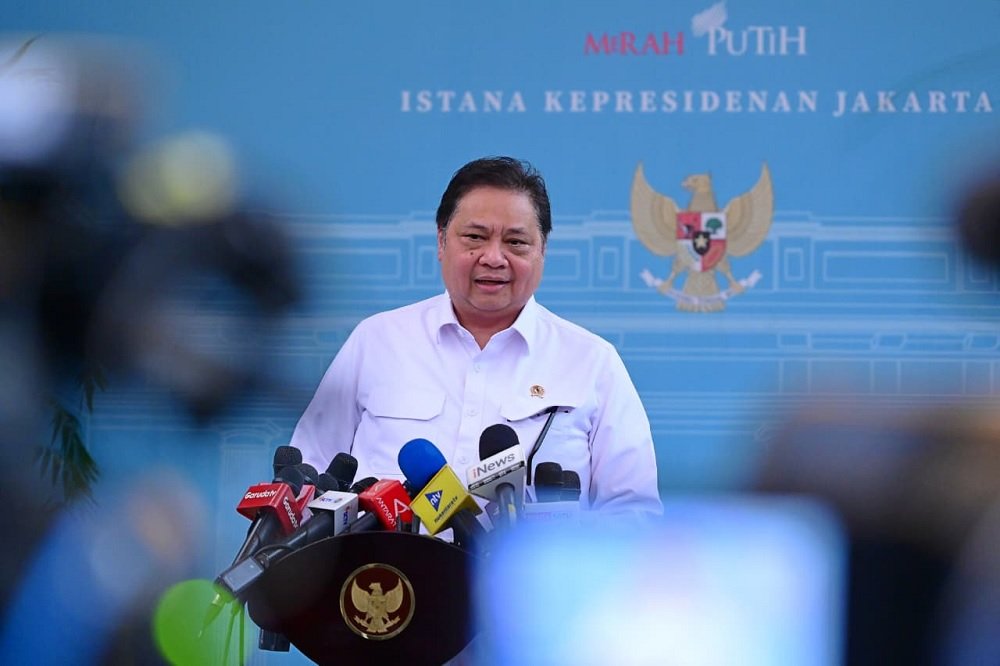
EN.malanginspirasi.com – The Indonesian government will officially unveil a comprehensive package of policies to mitigate global economic risks on Tuesday evening, March 31, 2026. The announcement will take place via a hybrid press conference broadcast live from Seoul, South Korea, at 9:00 PM local time (19:00 WIB).
Secretary of the Coordinating Ministry for Economic Affairs Susiwijono Moegiarso confirmed that all measures addressing global volatility — including adaptive work-from-home (WFH) arrangements, budget adjustments, accelerated mandatory B50 biodiesel implementation, and other efficiency initiatives — will be detailed during the event.
“All policies related to mitigating risks from global dynamics, such as WFH, budget adjustments, B50 and others, will be announced tomorrow,” Susiwijono stated in a press release on Monday, March 30, 2026.

The policy package was developed as a rapid response to the sharp rise in world oil prices caused by escalating conflict in the Middle East, particularly tensions between the United States, Israel, and Iran.
Crude oil has now exceeded US$100 per barrel, significantly increasing Indonesia’s fuel import costs, energy subsidy burden, and pressure on the 2026 State Budget (APBN).
WFH, B50 Biodiesel & Budget Cuts
Coordinating Minister for Economic Affairs Airlangga Hartarto earlier indicated that the government is finalizing strategic steps following a coordination meeting chaired by President Prabowo Subianto.
Key policies expected to be announced include:
- Adaptive Work-from-Home (WFH) for state civil servants (ASN) and private sector employees, enabling remote work to cut national fuel consumption and reduce traffic congestion. Officials have signaled Friday as a potential WFH day without affecting productivity or essential public services.
- Accelerated mandatory B50 biodiesel to lower reliance on fossil fuel imports while boosting the domestic palm oil industry.
- Budget efficiency and tightening, including optimized spending by ministries and agencies (K/L), savings on priority programs such as the Free Nutritious Meal Program, and reduced use of non-essential government facilities.
These measures are designed to keep the APBN deficit below 3% of GDP, safeguard rupiah stability, and prevent inflation spikes triggered by global energy turmoil. The government has stressed that vital public services will remain untouched.