EN.malanginspirasi.com – Indonesia’s Minister of Manpower (Menaker) Yassierli has stressed that Collective Labor Agreements (PKB) must be strictly monitored to ensure they effectively regulate industrial relations. According to him, the biggest challenges usually arise during the implementation phase, not during the negotiation process.
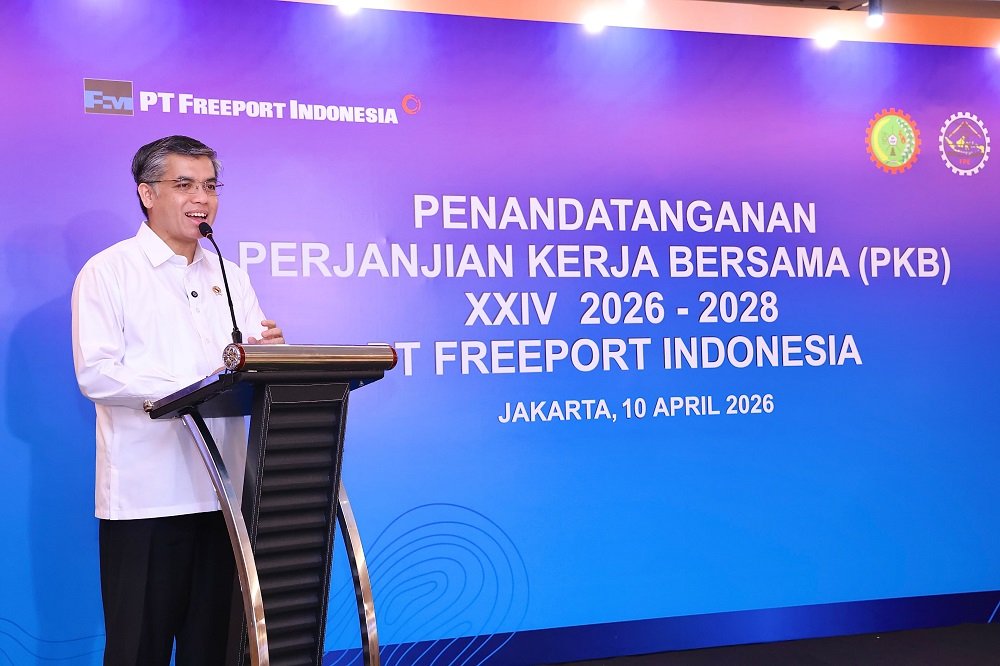
The statement was made by Yassierli while attending the signing ceremony of the 24th Collective Labor Agreement for the 2026–2028 period between PT Freeport Indonesia (PTFI) management and three labor unions in Jakarta on Friday, April 10, 2026.
“The Ministry of Manpower pays very close attention to the entire process from drafting to the signing of PKB. We are ready to step in through industrial relations mediators if any obstacles arise during negotiations,” Yassierli said.
He explained that once signed, the PKB becomes the legally binding document for the next three years and serves as the primary reference for resolving any industrial relations disputes.
Yassierli emphasized that after signing, the real challenge lies in ensuring the agreement is properly implemented on the ground. Problems often occur due to differences in interpretation or discrepancies between the written terms and actual practices.
“Once the PKB is signed, the next step is implementation. What usually happens is differing opinions or disputes because what is written in the PKB is not reflected in practice,” he added.
The Minister also praised the negotiation process between PT Freeport Indonesia management and the labor unions, describing it as constructive, family-oriented, and completed in a relatively short time of just 18 days.
Conducive Industrial Relations
Yassierli noted that this 24th PKB, which marks 48 years of the agreement, reflects a long-term commitment to maintaining harmonious industrial relations.
However, he acknowledged that many companies in Indonesia still do not have a PKB or have failed to reach an agreement despite negotiations.
“We still have homework to encourage more companies to establish Collective Labor Agreements. For those that already have one, we must continue to promote conducive and harmonious industrial relations,” he said.
Yassierli added that future industrial relations challenges will become increasingly complex, requiring stronger collaboration and synergy between labor unions and management to create adaptive and sustainable relations.
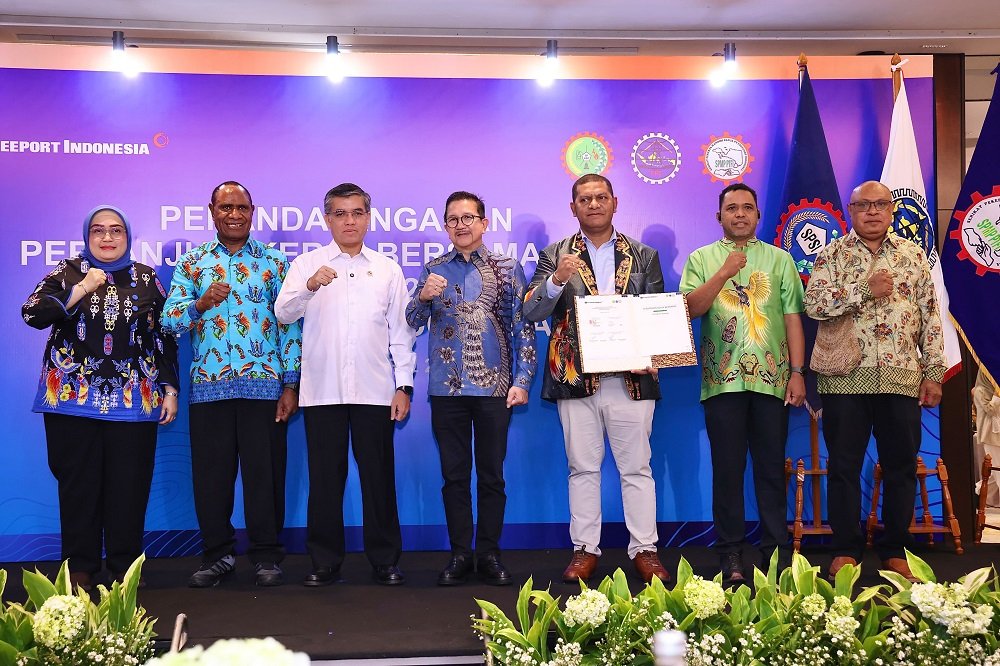
Meanwhile, PT Freeport Indonesia President Director Tony Wenas said the negotiations were conducted in a spirit of kinship, resulting in an agreement that reflects shared interests.
He explained that the new PKB includes several improvements in worker welfare, including a 3% salary increase in the first year and 4% in the second year. Education allowances will rise by 15%, and accommodation allowances will also increase by 15%.
The company has also raised its monthly contribution to the old-age savings fund to Rp2 million for all entry-level (pratama) employees. Underground mining shift allowances have been set at Rp85,000 for shift workers and Rp55,000 for non-shift workers. In addition, compensation for work-related fatalities in mining has been increased from US$50,000 to US$75,000.