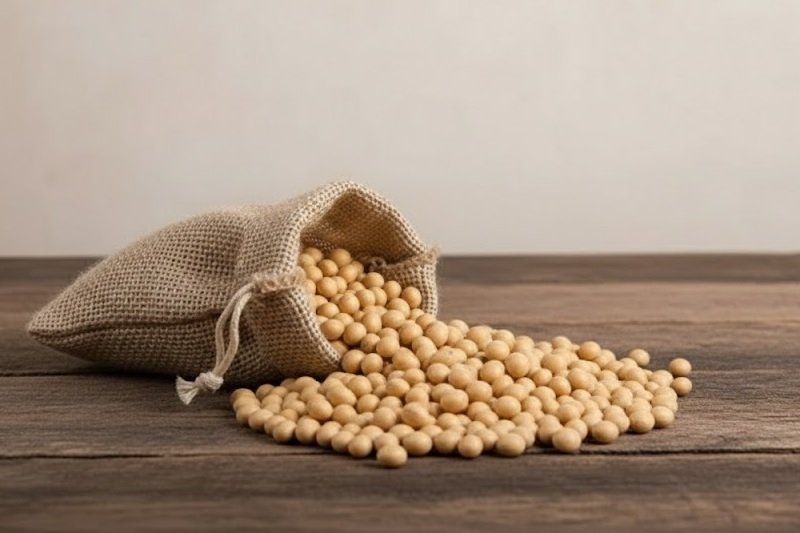
EN.malanginspirasi.com, Jakarta – The Indonesian Soybean Association (Akindo) and the National Food Agency (Bapanas) have confirmed that national soybean stocks are ample and in surplus as the country approaches Ramadan and Idulfitri 2026. Projections up to the end of March 2026 show total availability of approximately 629,000 tons against estimated consumption of 453,900 tons for February–March, yielding a surplus of around 176,000 tons.
Akindo Chairman Hidayatullah Suralaga stressed that supply remains reliable during the fasting month and holiday period.
“Ahead of, during, and after Ramadan and Idulfitri, domestic soybean stocks are consistently available,” he said in a statement on Wednesday (12/2/2026).

He added that Akindo-affiliated importers are fully committed to smooth distribution of this essential raw material for tofu and tempeh.
Indonesia’s average monthly soybean requirement is about 220,000 tons, with annual consumption ranging from 2.7 to 2.9 million tons.
Roughly 90% of supply is imported, while domestic production covers only 10%.
Notably, demand is expected to fall by up to 30% in the lead-up to Ramadan 2026 due to shifting consumption patterns during fasting.
Bapanas Head Arief Prasetyo Adi affirmed that all strategic food commodities, including soybeans, are at sufficient levels through March.
“As we face Ramadan, our stocks for the next two months are in surplus,” he stated.
Impact on Producers and Consumers
The comfortable supply position benefits the predominantly small-scale tofu and tempeh industry, with prices remaining stable and reasonable, particularly in key production areas like East Java.
No shortages or sharp price increases are anticipated, avoiding the social tensions seen in previous years from global supply disruptions.
However, Indonesia’s heavy reliance on imports leaves it vulnerable to international price volatility, weather events in major exporters (the United States, Brazil, and Argentina), and geopolitical risks.
Bapanas continues close monitoring and coordination with importers to prevent speculation.
Overall, the 2026 soybean outlook reflects improved food security compared to prior periods, supporting stability for consumers and businesses during a major religious season.