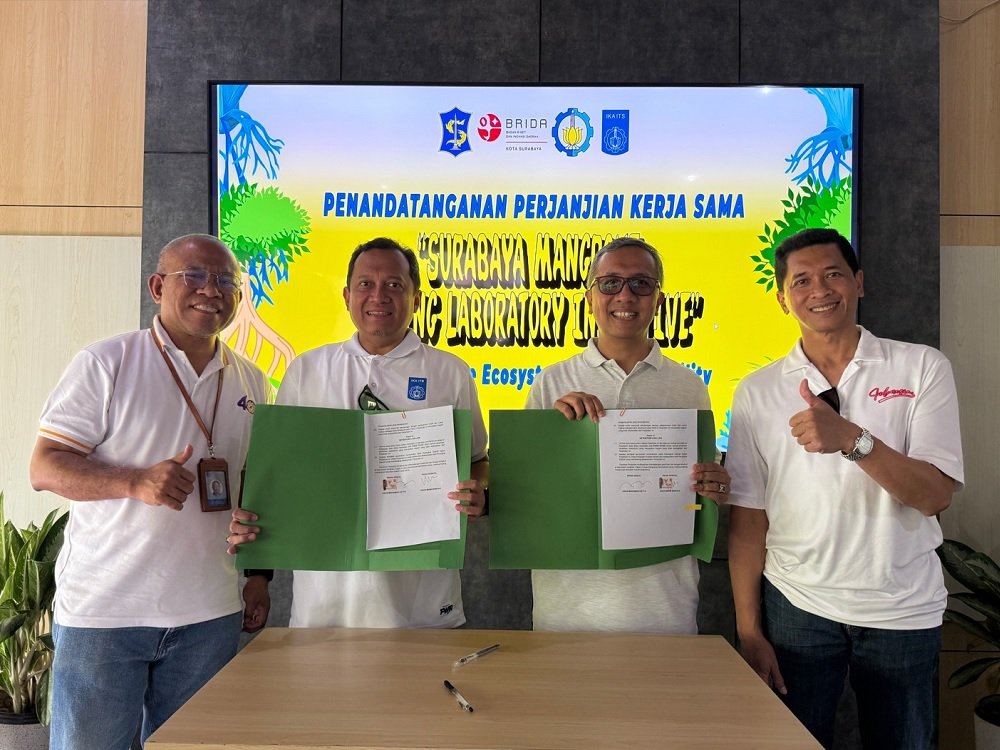
EN.malanginspirasi.com – Institut Teknologi Sepuluh Nopember (ITS) continues to broaden its academic impact in environmental conservation, technology development, and appropriate innovation. A key example is the strategic site visit conducted by ITS leadership and the Surabaya Regional Research and Innovation Agency (BRIDA) to explore the establishment of a living laboratory at Kebun Raya Mangrove (KRM) Surabaya on Friday morning, April 10.
Spanning 34 hectares on the eastern edge of the City of Heroes, KRM is Indonesia’s first coastal conservation area to seamlessly integrate education, research, and tourism within a single ecosystem. Home to dozens of mangrove species and various migratory birds, the site holds immense potential as a hub for cutting-edge research and innovation.
ITS Rector Prof. Dr. (HC) Ir. Bambang Pramujati, S.T., M.Sc. Eng., Ph.D. stated that the visit follows up on the Memorandum of Understanding (MoU) signed between ITS and the Surabaya City Government. ITS aims to transform KRM Surabaya into a living laboratory serving multiple disciplines, from biology to maritime technology.
Bambang highlighted that ITS academics recognize the vast potential for mangrove development in the area.
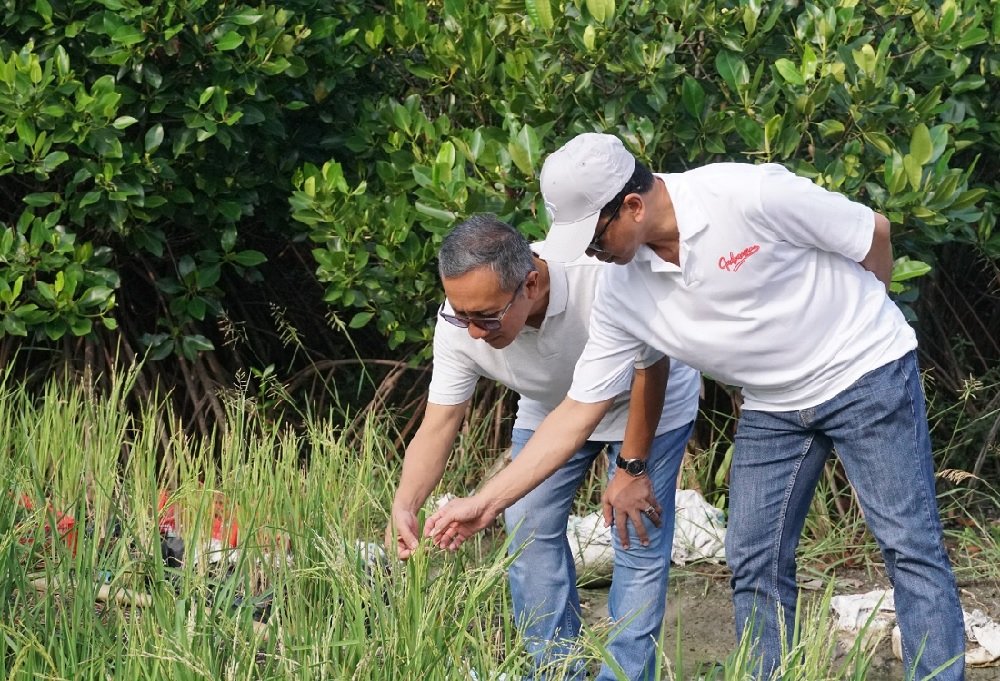
“Currently, several plots of land are already being utilized by ITS researchers to test IoT sensors and develop rice varieties adaptive to mangrove soil,” explained the 13th Rector of ITS.
He further emphasized the significant role of students in the project. Departments such as Biology, Urban and Regional Planning (PWK), and Architecture are poised to make major contributions to KRM’s development.
The Biology Department has strong opportunities to study biodiversity and protect rare species in the mangrove ecosystem. Meanwhile, the PWK and Architecture Departments are expected to contribute ideas for designing the area in ways that enhance its appeal to tourists.
Another concrete innovation proposed by the Rector is the modernization of river transportation. Bambang noted that conventional diesel-powered boats often generate noise and air pollution that disturb bird habitats.
“In the future, we can develop solar-powered boats and electric motors that are quieter and more environmentally friendly,” he added.
Dr. Agus Imam Sonhaji, S.T., M.MT., Head of BRIDA Surabaya, warmly welcomed the collaboration. He expressed hope that ITS’s expertise in technology, maritime affairs, renewable energy, and community empowerment through silvofishery (integrated mangrove-fish farming) can be implemented swiftly.
The planned formal cooperation agreement between ITS, BRIDA Surabaya, and KRM is expected to channel all of ITS’s resources and expertise into the site.
“This will turn KRM into a flagship educational venue and an economic driver for coastal communities,” Agus added.
Through this partnership, ITS and BRIDA Surabaya are confident they can achieve technology-driven management of the conservation area, delivering real impact for sustainable development in Surabaya.
The initiative also demonstrates ITS’s commitment to the United Nations Sustainable Development Goals (SDGs), particularly Goal 7 (Affordable and Clean Energy), Goal 14 (Life Below Water), and Goal 17 (Partnerships for the Goals).