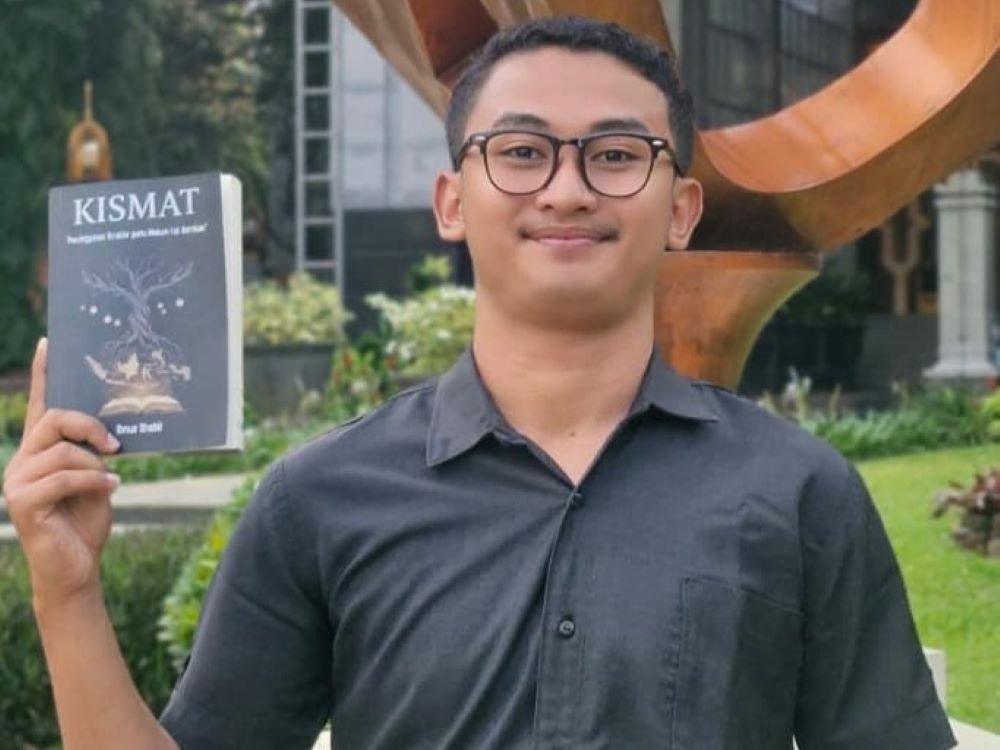
EN.malanginspirasi.com – Ibnus Shabil, a 2023 student in the English Language Education Study Program, Faculty of Cultural Sciences, Brawijaya University (FIB UB), has once again demonstrated his literary prowess by publishing his fourth book, ‘Kismat’.
Officially released on February 14, 2026, through RO Publishing, it is a reflective literary work combining poetry, short stories, and self-reflective narratives.
The book was born from the idea of destiny, not merely understood as good or bad luck, but as a series of experiences, life journeys, and inner dynamics that shape one’s identity in the process of searching for a deeper meaning in life.
“The word ‘kismat’ is actually a metaphor, a metaphor for destiny, where I illustrate that destiny is not only related to good or bad fate in our journey,” said Ibnus, explaining the background to his choice of the title.
He explained that the entire book’s contents represent his personal experiences as a student and a growing individual.
Therefore, each piece of writing is not only a work of literature, but also a space for contemplation and self-recognition.
Also Read:
FEB UB Lecturer Held Personal Financial Management Training for Prospective PMI
“Everything I experience while creating my work, I express in the word kismat, whether it’s poetry, short stories, or reflections on life,” he explained.
Regarding his creative process, Ibnus admitted that he didn’t set a specific time to start writing the manuscript.
Yet he estimated that the drafting process began in mid-2025, when he had more free time to reflect and develop ideas.
He also stated that his most productive writing time is at night, especially after midnight, when the atmosphere tends to be quiet and there are fewer distractions.
Serenity allowed him to focus and freely develop ideas.
“I usually write at midnight or half past one, because that’s when I enjoy it more and find more ideas,” he said.
Ibnus Shabil and His Excellent Time Management
Amidst his busy schedule as an English Education student with quite a lot of academic responsibilities, Ibnus implements structured time management.
He divides his daily activities into two main periods to maintain a balance between academics and literacy productivity.
“I divide my time into two parts. From morning until around 7 p.m. to focus on lectures and assignments. After that, I use it for writing, participating in competitions, or other self-development activities to avoid multitasking and stay focused,” he said.
He acknowledged that the biggest challenge in the writing process is not only consistency, but also maintaining a variety of topics to avoid monotony.
This is why each section of the book maintains depth of meaning and its own appeal to readers.
He also emphasized the importance of knowing yourself before deciding to write.
He believes many aspiring writers tend to force themselves to imitate others’ styles without first understanding their own identity and voice.
“Know yourself, because when we know ourselves, we will enjoy ourselves more and know what we want to convey in each word,” he said.
Through Kismat, Ibnus hopes the book will provide a space for readers, especially teenagers and adults, who may feel lost, underappreciated, or still struggling to find their identity amidst the demands of life.
“Every era has its own people and every person has their own time, so don’t feel left behind just because your time is different from others,” he said.
Golden Age
Furthermore, he also believes that college is a golden age that should be utilized optimally to build identity, achievements, and works that can leave an intellectual and personal mark in the future.
“The ages of 18 to 22 are the golden age, so please take advantage of it to produce work, because after graduation, our focus will shift to careers and other responsibilities,” he said.
For Ibnus, publishing a book is not merely a commercial endeavor or a symbolic achievement, but rather an effort to immortalize ideas and extend the footprint of one’s existence through writing that can continue to be read even when he is no longer physically present.
“Honestly, I don’t want to sell this book to the general public, because my main goal is to extend my life through my work, so that when I’m gone, my name will still live on in my writing,” he said.
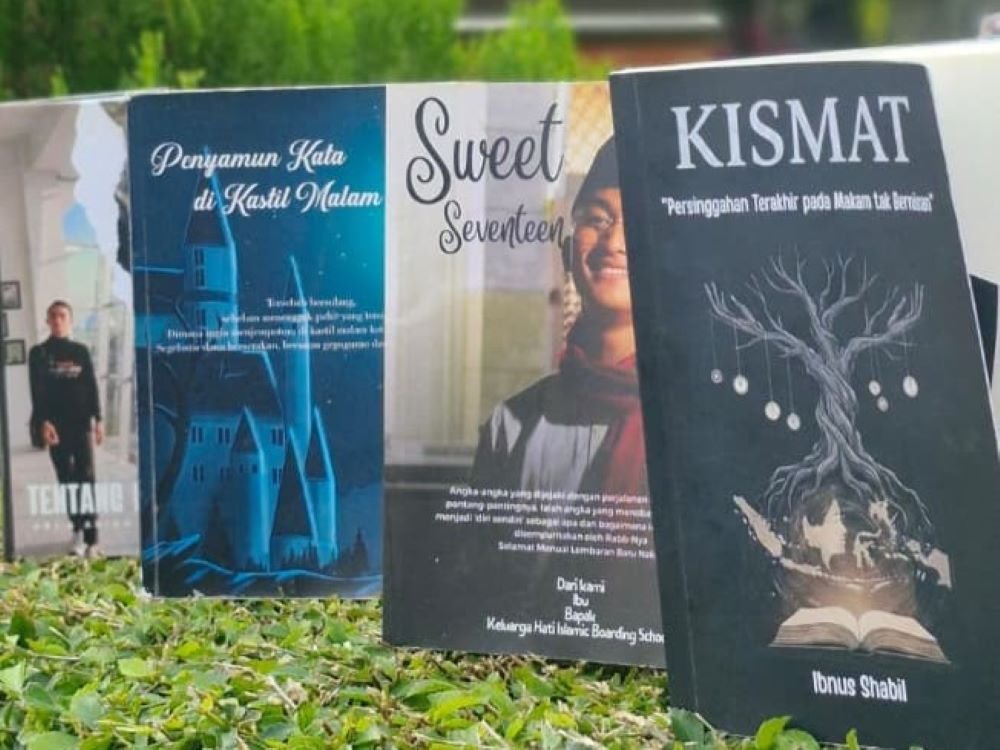
Previously, Ibnus had published three books: “Penyamun Kata di Benteng Malam” (Word Thief in the Night Castle), “Sweet Seventeen,” and “Tentang Kita” (About Us)