EN.malanginspirasi.com – Indonesia’s Minister of Manpower (Menaker), Yassierli, has signaled that an official announcement or circular on holiday bonuses (BHR) for online motorcycle taxi (ojol) drivers will coincide with the release of guidelines for Tunjangan Hari Raya (THR) benefits for formal employees.
“We’ll announce it later. Yes, it’ll be together – BHR, THR, and so on,” Yassierli stated during a press conference in Jakarta on Wednesday, February 25, 2026.
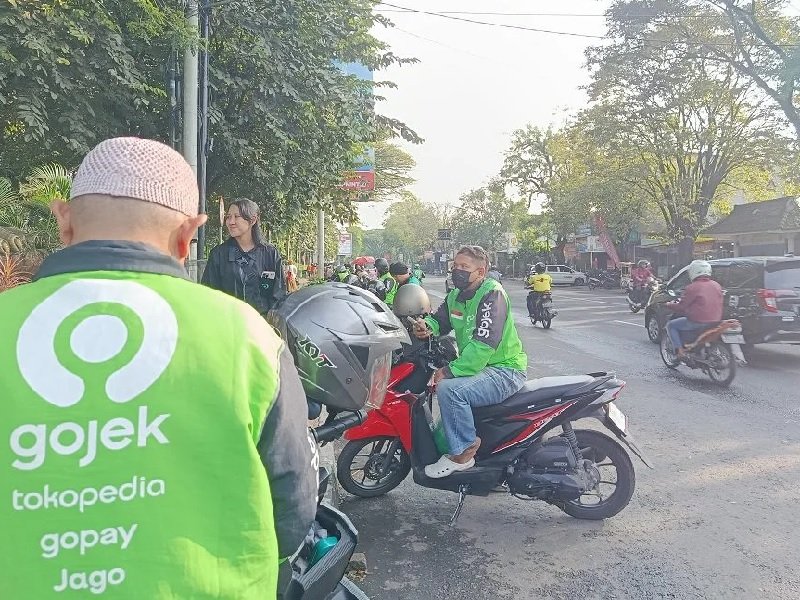
The remarks offer a glimmer of hope for the millions of ojol drivers across Indonesia, who have long felt sidelined from the mandatory THR entitlements enjoyed by permanent workers.

“Of course [they’ll get BHR], and we’re hoping for something even better,” the minister added.
The statement comes as preparations for Eid al-Fitr 2026 intensify, with THR emerging as a pivotal issue for the workforce.
For ojol drivers, classified as partners rather than full-time employees, BHR represents a non-mandatory incentive rather than the obligatory holiday allowance outlined in Law No. 13 of 2003 on Manpower. Instead, it serves as an advisory measure from the government and app-based companies like Gojek, Grab, or Maxim.
This policy traces its roots to 2024, when former Minister Ida Fauziyah first urged the provision of BHR to ease the financial strain on drivers amid soaring inflation.
However, many drivers were left disappointed, as the aid ranged from a mere Rp 50,000 to Rp 100,000 – far below the one-month salary equivalent of formal THR.
Legal Landscape
From a legal standpoint, ojol drivers’ status as gig economy workers creates regulatory loopholes. They fall outside the Ministerial Regulation on THR due to their partnership-based employment model, lacking the traditional employer-employee hierarchy.
This has sparked ongoing debates about whether the government should amend the Job Creation Law (UU Ciptaker) to recognize ojol as formal workers. Legal experts, cited in various social media discussions, argue that without binding regulations, BHR risks becoming an empty promise, reliant solely on corporate goodwill.
Complicating matters further, drivers often work across multiple platforms, raising concerns about overlapping aid or inequities in distribution.
Economic Implications
Economically, BHR could enhance the purchasing power of Indonesia’s estimated 4-5 million ojol drivers. With fuel inflation and rising living costs in 2026, such bonuses would aid in holiday travel or meeting festive needs, potentially stimulating national growth through increased household spending in transportation and e-commerce sectors.
Yet, for companies, this obligation might inflate operational costs, leading to higher service fares or reduced daily incentives for drivers. In 2025, for instance, several app providers were summoned by the Ministry of Manpower over meager BHR payouts, drawing criticism that the policy remains half-hearted.
Social Dimensions
Ojol drivers have been hailed as essential workers since the COVID-19 pandemic, yet they receive minimal protections, including limited access to BPJS Ketenagakerjaan (social security) or Job Loss Guarantee (JKP) programs.
Yassierli’s comments could empower unions like the Indonesian Transport Workers Union (SPAI) to push for stronger negotiations. If the 2026 BHR proves more substantial as hoped, it might foster greater driver loyalty to platforms and curb the protests that often erupt ahead of Eid.