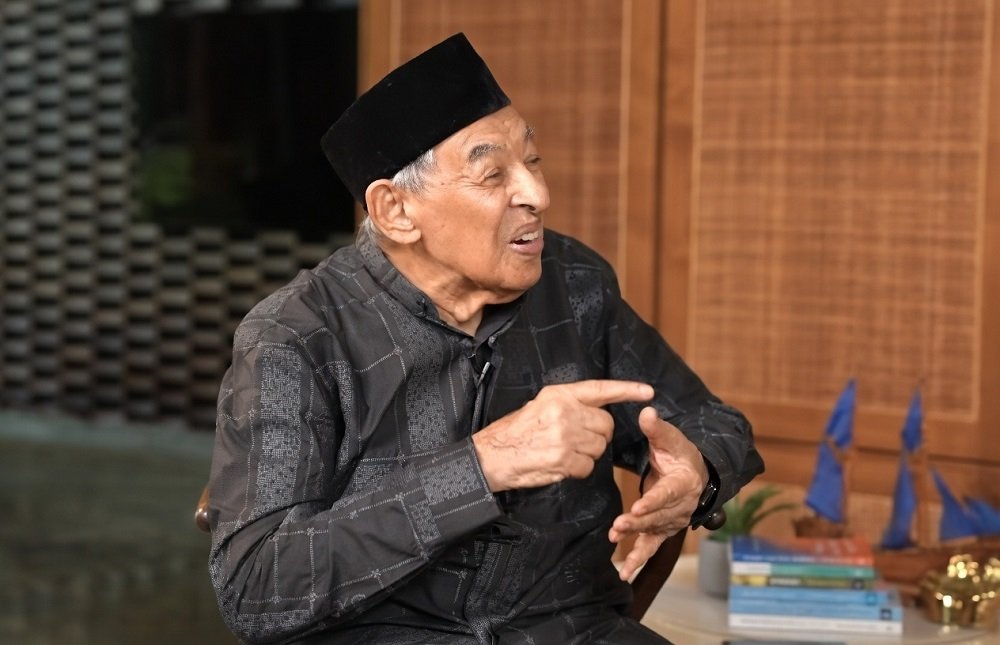
en.Malanginspirasi.com – Quranic exegesis expert, Prof. Muhammad Quraish Shihab, gave message that Eid al-Fitr is a moment to cleanse the heart of various inner ailments, especially resentment.
“The hallmark of a pious person is restraining anger and forgiving others. Eid al-Fitr is the right moment to forgive one another, both family and friends,” said Prof. Quraish on his YouTube Channel at the Ramadan Recitation of Tafsir Al-Mishbah: Living with the Quran, entitled “Forgiving Each Other, Erasing Wounds and Sins,” Friday, March 20, 2026.
He encouraged Muslims to practice forgiveness, even if others don’t apologize first.
Also Read:
“At the end of Ramadan, let’s get used to forgiving. Even if someone doesn’t apologize, we can forgive first,” he continued.
According to Prof. Shihab, the Quran provides step-by-step guidance on how to address others’ mistakes.
There are several levels of human response when hurt, ranging from retaliating in kind, turning away without regard, to the highest level, which is doing good to the wrongdoer.
“Forgiveness is erasing the wound in the heart, not retaliating. But like writing a mistake on paper, if erased, the writing disappears, but the paper still leaves a mark,” he explained.
On that occasion, Prof. Quraish explained the concept of safh in the Quran, which means turning over a new leaf.
At this stage, individuals no longer look back or bring up old wounds.
The peak is the level of ihsan, when individuals are able to do good to those who have hurt them.
“The characteristic of a pious person is to restrain anger and forgive. Allah loves those who do good to those who have wronged them. This is the highest level,” he said.
He reminded Muslims not to fall into the trap of revenge, which is detrimental to themselves.
He believes that holding a grudge will only erode peace of mind and hinder productivity, both in work and worship.
“Grudges can ruin our own hearts. Therefore, there should be no place for revenge because it can be detrimental,” he said.
Ultimately, Prof. Quraish advised each individual to view others’ mistakes from a broader perspective, including the possibility of unintentional actions or pressure from the perpetrator.
“Remember that others’ mistakes may be less serious than our own. If you forgive, there’s a chance that Allah SWT will forgive your mistakes,” he concluded.