
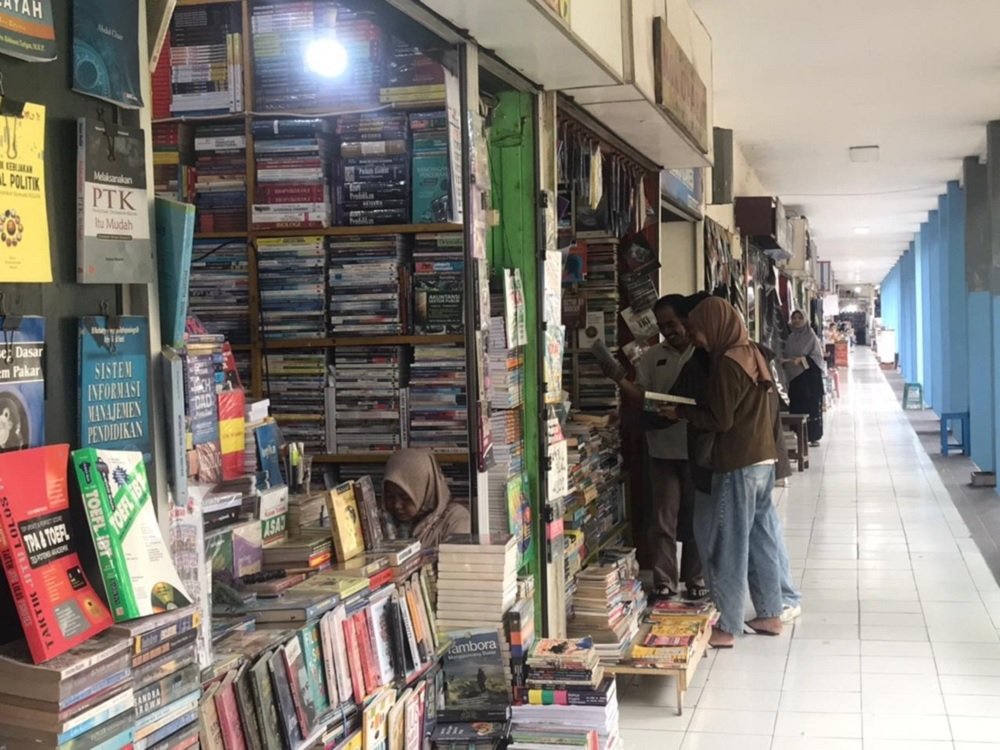
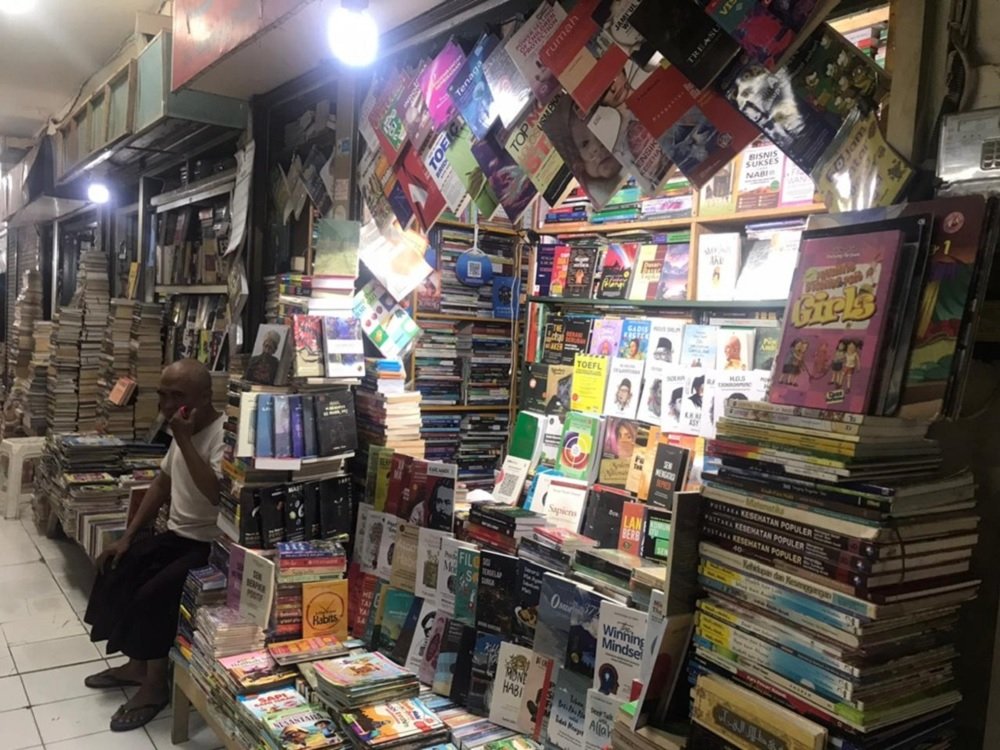
Malanginspirasi.com – The Wilis Book Market, located on Jalan Simpang Wilis Indah in Gading Kasri Village, Klojen District, Malang City, is grappling with significant challenges as consumer shopping habits shift toward digital platforms and online marketplaces.
Once bustling with activity, the legendary market has seen a sharp decline in foot traffic. Nevertheless, traders are choosing adaptation over surrender, turning to digitalization as a survival strategy while maintaining strong faith in the future of physical books.
Significant Post-Pandemic Decline
Chairman of the Wilis Book Market Traders Association, Muharto, stated that the downturn began during the COVID-19 pandemic and has persisted to this day.

While pre-pandemic operations were considered normal, the current situation is markedly different.
He noted that from 2022 to 2023, the market experienced a relative uptick in activity compared to now. However, over the past year, visitor numbers have dropped drastically again.
“Almost all traders are complaining about the decline. But what can we do? This is the reality,” Muharto said on Tuesday, December 16, 2025, when met at his book stall.
Despite the overall slump, Muharto added that the market still sees temporary boosts during certain periods, particularly ahead of and at the start of the new school year when demand for textbooks rises.
“During the beginning of the school year, the market usually gets a bit busier. Visitor numbers increase, though it doesn’t last long,” he explained.

Shift to Online Sales
In response, the majority of Wilis Book Market traders have begun transitioning to online sales.
Muharto estimated that 85 to 90 percent of traders now maintain stores on online marketplaces.
“We have no choice but to follow the digital trend. Relying solely on offline sales here would be tough,” Muharto said.
However, the digitalization process is not straightforward. The biggest obstacles come from older traders unfamiliar with digital technology. Additionally, administrative fees and platform taxes pose challenges for small-scale vendors.
Changes are also evident in reader preferences. University textbooks are increasingly replaced by e-books and digital campus journals, further reducing demand for conventional books.
Adjusting to New Market Targets
To cope, some traders are adapting their inventory. Many have shifted focus to children’s books and popular reading materials, which still enjoy stable demand.
“Children can’t be glued to phones all the time. Children’s books are still needed. That’s an opportunity that remains,” Muharto explained.
Even as physical visits decline, Muharto emphasized that the move to digital does not spell the end for physical books. In his view, printed books offer a reading experience irreplaceable by e-books.
“Books will never die. The sensation of flipping through paper pages is different from e-books,” he said.
He believes printed books retain their own niche, especially for readers who treat reading as a reflective process rather than quick information consumption.
Calls for Greater Support from Malang City Government
Regarding government support, Muharto acknowledged that attention from the Malang City Government toward the Wilis Book Market remains limited. Nonetheless, promotional efforts continue, including visits from university communities and opportunities for content creators to introduce the market to younger generations.
However, Muharto noted that the impact of such activities is still temporary.
Traders’ conviction in the enduring value of physical books is what keeps the Wilis Book Market alive today. For them, digitalization is not the end of printed books but a tool to expand reach.
The soul of the Wilis Book Market remains unchanged: preserving the pulse of literacy and presenting books as an experience, not merely a product.