EN.malanginspirasi.com – Indonesian coffee can now enter the United States completely duty-free thanks to the Agreement on Reciprocal Trade (ART), signed by the Presidents of Indonesia and the United States on February 19, 2026, in Washington, D.C.
Before the deal, the US had applied reciprocal tariffs of up to 32 percent on goods imported from Indonesia. After lengthy negotiations, the general rate was lowered to 19 percent.
However, under the new agreement, tariffs on 1,819 flagship Indonesian products — including coffee, palm oil, cocoa, spices, and rubber — have been reduced to a full zero percent.
Coordinating Minister for Economic Affairs Airlangga Hartarto described the facility as a major competitiveness booster for Indonesian products on American supermarket shelves and in cafes.
“Our coffee, cocoa, and palm oil can now enter the US duty-free,” he said in an official press statement.
Positive Impact on Farmers and Exporters
The Indonesian Coffee Exporters Association (AEKI) and business players see this as a strong positive momentum. Export volumes are projected to increase, farm-gate prices are expected to stabilize, and the country’s foreign exchange earnings will rise.
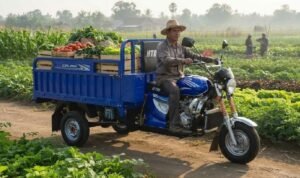
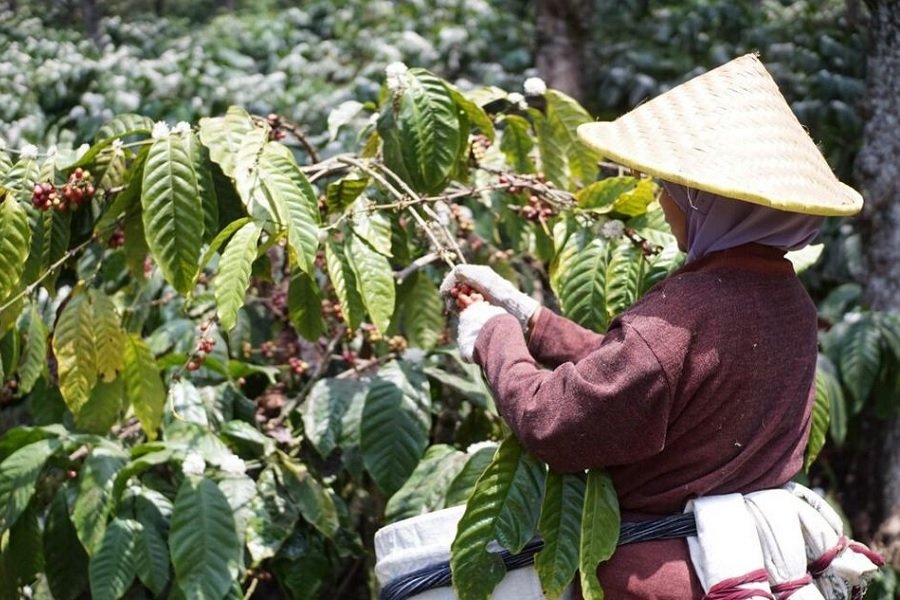
Millions of smallholder farmers in key coffee regions — Sumatra, Java, and Sulawesi — will gain the benefits directly through higher household incomes and more jobs in processing and packaging.
Indonesia’s world-famous specialty coffees, known for the distinctive profiles of Sumatra Robusta and Gayo Arabica, will now reach premium cafes in New York and Los Angeles more easily.
Read Also:
Indonesia Accelerates Toward Sugar Self-Sufficiency with 2.7 Million Ton Target by 2030
The opportunity goes far beyond raw beans. It opens the door for downstream industries such as roasting and ready-to-serve packaging.
Although the news is encouraging, it does not solve every problem. Indonesian coffee production has been relatively stagnant due to natural disasters, extreme weather, and rising domestic consumption. If US demand surges without a matching increase in supply, domestic prices could actually rise.
Logistics also remain a bottleneck. Shipping times from Indonesia to the US are longer than those from Brazil or Colombia. Farmers and exporters will need to be more innovative such as obtaining sustainable certifications, improving quality, and actively promoting their products at international coffee exhibitions.
Risks That Require Attention
The ART agreement is fully reciprocal. In exchange, Indonesia has opened its market to 99 percent of US products with tariffs close to zero. While this strengthens bilateral ties, it could put pressure on local producers in other sectors if American imports flood the domestic market.
In addition, the US Supreme Court recently overturned parts of previous tariff policies. General tariffs may fall further to around 15 percent. The Indonesian government is actively ensuring that the special zero-tariff status for coffee remains secure and unchanged.
Overall, the impact is significantly positive. An industry that supports millions of livelihoods now has greater market certainty. Exports will grow, farmer incomes will improve, and Indonesia will strengthen its position as a major global coffee player.
Success, however, depends on strong follow-up actions. The government, industry associations, and farmers must work together: plant climate-resilient high-yield varieties, upgrade port infrastructure, and accelerate downstream processing so Indonesia exports not only raw beans but also high-value finished products.
This landmark agreement marks a new chapter for Indonesian coffee on the world stage. One filled with both exciting opportunities and the need for continued hard work.