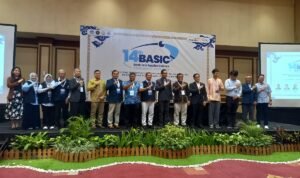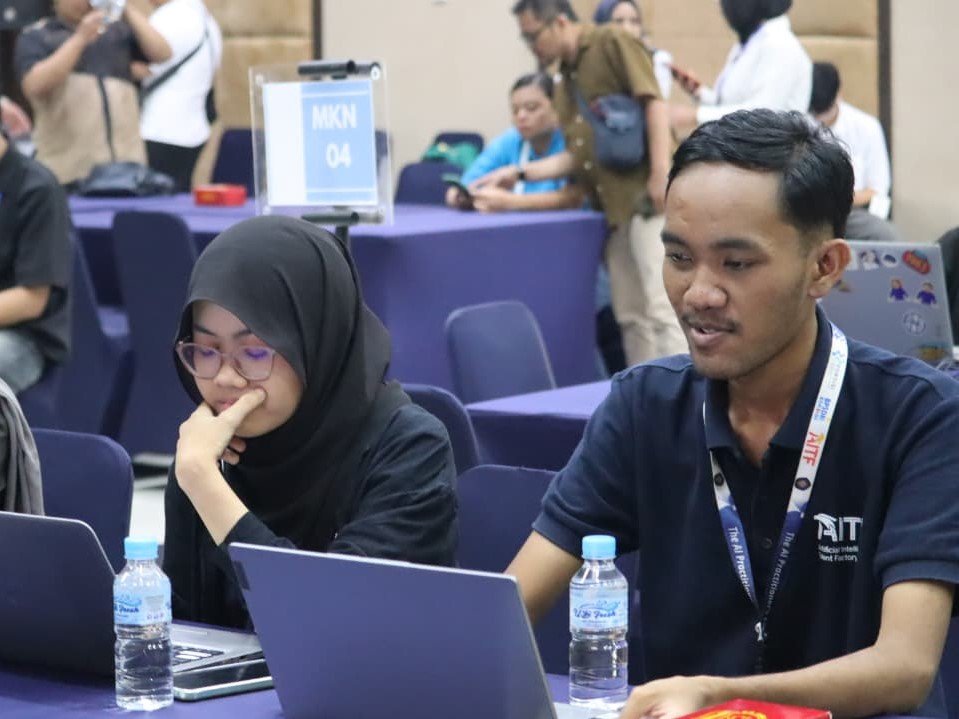
en.malanginspirasi.com – Brawijaya University (UB) held another Workshop 3 for the Artificial Intelligence Talent Factory (AITF) Batch 2 Program on June 8–9, 2026, at the Algoritma Auditorium, Faculty of Computer Science (FILKOM) UB.
This activity marked a crucial step in preparing various artificial intelligence-based solutions developed by students to address strategic national issues, particularly those related to Elementary Schools, social assistance (Sekolah Rakyat), and poverty mapping.
The workshop was attended by dozens of AITF student participants who, over the past few months, have developed various artificial intelligence projects through a collaboration between Brawijaya University, the Ministry of Communication and Digital (Komdigi), the Ministry of Social Affairs, and the East Java Provincial Government.
In his remarks, Said Mirza Pahlevi, Head of the Center for Digital Talent Development at the Human Resources Development Agency (BPSDM) of the Ministry of Communication and Digital, stated that this activity was a continuation of the AITF Batch 2 implementation and a crucial momentum to ensure each team is capable of producing innovations that provide real benefits to the community.
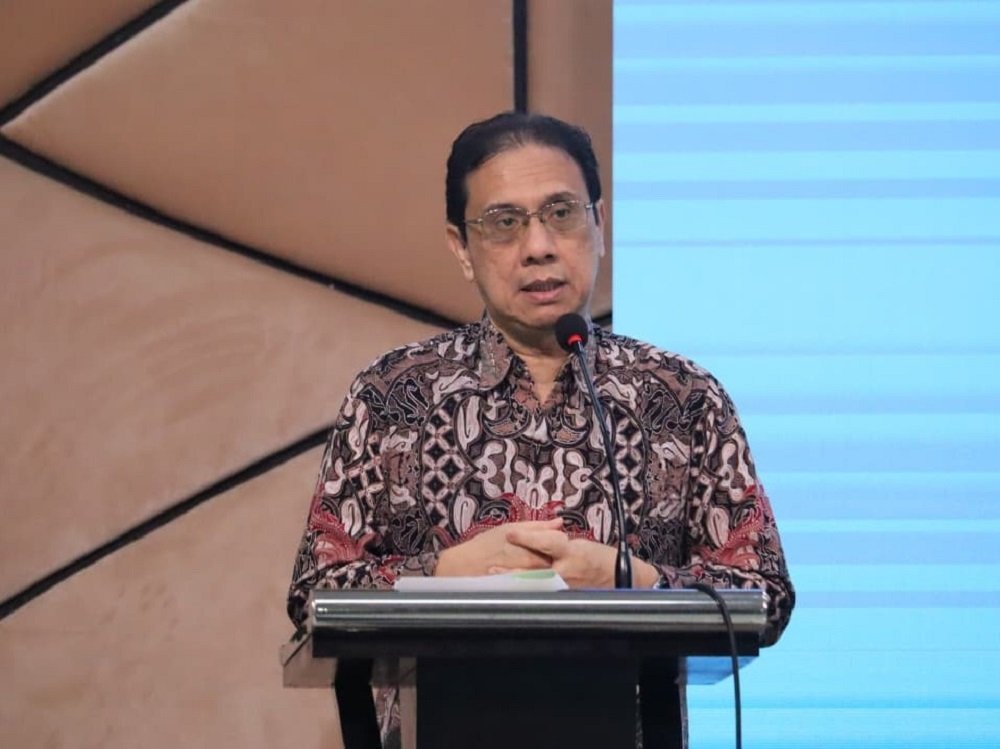
According to him, the AITF is not just a technological development program, but also a platform for developing solutions that the government can use to improve the quality of public services.
“This workshop is the third for Batch 2 of the AITF at Brawijaya University and will be the first in 2026. We hope this program will produce various innovations that can address community needs through the use of artificial intelligence,” he said.
Mirza explained that this year’s AITF included several case studies that have garnered government attention.
One of the most important is the development of solutions to support the implementation of the People’s School program and a more targeted social assistance system.
He said these two use cases are highly anticipated because they have a direct impact on the community. Therefore, the results of the participants’ development will serve as important evaluation material for the various relevant ministries.
“The AITF program, both from Komdigi and the university, aims to bridge the gap between innovations for public services. At Brawijaya University, participants are currently completing a crucial use case related to People’s Schools and social assistance. The results of these two use cases are eagerly awaited,” he said.
Mirza stated that the students’ work will be presented at a Demo Day, scheduled for June 29–30, 2026. Several ministers and national stakeholders are expected to attend the event. The East Java Provincial Government will also be involved.
He stated that Demo Day will be a platform to demonstrate the quality of the solutions developed by students during the AITF. Therefore, all participants are encouraged to utilize the remaining time to refine the systems they are building.
“This event is quite significant and will be a testament to the viability of the solutions they have developed. The results of the participants’ work will be directly seen by policymakers,” he said.
He added that the resulting solutions have the potential to become the initial foundation for developing digital systems to support the People’s School program and the distribution of social assistance at the national level. If successful, these innovations can be further developed in subsequent AITF programs and presented to relevant ministries as solutions ready for implementation.
AITF as a Lighthouse Program for FILKOM Students
Meanwhile, Sabriansyah Rizqika Akbar, S.T., M.Eng., Ph.D., Deputy Dean for Academic Affairs at FILKOM UB and Chair of the AITF Committee, emphasized that Workshop 3 is a crucial phase as participants begin refining their solutions ahead of Demo Day.
He described AITF as a lighthouse program that provides students with the opportunity to be directly involved in solving real-world problems faced by the government and the public.
“Through AITF, our students have the opportunity to work on various case studies that pose significant challenges. This year’s focus includes the People’s School and poverty mapping in East Java,” he said.
According to Sabriansyah, the participants’ achievements demonstrate positive progress. In addition to gaining technical experience in artificial intelligence development, students also gain direct insight from the program’s partner ministries and agencies.
He explained that during AITF, students received extensive input on user needs, implementation strategies, and technology development models that can be applied effectively in public services.
“Participants received a lot of insight from various agencies regarding real needs in the field. This was a valuable experience because they… “It’s not just about building technology, but also understanding how that technology can be used to solve societal problems,” he said.
To ensure all targets are completed on time, the committee will provide additional mentoring to participants. Students are even scheduled to attend follow-up workshops with a quarantine schedule so they can focus more on completing the system development they are working on.
According to Sabriansyah, this step is necessary because the final project results will be presented directly to national stakeholders at the end of June.
“At Brawijaya University, AITF activities are being converted into 12 credits. Therefore, we hope all participants can complete their work on schedule. “There will be additional workshops and intensive mentoring to ensure the developed solutions are truly ready to be presented on Demo Day,” he said.
Also Read:
UB Engineering Lecturer Develops Mental Health Detection App
He also expressed his appreciation for Komdigi’s continued support in the AITF implementation at Brawijaya University. One of the visible achievements is the development of a solution related to handling online gambling, which is said to be entering the launch phase soon.
This achievement, he believes, demonstrates that the AITF program is capable of producing solutions that go beyond the research stage but also have significant potential for practical implementation.
Furthermore, AITF 2026 is also directed to complete various other case studies based on the needs of government agencies, including those related to the BPJS employment sector.
Through this 3rd Workshop, all participants are expected to refine the models, algorithms, and systems they have developed before entering the final presentation phase. The results of this program will demonstrate the university’s contribution to supporting national digital transformation through the use of artificial intelligence.