en.malanginspirasi.com – A major political and financial crisis triggered by the collapse of banking system has forced the resignation of the Paraguayan president, Santiago Peña.
Ueno Bank becomes the epicenter of the turmoil.
Under Peña’s leadership, the institution rapidly transformed from a minor digital finance firm into one of the country’s dominant lenders, claiming a customer base that included roughly 60% of Paraguay’s adult population.
The situation escalated when the country’s central bank stepped in to place Ueno into resolution due to insolvency.
The move froze the accounts of 3 million customers, cutting off hundreds of thousands of families from the funds needed for daily necessities. Executive arrests quickly followed, alongside widespread public demonstrations.
The 47-year-old economist, who took office in August 2023 with a term intended to last until 2028, was already facing strong momentum toward impeachment prior to his decision to step aside.
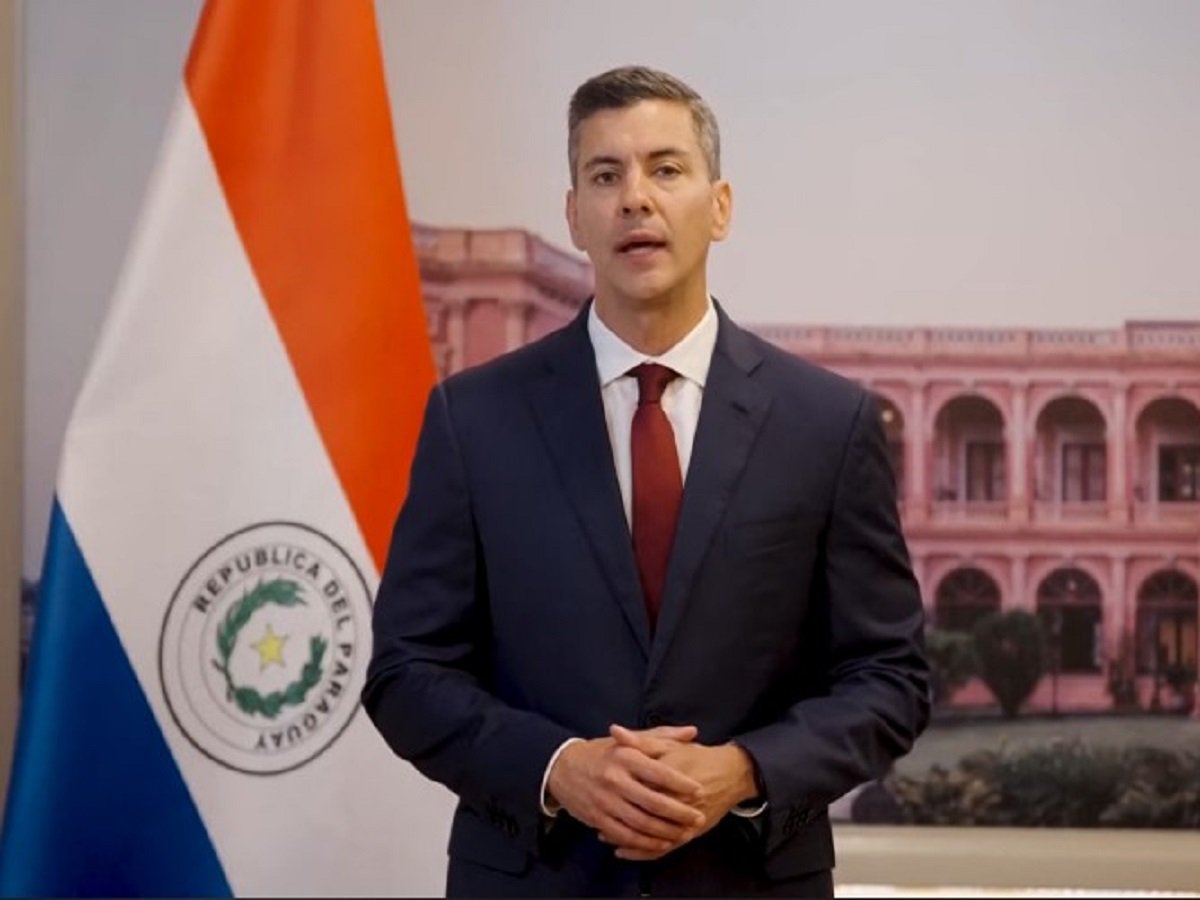
“Dear compatriots, today I address you at one of the most difficult moments of my life. With my heart set on Paraguay and with the conviction that our republic must always come before any person or circumstance, I have decided to submit my resignation as president of the republic,” said Peña in a video.
Originally established as a finance company in the 1970s, Ueno was acquired in 2021 by Grupo Vázquez, a prominent business conglomerate in Paraguay.
By late 2023, under Peña’s administration, the central bank granted it approval to operate as a full digital bank.
The lender rapidly grew by offering aggressive cash-back promotions on everyday items and securing high-profile sponsorships, including Paraguay’s national football team.
Afterwards, players of the national football team released a public statement “demanding” a “forceful response” from the government and the justice system.
Scrutiny mounted over potential conflicts of interest tied to Peña’s prior stake in Ueno Holding, particularly as the institution amassed between $800m and $850m in state and pension entity deposits.
Peña maintained that his involvement was strictly a financial “investment” and stated that he had sold off all of his shares.
He dismissed investigative reporting highlighting possible administrative favoritism regarding state fund allocations as a “false media campaign” aimed at weakening his government.
Pressure culminated when opposition figures and members of Peña’s own Colorado party introduced an impeachment motion holding him accountable for the system’s breakdown.
Peña had previously held shares in the bank’s parent entity until early last year and reportedly disregarded months of warnings from both regulators and investigative journalists.
The political momentum turned decisively when former president Horacio Cartes, a key political ally, publicly backed the impeachment effort.
“We will not stand on the side of the theft of public, private and pensioners’ funds. We must think of the people and of the values we uphold in the Colorado party. We support the impeachment of the president of the republic, Santiago Peña, in order to restore the institutional order of the republic,” he wrote.
As lawmakers assembled to debate the motion, Peña broadcast his formal resignation announcement.
“I do so thinking of the stability of our country, social peace and the need to preserve our democratic institutions,” said the now former president.
“I also want to apologise to the people if at any point I failed them … But today my priority is only one thing: the peace of mind of Paraguayans who trusted their savings to our financial system … My greatest wish is that the return of those funds is guaranteed,” he added.
Throughout the scandal, Peña has repeatedly denied any criminal wrongdoing.
A former finance minister who campaigned on a platform to build a “great Paraguay,” Peña was a key regional partner to US President Donald Trump and attended his second inauguration.
US officials, including Secretary of State Marco Rubio, previously highlighted Peña as a “strategic partner,” referencing recent meetings in Washington regarding trade and critical minerals.
The transition process remains uncertain, as Congress must formally accept the resignation for Vice-President Pedro Alliana to assume office, whom also faced accusations of Ueno Bank scandal involvement.
Yet, he denied.
Shortly after Peña’s speech, the lower house voted unanimously to approve the impeachment motion, sending it to the senate.