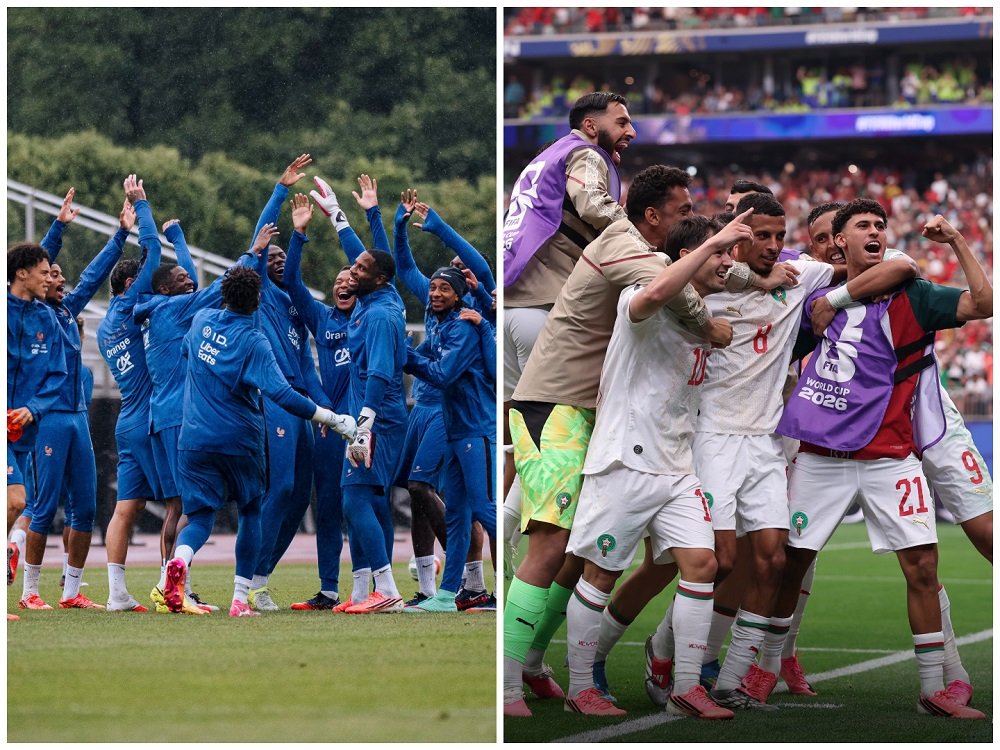
en.malanginspirasi.com – Four years ago, Theo Hernandez’s fifth-minute strike set the tone for a 2-0 France victory, ending the run of Morocco at the semi-final stage in Qatar World Cup 2022.
On Friday morning, the two sides meet again in the World Cup quarter-finals, but Les Bleus would be mistaken to treat this as a rematch in anything but name.
The current Morocco side is materially different from the one Didier Deschamps’ men dispatched in 2022.
Armed with new personnel, a revamped system, and a far more adventurous attacking philosophy, the Atlas Lions have truly evolved.
Here is how Morocco transformed themselves between the 2022 and 2026 World Cups.
Perhaps the most significant shift is in the dugout.
Walid Regragui earned legendary status by guiding the Atlas Lions to the semi-finals in Qatar, becoming the first coach to take an African nation that far. However, his historic reign concluded following the Africa Cup of Nations.
His successor, Mohamed Ouahbi, arrived with a golden reputation after leading Morocco to the FIFA Under-20 World Cup title.
While the 49-year-old inherited Regragui’s defensive foundation, he has instilled a bolder style of play without sacrificing the organization that made Morocco so difficult to break down four years ago.
Unbeaten through his first 10 matches leading into this quarter-final, Ouahbi has proven that this team wants to dictate games rather than just contain opponents.
New Faces Reshaping the Squad
This evolution is vividly reflected in the roster, headlined by Brahim Diaz’s decision to represent Morocco.
The Real Madrid playmaker has provided Ouahbi with a creative spark that simply wasn’t present in Qatar, becoming the first African player to register four assists at a single World Cup after setting up a goal in the Round of 16 victory over Canada.
Meanwhile, Ismael Saibari has emerged as a crucial attacking threat, netting goals against Brazil, Scotland, and Haiti since his 2023 debut.
Other player, Ayyoub Bouaddi, a teenage Lille midfielder, has seamlessly transitioned into the senior setup after starring at the youth level.
Also Read:
Kylian Mbappé Condemns Paraguayan Senator Following Racist Remarks
Don’t forget Issa Diop.
The Fulham defender has added physical steel and veteran experience to the heart of the defense.
Demonstrating just how much the squad has evolved, Qatar heroes Youssef En-Nesyri and Sofiane Boufal are absent from this squad entirely, making room for this dynamic new generation.
A Bolder Tactical Identity
Regragui’s Morocco was celebrated for its compact, disciplined low-block and lethal counter-attacks. Ouahbi has added a whole new dimension.
The Atlas Lions now press higher up the pitch, commit more numbers forward, and afford Diaz the freedom to drift between the lines.
Concurrently, the full-backs provide much more attacking width than they did in 2022.
Crucially, this added ambition hasn’t compromised their backline; Morocco has conceded just four goals in five matches this tournament.
Meanwhile, they have looked devastating upfront—scoring 10 times, including three against Canada, while consistently creating high-quality chances against elite teams like Brazil and the Netherlands.
From Experience to Ultimate Belief
While the team has evolved, the core spine remains intact.
Captain Achraf Hakimi, goalkeeper Yassine Bounou, and midfield engine Sofyan Amrabat continue to provide vital leadership.
However, they now play with the deep-rooted confidence of players who have already broken boundaries on the world stage.
Hakimi has matured into arguably the world’s finest right-back at Paris Saint-Germain, while Bounou continues to make a legitimate claim as one of the greatest African goalkeepers in football history.
That seasoned experience, fused with the explosive energy of Diaz and Saibari, has transformed Morocco from a tournament underdog into a powerhouse that genuinely expects to conquer the world’s elite.