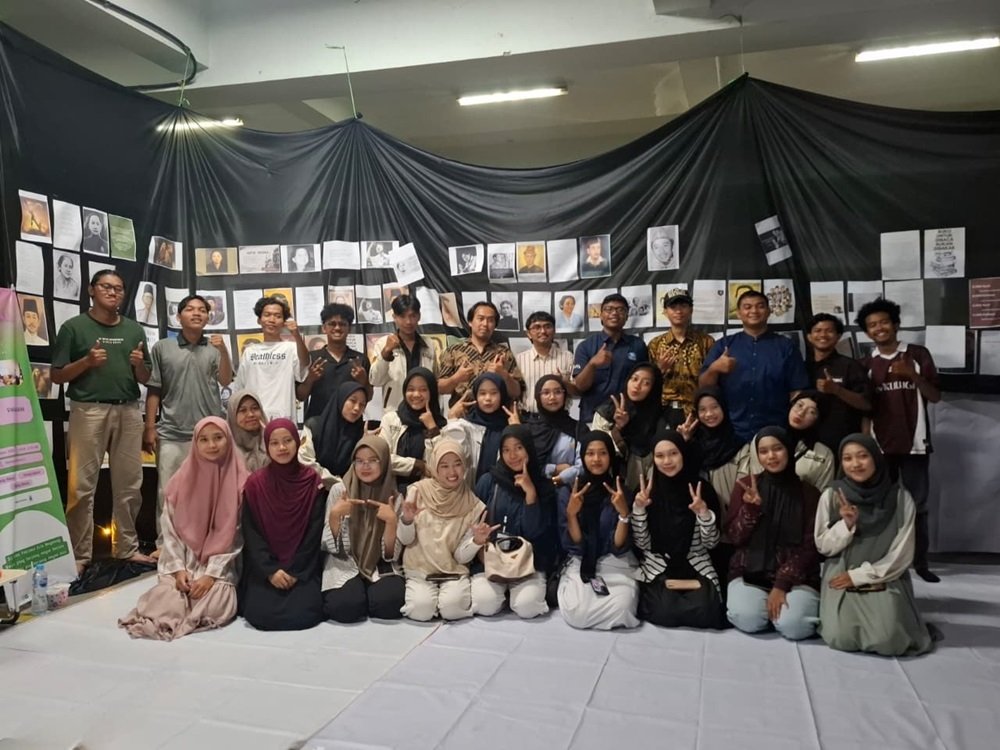
Malanginspirasi.com – Festival Kata is an event initiated by the Research and Strategic Studies Division of the Student Executive Board (DEMA) at the Faculty of Humanities, UIN Maulana Malik Ibrahim Malang. It represents a concrete step toward rekindling the spirit of literature on campus, particularly among students in the Faculty of Humanities.
In an interview with Nur Robi’ Ari Saputra, the event’s chairperson and a student in the Arabic Language and Literature program, he explained that the division emerged from the DEMA Governor’s concern over the lack of platforms to examine social issues and the faculty’s identity. Especially in the realm of literature.
“This division was born from that background. We aim to foster empathy toward social issues, highlight those issues, and build a literary soul within the Faculty of Humanities,” Nur Robi’ stated.
The Research and Strategic Studies Division runs two main programs: Suara Arah Pandangan (SAPA) and Festival Kata.
SAPA focuses on analyzing current issues, such as protests and government policies that harm the public. These are packaged into articles and turned into brief content shared via social media, like Instagram.
Festival Kata, meanwhile, serves as an expressive space for literature enthusiasts among students. It includes discussions, artwork exhibitions, and an open stage open to anyone wishing to perform—whether through poetry readings, poetry musicalizations, singing, or other creative works.
Nur Robi’ noted that the event stems from a deep concern for literature, which has been far from “prioritized” within the Faculty of Humanities.
“Many students here have potential in literary creation, but they lack a stage. That’s why we provide an open stage for anyone who wants to perform,” he said.
2 Weeks Preparation
The event was prepared in just two weeks, involving 15 committee members.
Robi’ admitted that the initial concept changed due to permit limitations.
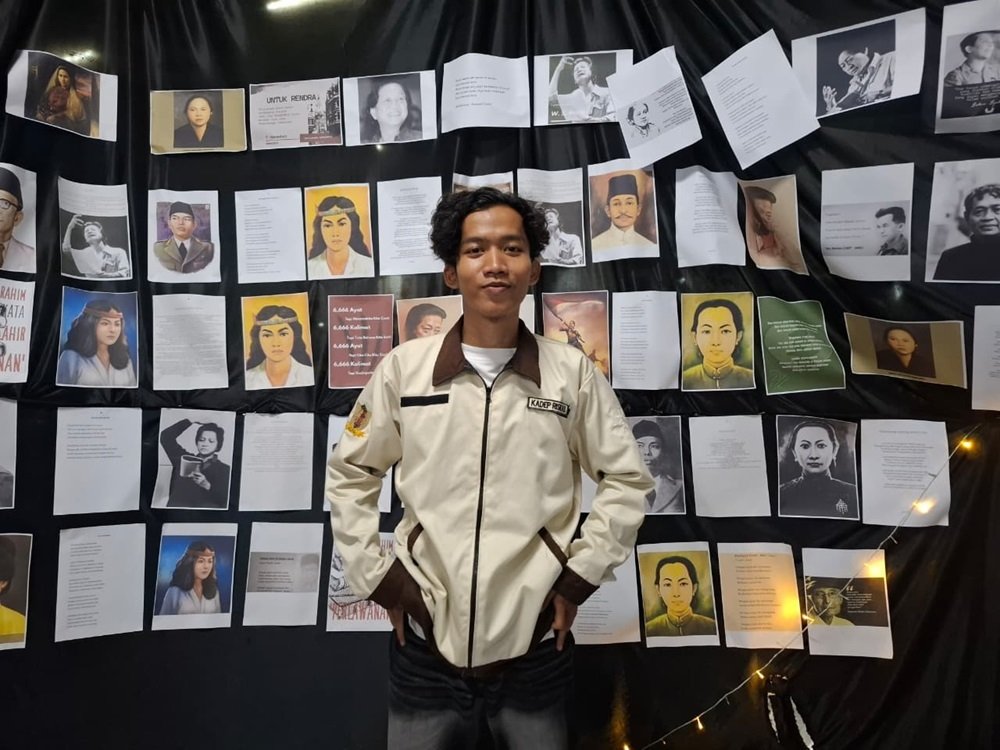
“Originally, the venue was larger, and the exhibition featured hanging photos and works. But security policies prohibited it, so we adapted to this display format. Surprisingly, it turned out more aesthetic for photos,” he explained.
Selected works on display included poems by W.S. Rendra and Sutarji Calzoum Bachri, as well as photos of heroes—both officially recognized and unsung figures by the government, such as Tan Malaka.
Robi’ revealed that the theme commemorates Heroism Month, honoring those who fought with weapons and those who battled with words, like W.S. Rendra.
Notably, the event coincided with Rendra’s birthday (November 7), making him the central figure studied in this year’s Festival Kata.
Despite challenges from low interest in literature, Festival Kata proceeded vibrantly and inspirationally. The committee hopes it marks the beginning of nurturing new literary talents from the Faculty of Humanities.
“I didn’t set high expectations for participants, as interest in literature—especially in Malang—is extremely low. We’re grateful for those who registered and attended,” he said.
“The output? We certainly want to produce new literary figures from the Faculty of Humanities at UIN Malang,” Robi’ added.
With youthful enthusiasm and strong idealism, Festival Kata proves that literature remains alive on campus—not just on paper, but in the souls of the next generation.