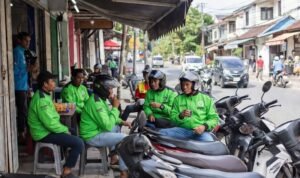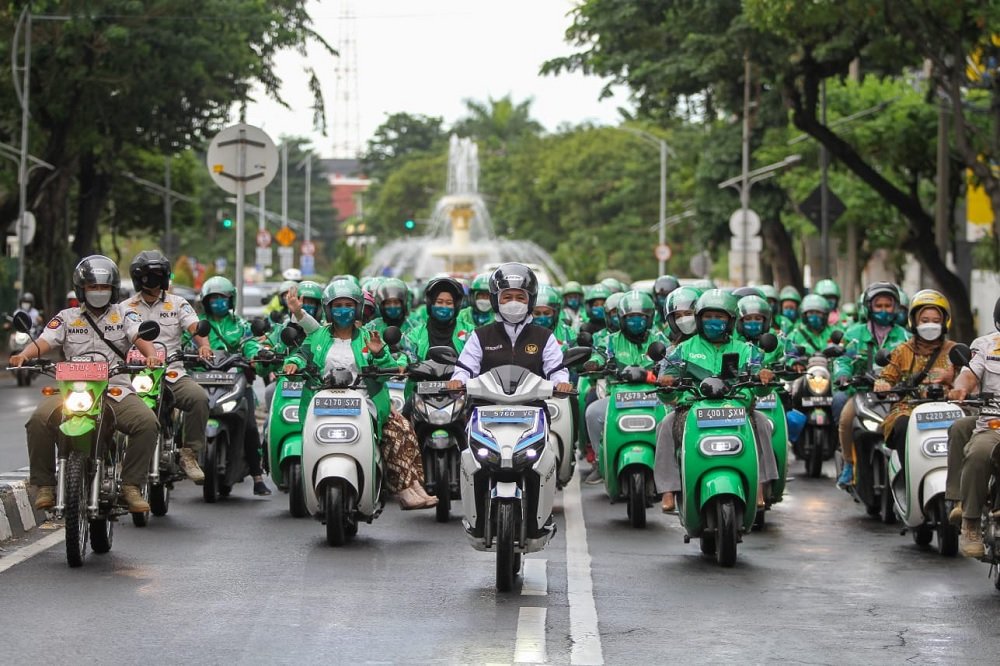
EN.malanginspirasi.com – Motorcycle taxi (ojol) drivers and delivery riders are divided over the Indonesian government’s latest appeal asking app companies — Gojek, Grab, Maxim, and InDrive — to give Eid al-Fitr bonus (BHR) worth at least 25% of drivers’ average net monthly earnings over the past year.
For many rank-and-file drivers, the increase feels like a breath of fresh air ahead of Lebaran. The amount is double what they received last year.
However, labor unions have flatly rejected the scheme, calling it still too small, discriminatory, and nothing more than a non-binding “appeal” without legal force.
Manpower Minister Yassierli issued Circular Letter No. M/4/HK.04.00/III/2026 on Tuesday, 3 March, 2026. The directive is clear: platform companies are urged to pay BHR in cash, no later than seven days before Idulfitri (and can start as early as H-14). The minimum amount is 25% of each driver’s average net monthly income over the last 12 months.
The national budget for the program reaches Rp220 billion for around 850,000 active partners, exactly double the Rp105–110 billion disbursed last year.
Read Also:
Indonesian Government Doubles Eid Bonus (BHR) to Rp220 Billion for 850,000 Online Drivers
Nila, a female Gojek driver and Chairwoman of the Gojek Women’s Community, welcomed the news with delight.
“Of course we’re really happy,” she said excitedly.
She hopes the cash BHR becomes an annual program so drivers stay motivated. Previously, many only received basic food packages (sembako). Now it’s cash and significantly larger, real support from both the government and the platforms, Nila said.
Across social media, drivers flooded timelines with “Alhamdulillah,” saying the money will ease the cost of mudik travel, groceries, and children’s school fees before Lebaran.
Unions Demand Real THR, Not “Imbauan”
On the other side, the Indonesian Transport Workers Union (SPAI) immediately rejected the formula. Chairwoman Lily Pujiati said 25% of net income “does not meet Eid needs.”
She pointed out that drivers already lose up to 20% in app commissions, plus fuel and maintenance costs. SPAI is demanding the BHR be converted into a formal THR (Tunjangan Hari Raya) equal to the provincial minimum wage — for example Rp5.7 million in Jakarta — instead of a voluntary circular letter.
“This is discriminatory,” Lily stressed.
Last year many drivers only pocketed Rp50,000 to Rp200,000 because of strict conditions: active at least 25 days a month, high online hours, 90% rating, and more. They fear the same strict filters will be applied again.
Actual BHR amounts vary. For the roughly 800,000 Gojek and Grab drivers, the average is Rp250,000–Rp400,000 per person. On smaller platforms like Maxim and InDrive, it drops to Rp150,000–Rp200,000.
The key requirements: companies must be transparent in calculations. The bonus alson only applies to officially registered partners who have been active for at least 12 months.
The government argues the policy will boost household spending among drivers and support the Lebaran economy. Coordinating Minister for Economic Affairs Airlangga Hartarto said communication with platform companies has been intensive, and local governments have been asked to monitor compliance.
While the move is a positive step, deeper issues remain. Sky-high commissions, lack of social protection, and formal recognition of drivers as workers. Those challenges still need urgent attention.