en.malanginspirasi.com – The 2026 Bestari Saintek Team from Universitas Brawijaya (UB), led by Prof. Dr. Ir. Setyono Yudo Tyasmoro, M.S., presented the development of a circular economy ecosystem in Bluri Village, Solokuro District, Lamongan Regency.
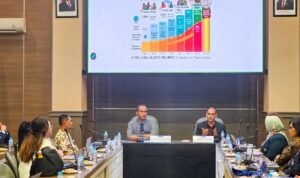
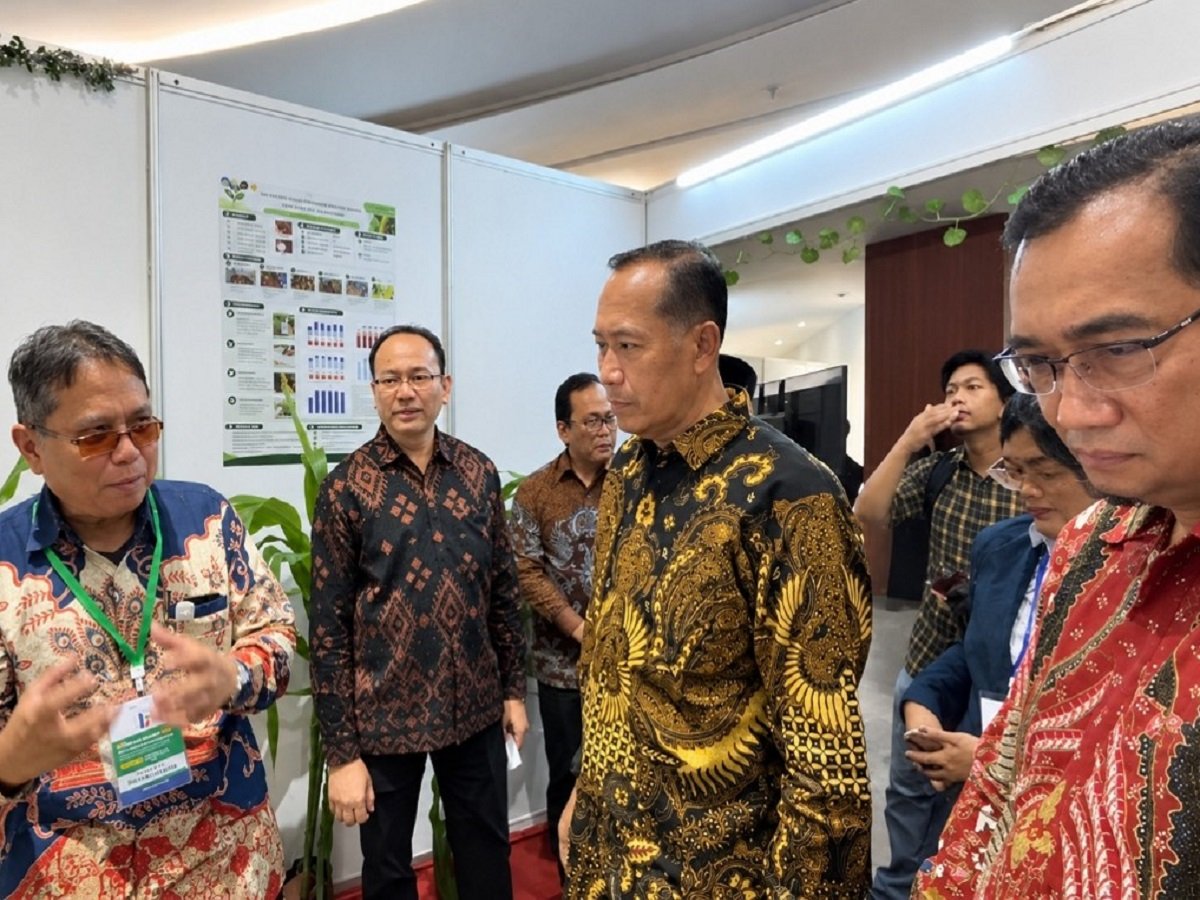
The showcase of the innovation presented to the Deputy Minister of Higher Education, Science, and Technology (Wamendiktisaintek), Prof. Fauzan, during his visit to the UB Living Lab exhibition at the UB Auditorium on Friday (Oct 30, 2026).
Prof. Yudo explained that one of the key outcomes of the program is the utilization of chicken manure waste—previously an environmental challenge—as raw material for organic fertilizer.
According to him, the circular economy framework goes beyond merely producing organic fertilizer; it establishes a strong linkage between livestock and agriculture through a Living Laboratory approach.
This allows waste generated from livestock farming to be repurposed to support agricultural practices.
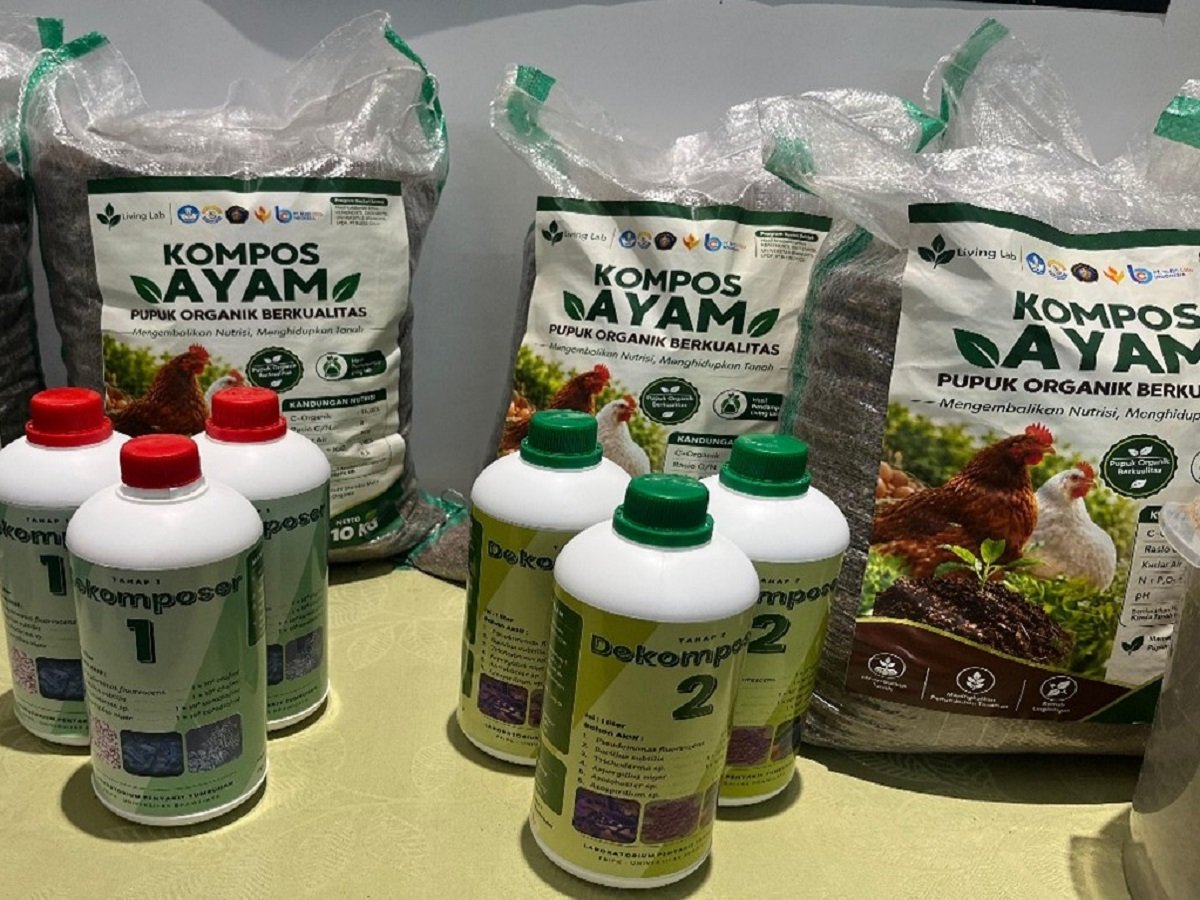
“For a long time, chicken manure has been viewed merely as a livestock byproduct that requires waste management. However, when processed using proper techniques, it has significant potential to serve as a primary raw material for organic fertilizer,” stated Prof. Yudo.
Also Read:
UB Joins Global Push for Sustainable Agriculture at Taiwan Summit
Utilizing a research-based and community-driven approach, the UB Bestari Saintek Team aims to deliver solutions that address environmental concerns while yielding usable products for the agricultural sector.
The core concept focuses on restructuring the resource utilization cycle.
In its implementation, the program employs a Living Lab framework, positioning community members and partners as integral stakeholders in the innovation lifecycle.
Universitas Brawijaya leads technology development, mentoring, and quality testing. PT Bless Coco Indonesia partners in product development and processing.
Meanwhile, the local poultry farmers’ association supplies the raw materials, and the Loh Jinawi Bluri Farmers Group plays a pivotal role in testing and implementing the organic fertilizer.
The collaboration also engages the Department of Livestock and Animal Health of Lamongan Regency as a supporting agency to build a robust program ecosystem.
“This approach embodies the principle of co-creation—building innovation collaboratively through multi-stakeholder participation. The community is not merely a passive recipient of research findings; they are actively involved in development, monitoring, testing, and exploring commercialization opportunities,” Prof. Yudo added.
A key stage of the program involves refining the treatment process using decomposers to accelerate organic matter decomposition.
The raw materials, sourced from layer and broiler chicken manure, undergo systematic processing and periodic monitoring.
Throughout the process, the team monitors critical parameters, including temperature, pH levels, and material consistency, to track progress and ensure fermentation meets target specifications.
Beyond production, the final organic fertilizer undergoes laboratory quality testing at UB’s Faculty of Agriculture Soil Chemistry Laboratory.
This scientific evaluation assesses chemical characteristics against national solid organic fertilizer quality standards.
The program’s second phase will focus on enhancing the fertilizer formulation by integrating biochar and beneficial microorganisms, including Azospirillum sp. and Azotobacter sp.
This phase aims to optimize the fertilizer’s chemical properties and evaluate its effectiveness on crop growth and yield.
“The objective extends beyond creating an organic fertilizer product; we are building a sustainable collaborative system,” emphasized Prof. Yudo.
Within this structured ecosystem, poultry farmers serve as raw material suppliers, processing partners manage production and refinement, and farmer groups act as primary end-users for crop cultivation.
This value chain can foster a mutually beneficial economic loop. Environmental waste is transformed into a valuable economic resource, providing farmers with a research-backed, sustainable alternative to commercial fertilizers.
Moving forward, the project will conduct comprehensive cost-benefit analyses, covering raw material sourcing, processing, packaging, and commercial pricing models, ensuring the innovation is both technically viable and economically scalable.