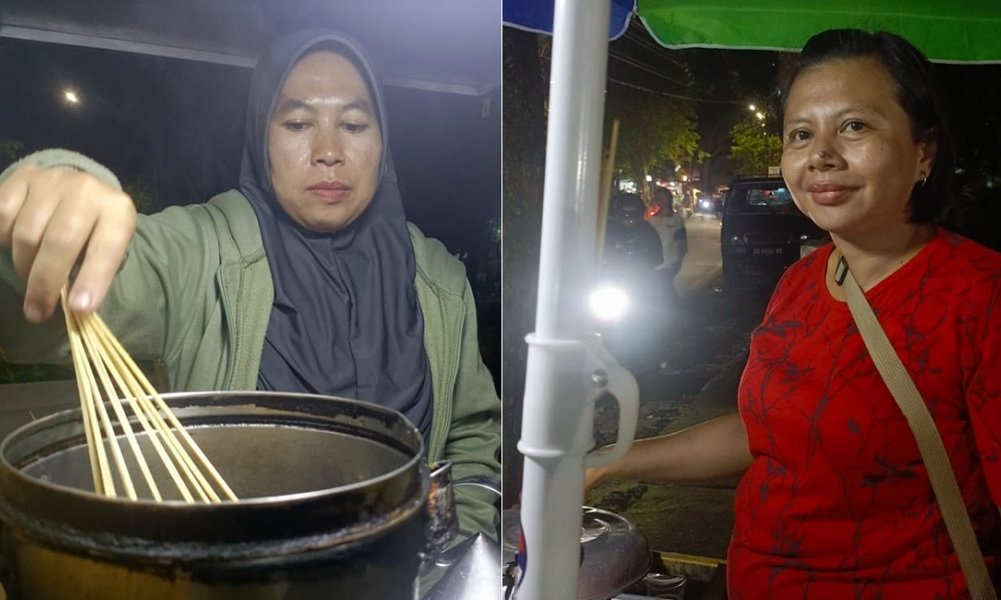
Malanginspirasi.com – The micro, small, and medium enterprises (UMKM) around Singha Merjosari Park in Malang City, display a unique economic vibrancy driven largely by women. These female entrepreneurs shoulder a double burden: generating household income while managing domestic responsibilities. Despite a lively daily cash flow, financial literacy remains their biggest hurdle, leaving many vulnerable in the informal sector.
A rapid survey of 14 vendors at Taman Merjosari found that 8 were women. Most sold ready-to-eat snacks such as sempol (chicken skewers), rolled maklor, jasuke (sweet corn with cheese and milk), and cilok (tapioca balls).
Remarkably, 10 out of the 14 vendors already accepted QRIS digital payments—an encouraging sign of digital adoption—even though their grasp of financial management remains limited.
The Missing Ledger
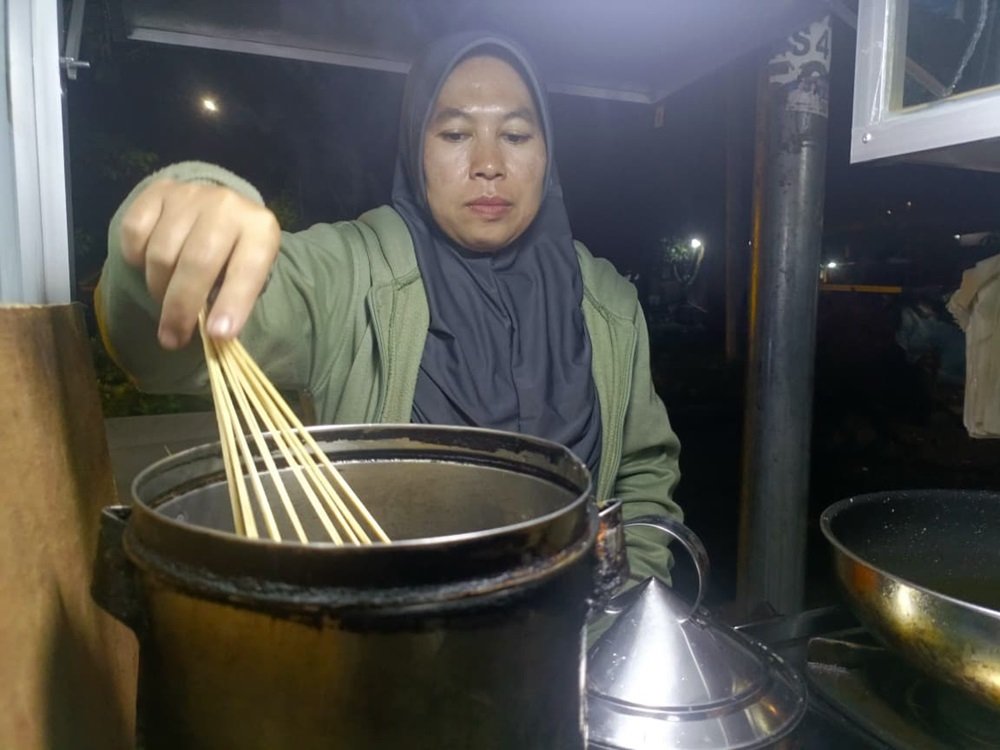
Wati, a sempol seller, admitted she has never kept any records of income or expenses.
“I never write anything down. The money I earn goes straight back into buying ingredients. Sometimes I end up a little short,” she said.
Her daily earnings range from Rp100,000 to Rp500,000, with a typical starting capital of Rp300,000 (excluding cooking oil and eggs).
Without systematic bookkeeping, she cannot accurately track profit, measure growth, or plan expansion.
Balancing Home and Hustle
Like many of her peers, Wati is also the primary caregiver at home.
“In the morning I get the kids ready for school. At midday I prepare the sempol, and from late afternoon until night I sell,” she explained.
Despite working until late, she feels safe in the park and values the extra income for her family.
Another vendor, Yeni, runs a small cilok outlet on a consignment basis for a culinary company based in Tulungagung.
She and her husband take turns minding the stall, while revenue is split with the brand owner.
“Income isn’t steady. When it’s busy it’s decent, but my husband usually does the calculations,” she said.
Although she accepts QRIS payments (using neighbour’s account), Yeni has never attended any UMKM training or financial management workshops.

A Gap Between Tools and Knowledge
The widespread use of QRIS shows these women are ready for digital tools. Yet, the absence of basic education—simple record-keeping, separating personal and business funds, calculating profit and loss—keeps their businesses fragile and growth limited.
Both women remain hopeful.
“I dream of having my own little warung one day,” Wati said.
“I just hope the business keeps running smoothly,” Yeni added.
Their stories underline an urgent need: targeted financial literacy programs for female micro-entrepreneurs that include hands-on mentoring in basic bookkeeping, working-capital management, and making the most of digital payment systems. Only then can their hard work and digital readiness translate into lasting economic empowerment.