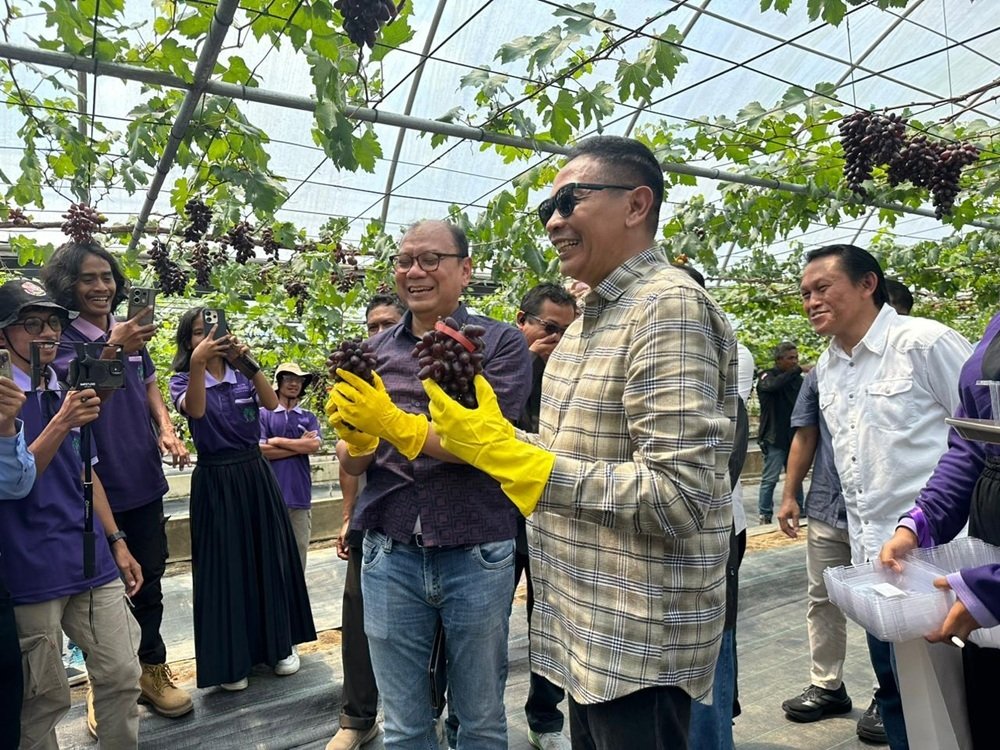
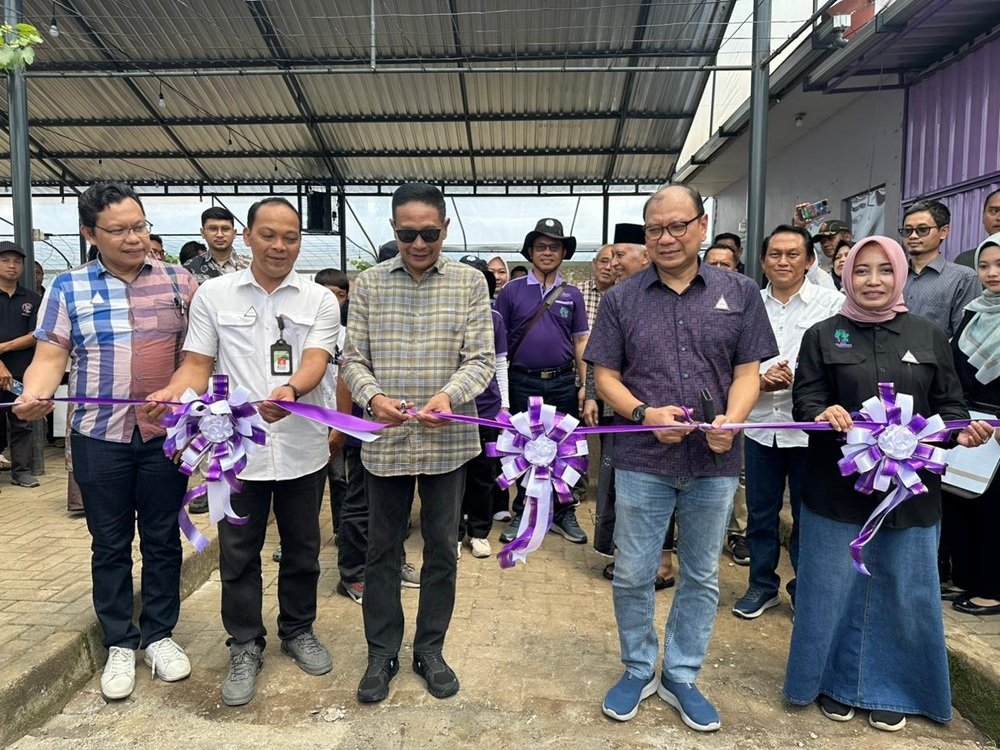
Malanginspirasi.com – The former idle land at Campus II of Politeknik Pembangunan Pertanian (Polbangtan) Malang has officially been transformed into the “Wisata Petik Anggur dan Edukasi Budidaya Anggur” (Grape-Picking Tourism and Grape Cultivation Education Center). The facility was inaugurated on Saturday, December 6, 2025, and is now regarded as one of the best examples of state-owned asset (Barang Milik Negara – BMN) optimization in Indonesia.
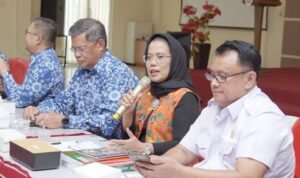
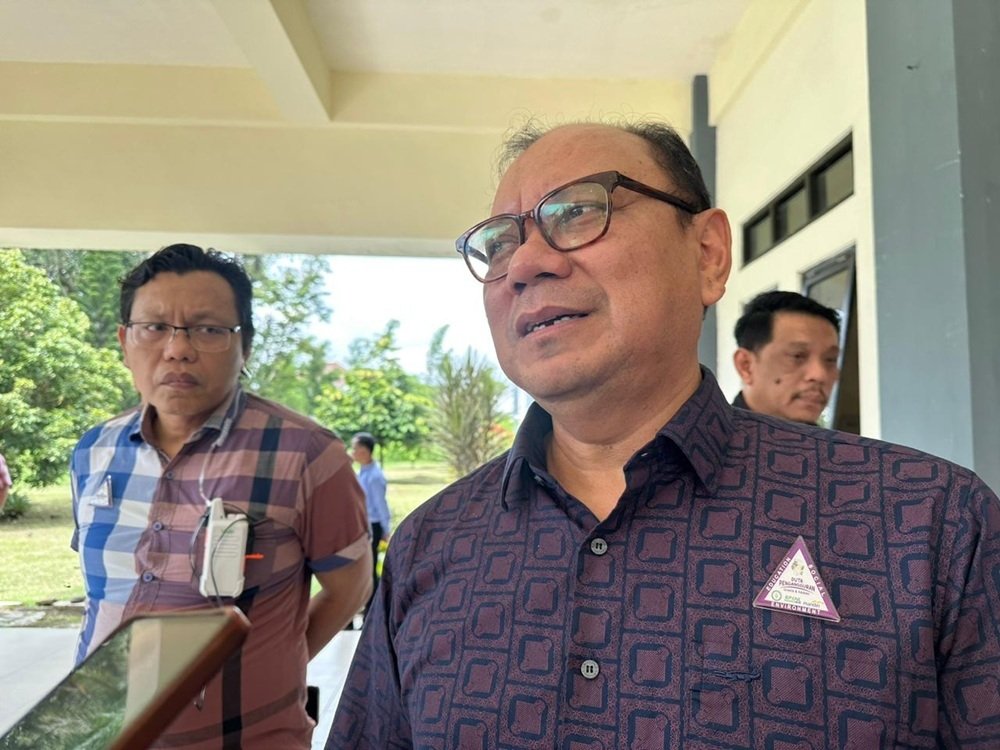
Head of the Regional Office of the Directorate General of State Assets (DJKN) East Java, Dudung Rudi Hendratna, emphasized that BMN optimization plays a crucial role in supporting the government’s priority programs.
This year and next, the government is rolling out large-scale initiatives such as the Free Nutritious Meal Program (MBG), excellent schools, and village- and urban-level cooperative strengthening — all of which require massive physical facilities and funding.
“The MBG budget alone reaches Rp76 trillion this year and is projected to rise to around Rp350 trillion next year, not counting other priority programs fully backed by the Ministry of Finance,” Dudung explained.
State revenue comes from taxes, excises, and Non-Tax State Revenue (PNBP), part of which is generated through the utilization of state assets managed by DJKN.
“BMN is purchased with people’s money. It must be used to carry out duties and functions. If it is not used, it must be utilized productively — it should never be left idle,” he stressed.
Collaborative Optimization Success
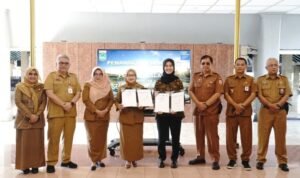
This principle was applied to the previously unused land at Polbangtan Malang Campus II. Through collaboration between DJKN, KPKNL Malang, Polbangtan Malang, the Duta PengAngguran community, and Bank Mandiri, the idle plot has been turned into a thriving agrotourism destination featuring various grape varieties.
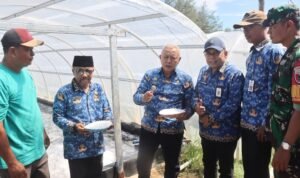
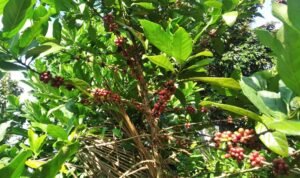
The 6,000 m² area now serves as a grape-picking tourist attraction, a center for grape cultivation education, and a space for social collaboration.
Head of KPKNL Malang, Kurniawan Catur Andrianto, called the transformation proof of the real benefits of BMN optimization.
“We turned overgrown bush into a high-value, mixed-use asset. The state earns PNBP, Polbangtan gains educational facilities, Duta PengAngguran gets creative space, and Bank Mandiri channels its social responsibility. This is a win for everyone,” he said.
A Living Entrepreneurship Laboratory
Polbangtan Malang’s Deputy Director for Student and Alumni Affairs, Hamyana, fully supports the initiative.
“This is not just land utilization — it is a real entrepreneurship laboratory. Our students now have direct access to learn agribusiness management in the field and interact with practitioners,” she said.
Director of Duta PengAngguran, Reny Wijayanti, added that the site includes an educational greenhouse, jogging track, internship facilities for school students and santri (Islamic boarding school students), as well as partnerships with UMKM and pesantren for grape cultivation mentoring.
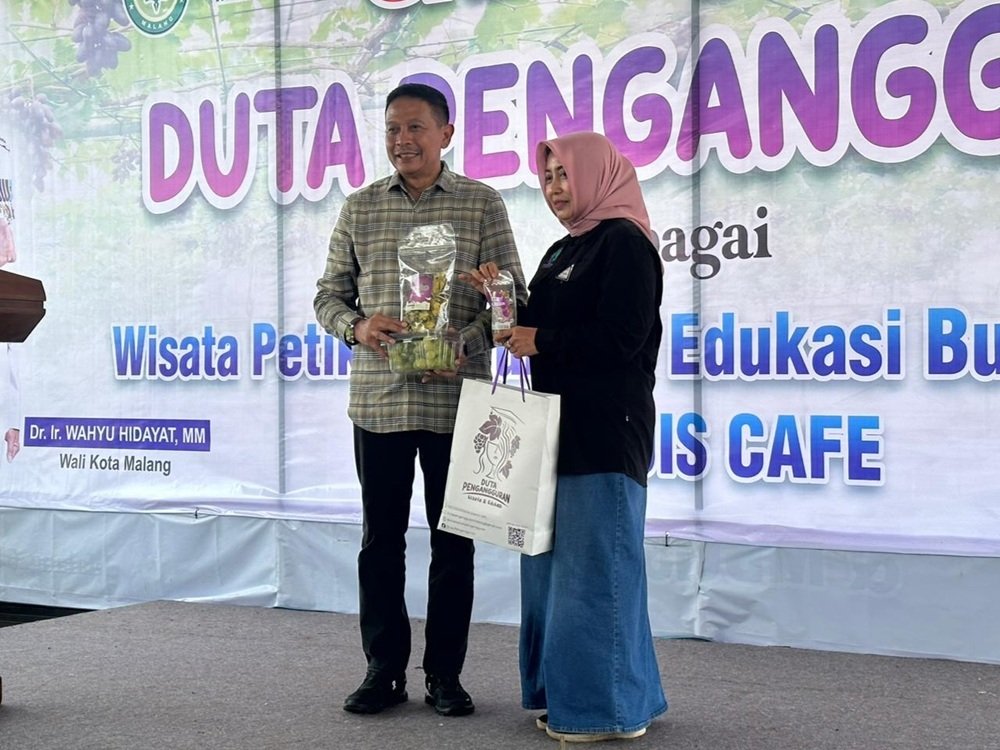
Bank Mandiri also contributed significantly. Former President Director Darmawan Junaidi donated his personal exclusive Tag Heuer watch to be auctioned for charity during the grand opening, alongside UMKM products by santri, batik by children with disabilities, koi fish, and recycled-art paintings. All auction proceeds will be fully channeled to social programs.
To date, the grape-picking tourism site has generated Rp177.8 million in PNBP and is projected to become a national pilot project for collaborative state-asset optimization.
“This is extraordinary. From an idle asset, we now have economic activity, education, and PNBP that contribute to national development,” concluded Dudung.