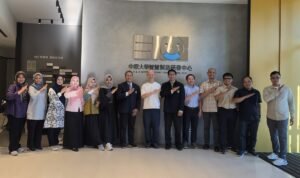
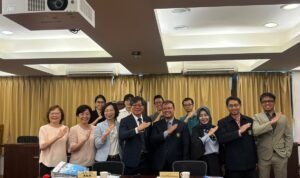
en.Malanginspirasi.com – University of Brawijaya (UB) students from startup Capunglam Agrinovasi Indonesia, collaborated with the Koalisi Rakyat Untuk Kedaulatan (KRKP) or People’s Coalition for Food Security of Malang City.
They held a Workshop on Waste Processing and Integrated Farming for Food Security for Usaha Mikro, Kecil dan Menengah (UMKM) or micro, small and medium enterprises During the Crisis.
There are 10 members of UMKM under the guidance of KRKP attended the event that occurred at Capunglam Farm, Gang Kahuripan, Candirenggo, Singosari, on March 1, 2026.
Capunglam Founder and Team Leader is Cahyo Ilham Firmansyah Subagio, a fast-track master’s student from the Faculty of Economics and Business (FEB), class of 2022.
Cahyo explained that this event aims to introduce the concept of green entrepreneurship while strengthening community-scale food security amidst global uncertainties.
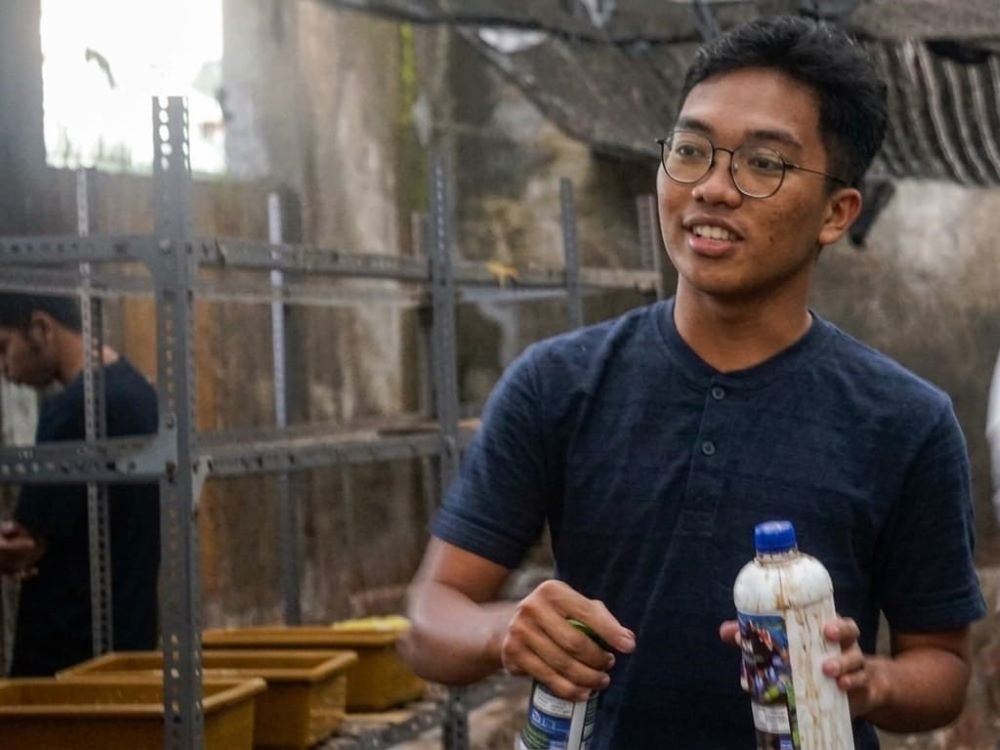
“As a student and entrepreneur in the field of green entrepreneurship, I see that the challenges of the future economic and food crises are not solely the government’s responsibility,” he said.
He continued that the younger generation, especially students, should involve deeper and become the part of the solution through innovation in the food sector.
Additionally, Cahyo mentioned Capunglam aims to encourage the development of sustainable food business models through this program.
Students can implement it at the household and community level.
“We want to introduce simple practices such as urban farming, organic waste processing, and integrated farming that can be implemented by the community. We hope that students can become agents of change who can strengthen the community’s economic resilience,” he explained.
What Participants Learned from The Workshop
Participants in the workshop first received an explanation of the concept of integrated farming and organic waste processing as part of a circular economy system.
This material emphasized that users can recycle household and business waste into feed or fertilizer, creating a more efficient and sustainable food production system.
The event then continued with a tour of the Capunglam Farm grounds to observe the implementation of the integrated farming system development.
At the workshop, participants learned about the interconnected production cycle, from catfish and chicken farming, organic waste processing using maggots, to growing vegetables such as chilies and mustard greens as part of an integrated food ecosystem.
Also Read:
FCS UB Launches Integrity Zone 2026, Collective Commitment Towards Clean and Serving Governance
Reza, the PIC of the Malang City KRKP, explained that strengthening community-scale food security is crucial for Malang.
The reason is because Malang still relies heavily on food supplies from surrounding areas.
According to Reza, the circular economy model that participants learned in this workshop can be an alternative solution for the community and MSMEs.
“Malang City is quite dependent on food supplies from surrounding areas. When distribution disruptions or crises occur, low-income households and small-scale MSMEs will be most vulnerable. Therefore, strengthening community-based food security is crucial,” he explained.
Furthermore, he also added that the high rate of food waste in Malang City is another reason why circular economy-based waste management is crucial.
“Food waste in Malang City can reach hundreds of tons per day. It rarely went through complete waste management process. Through approaches such as maggots and eco-enzymes, this waste can actually have economic value while reducing environmental impact,” he added.
Magobox for the Implementation of Waste Management System
Capunglam provided Magobox starter kits to participants to try the first step in implementing a waste management system in their businesses.
Magobox is a simple organic waste processing tool based on maggot cultivation.
This workshop was a continuation of the Green Entrepreneurship Bootcamp program previously held by the KRKP for MSMEs in Malang City.
In that program, Capunglam was one of the pilot startups fostered by KRKP.
Capunglam was therefore involved in sharing best practices regarding sustainable food business models based on waste management and integrated farming systems.
One of the workshop participants, Farida, owner of the Getas Lumer Malang, said she gained many new insights from the activity.
She believes the workshop opened the perspectives of small business owners regarding the importance of considering the environmental impact of business activities.
“Thank you to KRKP and Capunglam. From this activity, we learned that running a business is not just about production and sales, but also how our business impacts the environment. We learned how to take from nature and return it with greater benefits,” she said.
Capunglam Agrinovasi Indonesia is a social enterprise which was the initiation of Brawijaya University students.
This enterprise focuses on sustainable agriculture, green entrepreneurship, and the circular economy through organic waste management and integrated farming systems.
Meanwhile, KRKP is a community network established in 2003.
It has a strong commitment to championing food sovereignty by promoting a locally resource-based food system and strengthening the role of communities in developing a sustainable food system.