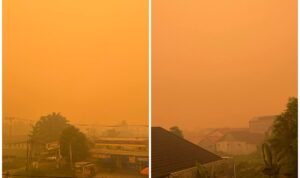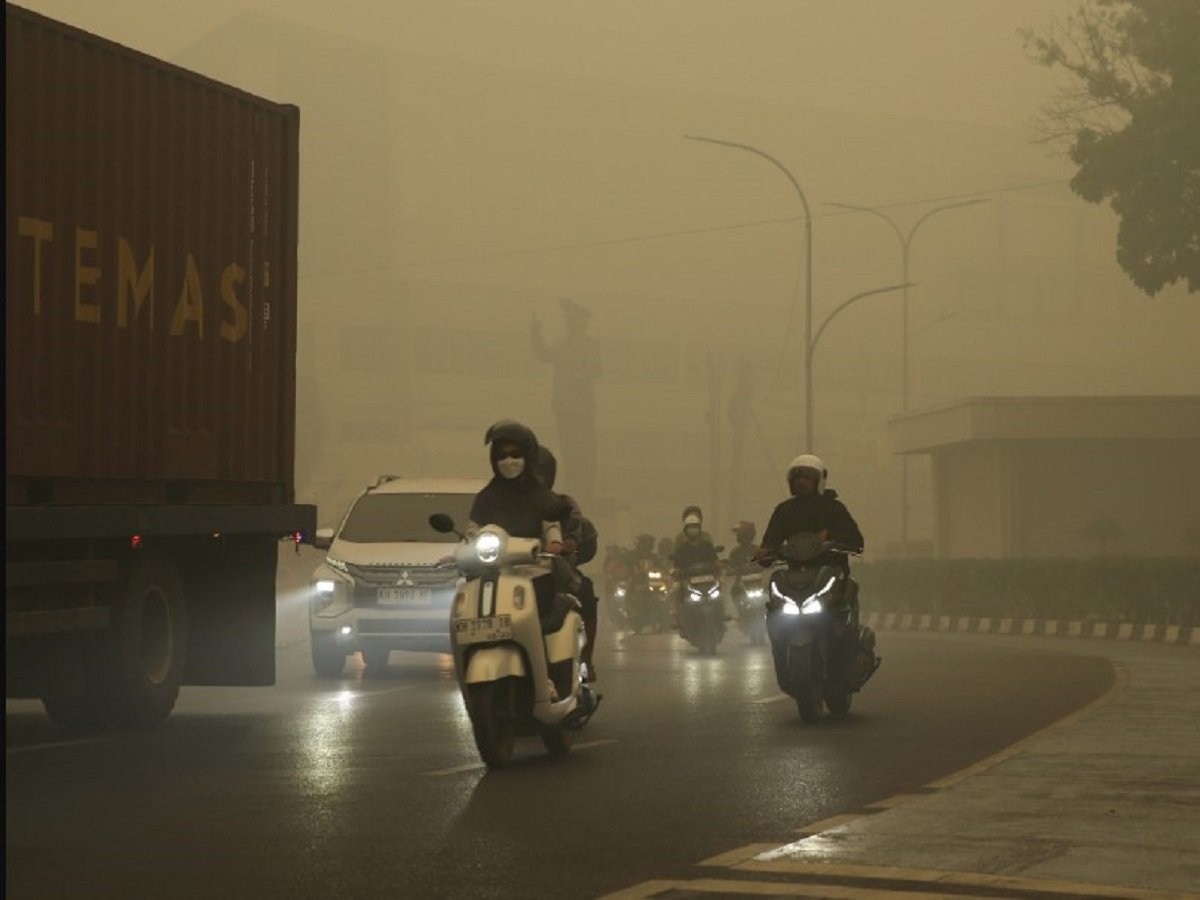
en.malanginspirasi.com – The Agency for Meteorology, Climatology, and Geophysics (BMKG) has released its latest air quality monitoring data regarding particulate matter (PM2.5) concentrations across various regions in Indonesia.
The data highlights a stark contrast in air quality nationwide, with a few areas recording alarming pollution levels while others maintain moderate or good conditions.
According to BMKG’s air quality standards, PM2.5 concentrations are categorized into five tiers: Good (0–15.5 µg/m³), Moderate (15.6–55.4 µg/m³), Unhealthy (55.5–150.4 µg/m³), Very Unhealthy (150.5–250.4 µg/m³), and Hazardous (>250.5 µg/m³).
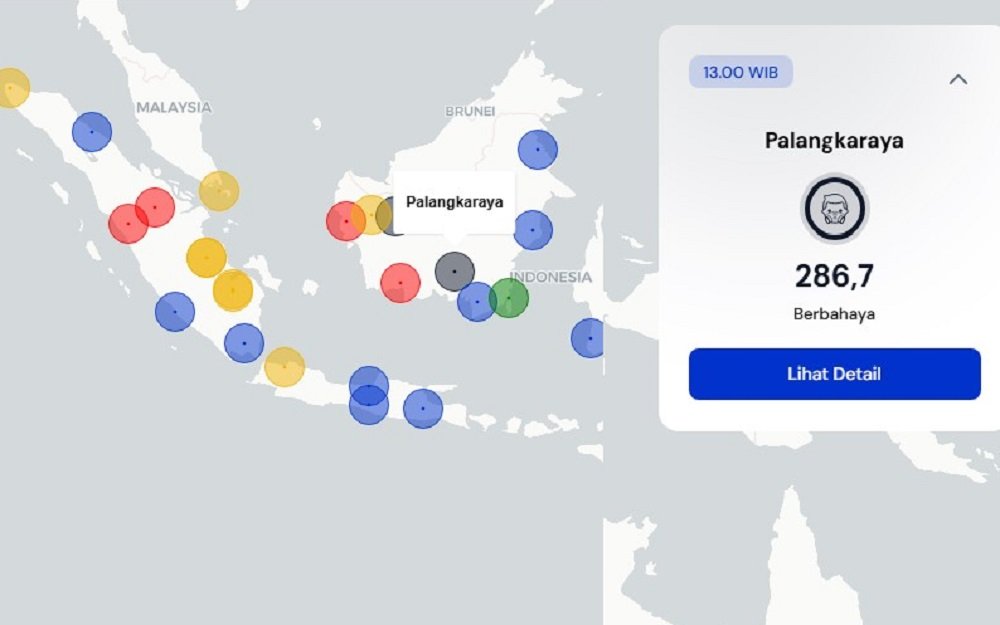
Measurements are taken using Beta Attenuation Monitoring (BAM) technology in micrograms per cubic meter (µg/m³).
High Pollution Alerts in Select Regions
In the latest observation update, Pangkalanbun recorded the highest PM2.5 concentration at 291.3 µg/m³, placing it firmly in the Hazardous category.
Meanwhile, several regions fell into the Very Unhealthy bracket, including Sintang (240.7 µg/m³), Palangkaraya (188.4 µg/m³), Musi 2 Palembang (182.3 µg/m³), Kubu Raya (175.9 µg/m³), Kototabang (172.7 µg/m³), Batam (158.7 µg/m³), Pekanbaru (158.3 µg/m³), and Talang Betutu Palembang (154.9 µg/m³).
Also Read:
Toxic Haze Plunges Palangka Raya into Eerie Twilight as Wildfires Rattle Southeast Asia
Regions experiencing Unhealthy air quality included Kota Jambi (114.9 µg/m³), Sorong (109.2 µg/m³), Mempawah (108.3 µg/m³), Muaro Jambi (106.6 µg/m³), Indrapuri (64.6 µg/m³), the capital’s Kemayoran district (60.3 µg/m³), and Samarinda (55.6 µg/m³).
On the other end of the spectrum, several areas reported Moderate air quality readings, providing relatively cleaner air for residents.
These include Bengkulu (48.6 µg/m³), Tanjung Harapan (46.5 µg/m³), Pesawaran (36.1 µg/m³), Medan (34 µg/m³), Maros (31.2 µg/m³), Semarang (29.6 µg/m³), Banjarbaru (28.8 µg/m³), Sleman (25.4 µg/m³), Kotabaru (20 µg/m³), and Malang (15.3 µg/m³).
Particulate Matter (PM2.5) consists of tiny airborne particles measuring 2.5 micrometers (µm) or smaller.
Because of their microscopic size, these particles can easily penetrate deep into the human respiratory system and bloodstream, posing significant health risks—particularly during periods of elevated concentrations.
BMKG continues to monitor air quality real-time to provide timely updates and warnings to the public across the archipelago.