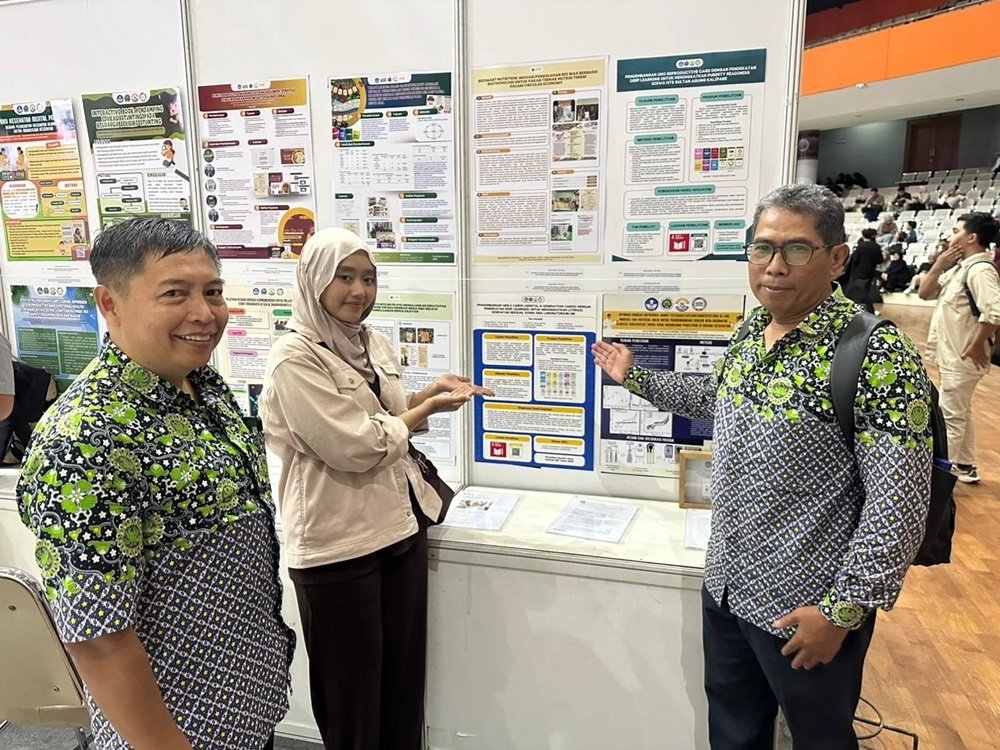
Malanginspirasi.com – Universitas Negeri Malang (UM) is holding its Research and Community Service Outcomes Exhibition.
The exhibition, under the theme “UM Berkarya, Bergerak, dan Berdampak untuk Negeri” (UM Creates, Moves, and Makes an Impact for the Nation), is taking place at Graha Cakrawala UM on Wednesday, November 19, 2025.
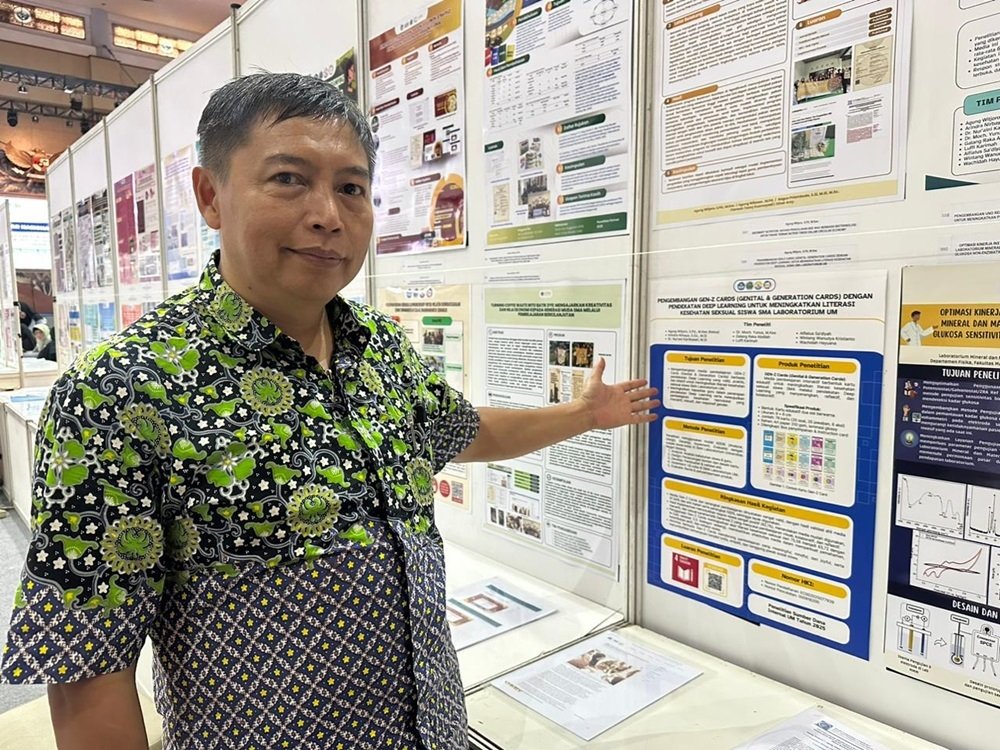
Among the many scientific innovations showcased, one standout project was the research titled “Development of Gen Z Cards (Genital & Generation Cards) Using a Deep Learning Approach to Improve Sexual Health Literacy Among Students at UM Laboratory Senior High School.”
The Innovative Gen Z Cards
The project was led by Agung Witjoro, S.Pd., M.Kes., together with a team of nine researchers.
Agung explained that the idea for Gen Z Cards emerged from a needs analysis conducted at the school. Teachers consistently reported that reproductive health topics were difficult to teach because they are often considered taboo and hard to explain verbally.
“At first, we found that reproductive material was quite challenging to deliver because it’s seen as taboo. We discussed this with homeroom teachers, biology teachers, and even the principal,” Agung said.
“Many teachers told us that reproductive health lessons were always a struggle. From those conversations, we requested permission to conduct research and began designing an innovative learning medium in the form of a card game,” he added.
UM Laboratory Senior High School was chosen as the primary testing site because it operates within the university ecosystem and has a clear need for new teaching tools, especially in biology.
Development and Methodology
The Gen Z Cards were developed using the ADDIE research and development model (Analyze, Design, Develop, Implement, and Evaluate):
- Analyze: Identifying the needs of students and teachers
- Design: Creating content and card layouts
- Develop: Producing the cards and obtaining expert validation
- Implement: Pilot testing at UM Laboratory Senior High School
- Evaluate: Revising and finalizing the product
Each card features original, student-friendly illustrations along with engaging questions about the reproductive system. The playful and interactive format makes previously sensitive topics feel approachable and comfortable to discuss.
“Through a game, students really enjoy the lesson. They become active because they have to answer the questions on the cards. They’re no longer tense—in fact, they end up learning the material more deeply,” Agung noted.
Challenges Faced
Developing the cards took approximately two months. The biggest hurdles were the time-intensive original illustrations (the team was not allowed to use images from the internet) and coordinating meetings among busy team members.
From the students’ side, however, there were virtually no obstacles. The game was so well received that the research team left five complete sets of cards with the school for continued use by teachers.
The gameplay is deliberately modeled after the popular card game UNO, which students already know well, allowing them to quickly grasp the rules and immerse themselves in learning.
“Kids are already familiar with UNO cards. We modified the concept so that reproductive health topics could be studied in a fun, in-depth, and meaningful way,” Agung concluded.