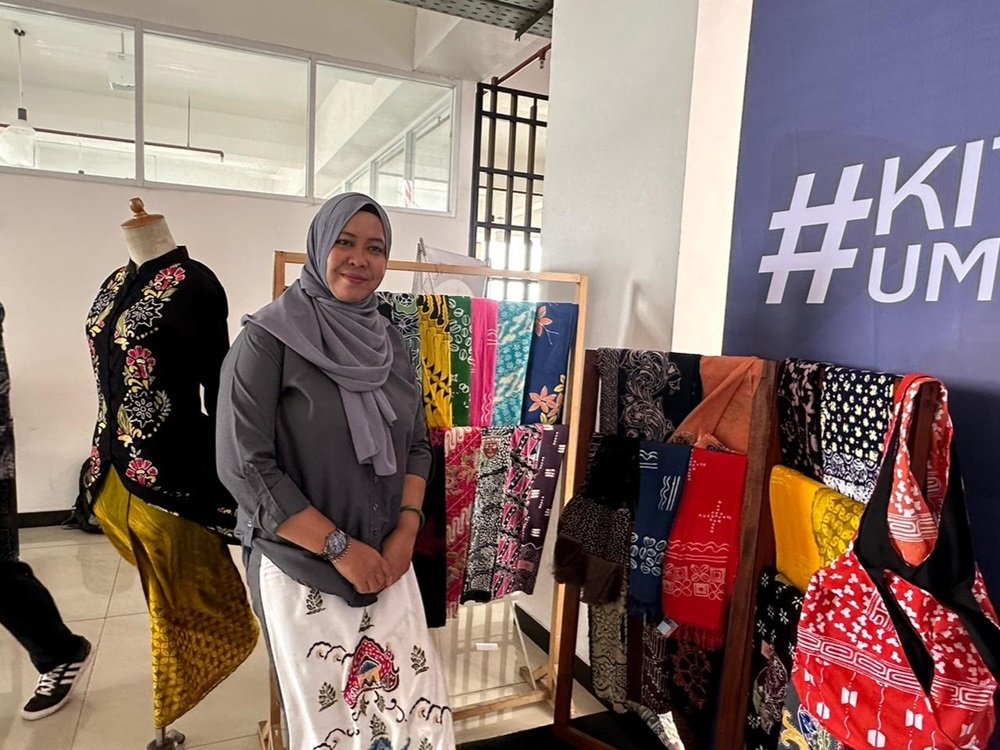
Malanginspirasi.com – Amid the vibrant atmosphere of the Indonesia Creative Cities Festival (ICCF) 2025 at Malang Creative Center (MCC), one booth captivated visitors: Batik Tulis Niati. Behind its vivid colors and distinctly Malangan motifs stood Kusniati, the artisan and business owner whose journey began with simple curiosity and blossomed into extraordinary craftsmanship.
The Birth of Batik Niati
Kusniati’s story with Batik Tulis Niati started in November 2019.
“At first, I just loved batik. I was curious—how could a single pen produce so many different colors?” she recalled.
This curiosity led her to a 10-day batik-making workshop.
By March 2020, she boldly launched her own brand. Batik Tulis Niati was officially introduced in mid-2022 and has since gained widespread recognition among Malangan batik enthusiasts.
Kusniati is not just the owner—she is the hands-on artisan. Her business operates on a custom-made model, ensuring every piece is uniquely designed and never replicated.
“I mostly do custom work, so you won’t find the same batik elsewhere. Unless it’s for uniforms, I never repeat a motif,” she explained.
One standout creation is the “Mbois Malang” batik featuring elegant Javanese script and local pride.
Philosophical Motifs Rooted in Malang Identity
Her designs often incorporate symbolic Malangan elements: masks, monuments, and lotus flowers.
“When Malangan masks were in the spotlight, I joined in preserving them through batik motifs,” she said.
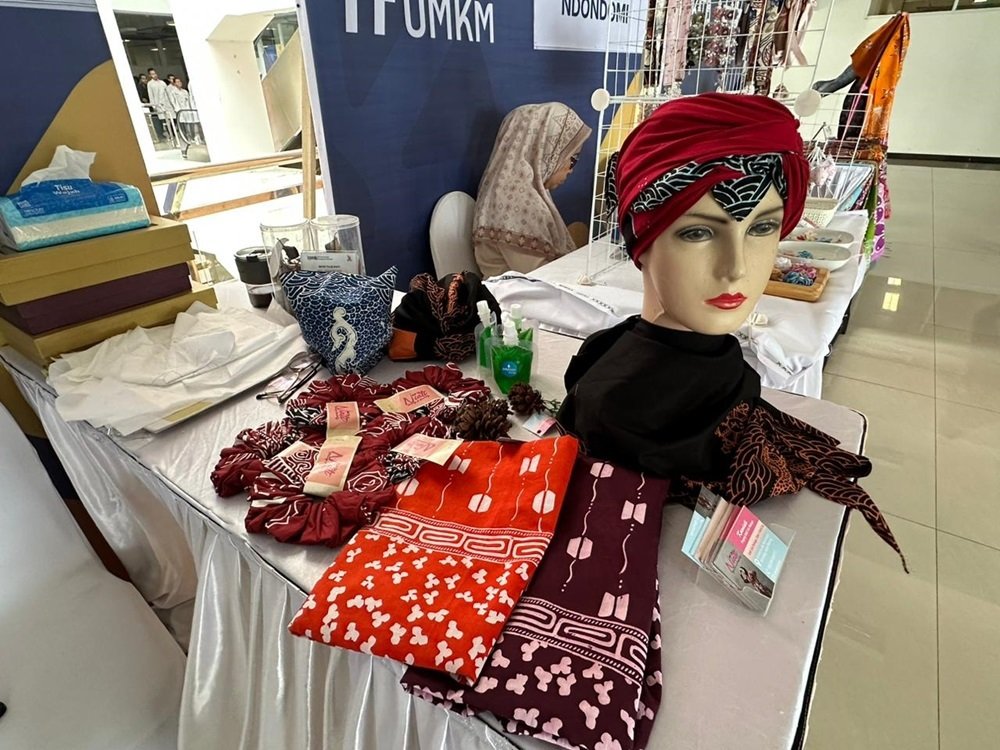
A notable example is the Panji Mask motif, which symbolically represents human character—abstract yet rich in philosophical meaning.
The process demands precision. Initial patterns are sketched on special tracing paper. For repeating motifs, a “master” template ensures consistency. The fabric then undergoes canting (wax-resist drawing) and dyeing.
Each piece’s value depends on its complexity.
“A full-motif, full-color batik can take three weeks. A standard design finishes in three days,” Kusniati shared.
The final, crucial step is fixation—locking in the dye to prevent fading.
“If the fixation is off, the color will bleed. But if done right, the batik lasts through countless washes,” she added.
For care, she advises avoiding direct sunlight, air-drying only, and washing with colorless shampoo or lerak (natural soapberry) extract.
Toward Global Recognition
Her dedication has paid off. Batik Tulis Niati now reaches international buyers from Malaysia, Brunei, and Nigeria.
“A Bruneian student once bought a piece in Malang and took it home. Nigerian customers love the bright rayon colors—they say it suits their fashion style,” she said proudly.
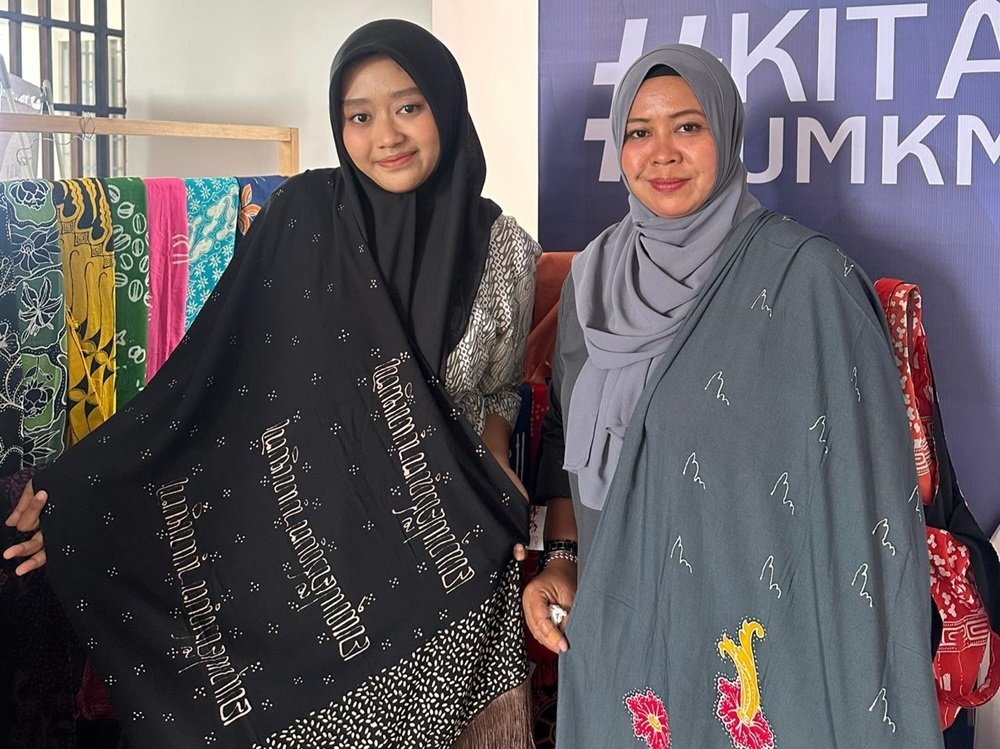
Though her business is only a few years old, Kusniati remains committed to innovation. She dreams of Batik Tulis Niati becoming a globally recognized icon of handcrafted Malangan batik.
“My hope is that more people fall in love with batik—especially hand-drawn ones. Because in every stroke, there’s a story and there’s love,” she concluded.