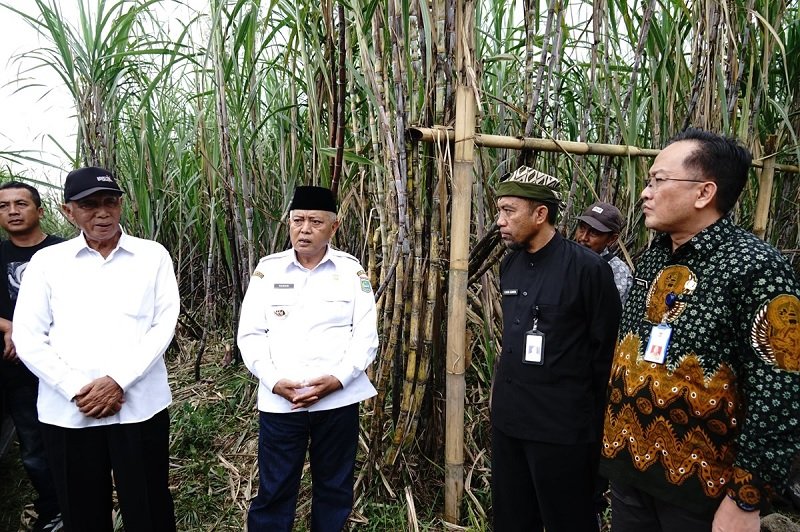
Malanginspirasi.com – In a significant step toward advancing agricultural development, Bupati (Regent) of Malang, HM Sanusi, has expressed his determination to cultivate the Cening sugarcane variety in Malang Regency (Kabupaten). This commitment was made following his visit to PT Tirta Harapan Perkebunan Bayu Kidul in Sumber Anom Village, Songgon Subdistrict, Banyuwangi Regency, on Thursday, May 8. The Cening variety, often referred to as “Si Raksasa Manis” (The Sweet Giant), has already proven its potential in Banyuwangi, despite being relatively new.
During his visit, Regent Sanusi was impressed by the plant’s stature, which reaches approximately 4 meters in height, and noted its significantly higher productivity compared to sugarcane varieties traditionally grown in Malang.
According to Bupati of Banyuwangi, Hj. Ipuk Fiestiandani, the Cening variety yields 1800 kwintal per hectare, equivalent to 180 tons per hectar, with a high brix level of 17-18 percent.

She further indicated that this variety thrives best at elevations between 550 and 750 meters above sea level and possesses strong adaptability.
Currently, the sugarcane productivity in Malang stands at only 80 tons (800 quintals) per hectare. In light of this, HM Sanusi intends to introduce and develop the Cening variety in Malang through collaboration with the Banyuwangi government.
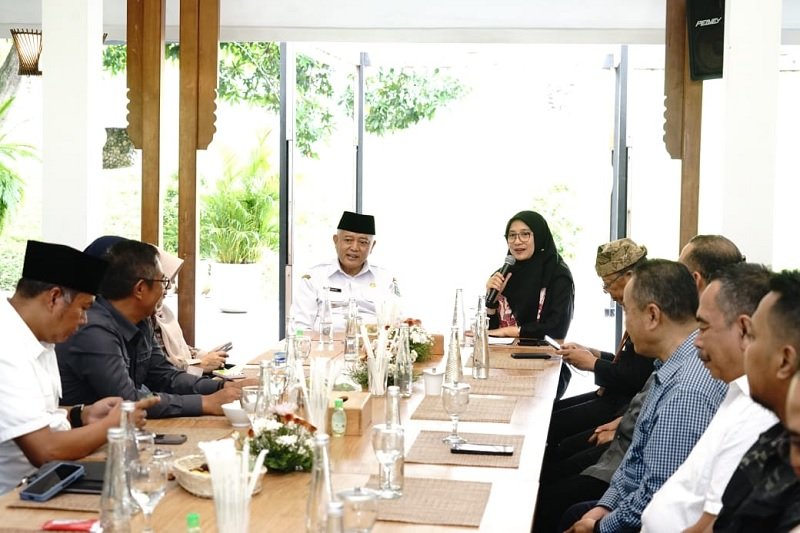
As part of this initiative, the Malang administration plans to purchase Cening seeds to cultivate on a 15-hectare plot as a demonstration site (demplot). This pilot project aims to test the viability of the variety in Malang’s climate and soil conditions.
“We will conduct trials of the Cening variety in Malang because its quality and productivity are twice as high as the BR variety we currently cultivate,” Regent Sanusi stated.
He also expressed appreciation for the full support and collaboration from Bupati Ipuk of Banyuwangi aimed at advancing the agricultural sector in Malang.
Bupati Malang’s initiative to adopt the Cening sugarcane variety reflects his commitment to modernizing agriculture and improving the livelihoods of local farmers. Through collaboration and innovation, Malang is poised to redefine its sugarcane industry, setting a precedent for other regions to follow.