en.malanginspirasi.com – The Faculty of Cultural Studies, Universitas Brawijaya (FCS UB) held the 2026 Oratory and Sabda Budaya Awards (ASB) as the culmination of its 17th Anniversary series on Tuesday (11/10/2026) at the Pandhita Majapahit Building Auditorium, UB.
Marking its 8th iteration, the Sabda Budaya Awards once again serve as a space of honor for artists, writers, cultural figures, educators, filmmakers, cultural activists, and communities who have dedicated themselves to preserving and developing culture.
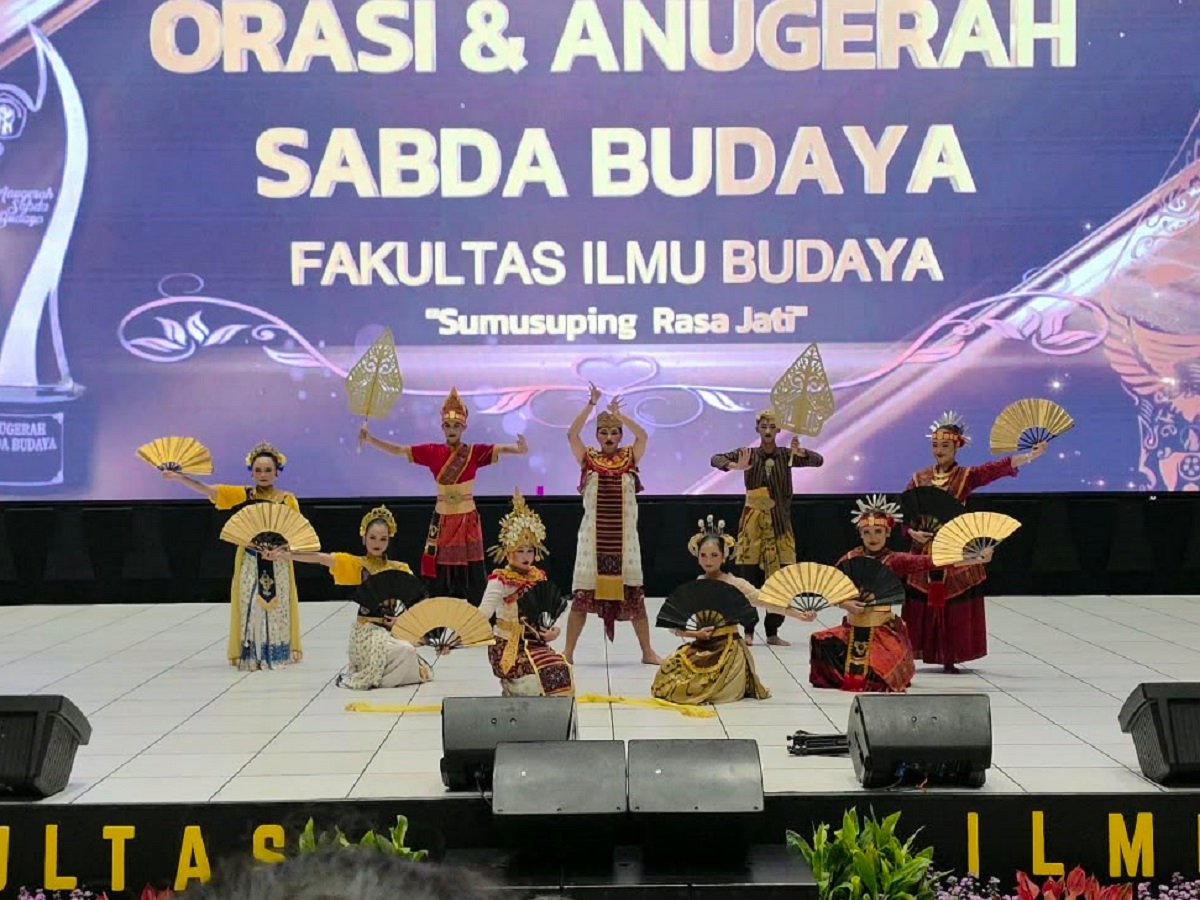
This year, the 17th anniversary series of FCS UB carries the theme “Sumusuping Rasa Jati,” an expression taken from the Serat Wedatama, Pangkur canto, by K.G.P.A.A. Mangkunegara IV.
In the opening remarks by the Dean of FCS UB, the phrase is interpreted as the “penetration or unification of true feeling” into human consciousness through contemplation, silence, and inner depth.
For FCS UB, this theme transcends a mere anniversary slogan.
It is positioned as a reflection of the faculty’s identity as it enters its 17th year—a phase deemed to represent maturity, direction, and a reaffirmed commitment to the humanities, ranging from classical to contemporary, and from the local to the global.
The Dean of FCS UB, Sahiruddin, S.S., M.A., Ph.D., explained that reaching the age of 17 serves as a momentum for the faculty to look back on its journey while deepening its core identity.
According to him, “Sumusuping Rasa Jati” can be interpreted as a process of returning to inner purity and true awareness.
Within the context of FCS UB, this spirit translates into the hope that all members of the academic community can maintain clarity of soul while spreading goodness to society.
In the Dean’s prepared remarks, the phrase is depicted as an inner experience that leads humanity to enlightenment, tranquility, and an understanding of the origins of life unburdened by worldly desires.
Sahiruddin noted that this spirit aligns with the trajectory of FCS UB as it turns 17.
“Just like a youth stepping into adulthood, FCS is increasingly finding its identity, its true feeling, and aligning itself with the direction of the Brawijayan Character,” he explained.
He expressed hope that this maturity will not stop at institutional achievements, but will be reflected in the academic community’s ability to bring benefits to the wider public.
UB Rector Prof. Widodo, S.Si., M.Si., Ph.D.Med.Sc., also employed the analogy of 17 years of age to view the development of FCS UB.
“At 17, one is already mature. We eagerly await your works,” he stated. Prof. Widodo likened the age of 17 to a phase where an individual begins to recognize many “feelings,” seek meaning, and understand their calling.
He expressed hope that FCS UB, as a faculty that speaks extensively about humans, humanity, and civilization, will become increasingly fluent in articulating this knowledge for society.
The Rector also reminded the audience that current cultural challenges unfold amidst extremely rapid technological changes.
“May the Sabda Budaya Awards consistently remind us of true feeling, ensuring we do not lose our identity amidst advanced technology, automation, digitalization, and artificial intelligence,” he hoped.
This message places the humanities not as a field opposed to technology, but as a space ensuring that technological advancement retains a humanistic orientation.
The Sabda Budaya Awards have been hosted by FCS UB since 2018 as a form of recognition for cultural contributions made by society. At ASB 2026, FCS UB presented awards across seven distinct fields.
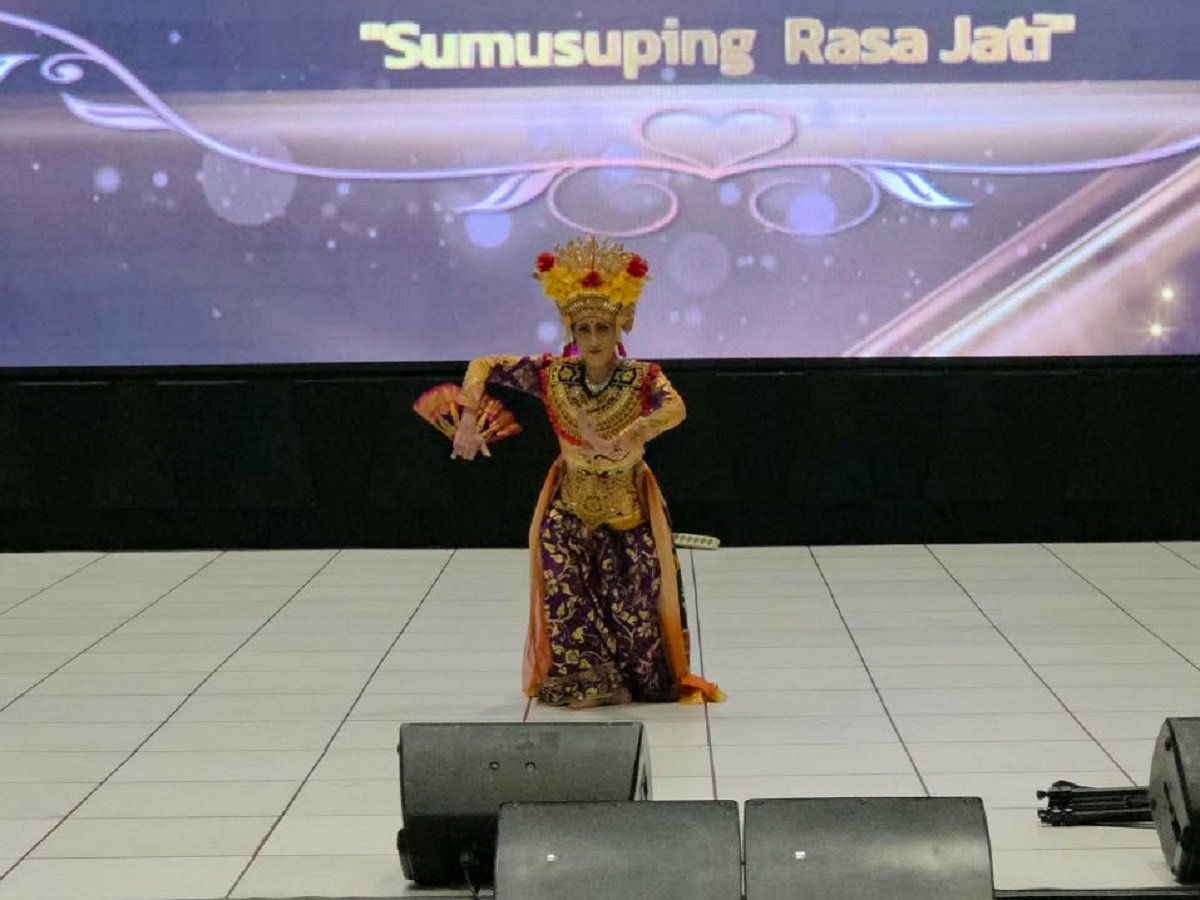
Didik Hadi Prayitno, better known as Didik Nini Thowok, received the Sabda Budaya Award in the Traditional Arts category.
Prof. Ali Saukah, M.A., Ph.D., received the award in Education, Akhmad Budi Santoso in Fine Arts, while Kampung Cempluk received the Cultural Incentive award.
In the Film category, the award was presented to director Fajar Bustomi.
The Literature category was awarded to Dr. Intan Andaru, Sp.U., M.Ked.Klin., and the Cultural Activist category was given to Endah Budi Heryani, S.S., M.M.
These seven categories demonstrate the broad scope of culture.
Culture does not merely manifest in performing arts or literary works; it also grows through education, film, fine arts, community initiatives, and the work of individuals who consistently drive culture within society.
Appreciation by Didik Nini Thowok
One of the award recipients, Didik Nini Thowok, confessed that he has never made awards a goal in his creative endeavors.
For him, the Sabda Budaya Award feels especially meaningful because it arrived while he was pursuing his artistic journey in a natural, flowing manner.
“I am not the type of person who is ambitious about receiving accolades. But when someone appreciates my work, the impression is profound,” he expressed.
Didik is widely known for his exploration of comedy dance and cross-gender performance.
He explained that this interest evolved into extensive research into cross-gender artistic practices across various regions in Indonesia and abroad. He studied these practices in Java, Bali, Sumatra, Kalimantan, Japan, India, China, and Thailand.
This journey revealed to him that cross-gender art holds a far more complex cultural context than what appears merely on the surface.
Drawing from this experience, Didik shared a specific message for the younger generation.
“If we want to learn a culture, we must not stop at the surface. We must go beyond. We must study its history, its philosophy, and dive deep into many aspects,” he advised.
Also Read:
Lecturer at FIB UB Researches Sasak Cukli Masks in Lombok to Support Cultural Heritage Preservation
According to him, culture is identity. One can recognize Bali, Java, Sumatra, or other regions through dance, cuisine, attire, and various distinctive cultural expressions.
Therefore, studying culture requires deeper engagement than simply observing its outward form.
Didik even emphasized the importance of directly experiencing the life of the community where the culture grows.
“When I study a culture, I study its food. I have to eat there, drink the local water, and experience life in that region,” he explained. Through this process, he noted that he learned about tolerance, sincerity, and the capacity to avoid rushing to judgment about things that are unfamiliar.
Didik’s extensive experience has also yielded a simple guiding principle for learning: approach with humility.
He likened a learner to someone who must bring an “empty glass.”
If an individual approaches with the presumption of already knowing everything, new knowledge struggles to enter.
Conversely, openness leaves space to embrace other experiences. For Didik, learning dance is ultimately not just about movement. “Learning to dance is not just about dancing, but about all of life,” he asserted.
This value resonates strongly with the theme “Sumusuping Rasa Jati.” Cultural depth cannot be achieved through intellectual knowledge alone; it requires experience, sincerity, appreciation, and the willingness to understand others.
The recipient of the Sabda Budaya Award in Film, Fajar Bustomi, viewed the recognition as a sign to continue building ties with UB.
According to the director of the films Dilan and Buya Hamka, the award instead generates the energy to open up new possibilities for collaboration.
“What I must remember is that I was given an award by UB. That is a sign that I must return to UB to create works together again,” he stated.
As a director, Fajar sees film as possessing the power to speak about history, culture, humanity, and the various values living within society.
He believes that film can breathe life back into the ideas and lives of predecessors, record past cultures, and reintroduce historical figures and stories to the current generation.
This power becomes increasingly relevant because today’s generation is closely connected to audiovisual media.
According to Fajar, the viewing experience centers attention on visuals and sound. In the era of smartphones, TikTok, YouTube, and various digital platforms, society has also grown increasingly accustomed to receiving information through moving images and audio.
“We must utilize this film culture as best as possible to visualize good ideas and concepts worth sharing with many people,” he said. With current technology and distribution access, he believes that the younger generation has an even greater opportunity to bring Indonesian works to the global stage.
The Oratory and Sabda Budaya Awards served as the culmination of a lengthy series of events celebrating the 17th anniversary of FCS UB. Previously, the faculty organized various activities, including the ICON LATERALS and ICOLLEC international conferences, the BIG East Java Vocational High School (SMK) Cup, the Batik Experience, the Batik Festival and the Roblox game “Chain of Batik,” Eurasia Courses, the DIPA MediaArt Festival, the Gata Script Exhibition, Bioskop Pojok, Book Reviews, the FCS Job Fair, and Monologue Markets.
This diverse lineup showcased the multifaceted identity of FCS UB, encompassing academic conferences, arts, technology, education, digital culture, literacy, film, the professional world, and performance.
All of these converged upon the Sabda Budaya Awards as a reflection that creative works and knowledge only hold true meaning when they deliver a positive impact on humanity and society.
In its 17th year, FCS UB embraces “Sumusuping Rasa Jati” as an invitation to return to the core: safeguarding humanity, culture, and clarity of feeling amidst a rapidly changing world.
Because as technology grows more sophisticated and global boundaries open up, humans still require something that machines can never replace—the capacity to feel, understand, appreciate, and pass kindness on to one another.