en.malanginspirasi.com – Faculty of Cultural Studies, Universitas Brawijaya (FIB UB), through its Dosen Berkarya (Dokar) Program, is conducting research on Sasak Cukli Masks in Labuapi District, West Lombok Regency, West Nusa Tenggara.
Led by A. Syarifuddin Rohman, M.Pd., a lecturer in the Fine Arts Study Program, the research team focuses on the form, colors, ornamental motifs, and symbolic meaning embedded in these traditional masks.
Running from June 15 to October 31, 2026, the ongoing study centers on Labuapi, an artisan hub that continues to preserve traditional Cukli mask-making.
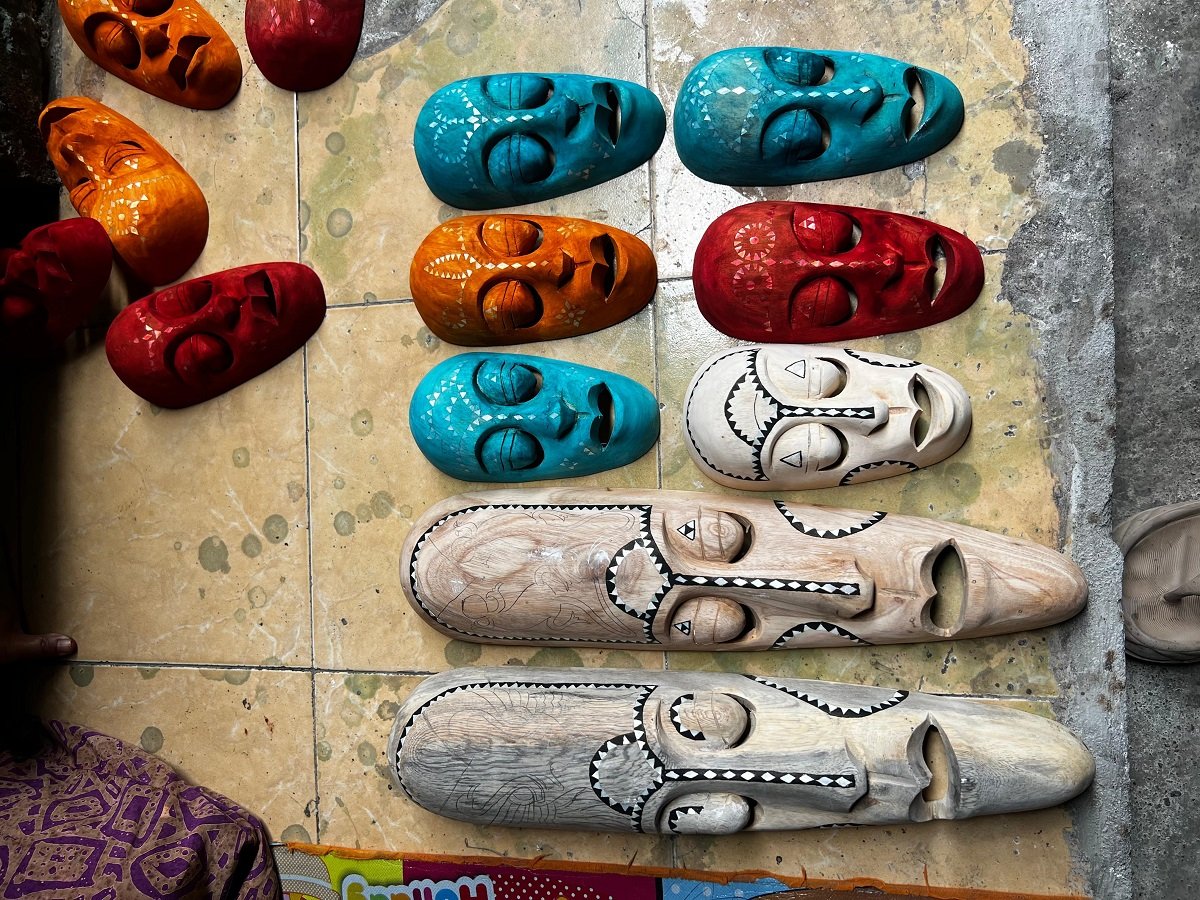
The masks caught the research team’s attention due to their distinctive shapes, vibrant colors, and rich ornamentation steeped in Sasak philosophy and local wisdom.
However, the craft faces an uncertain future as the number of active artisans steadily declines.
This vulnerability prompted the team to look beyond mere visual observation.
Researchers are actively documenting the knowledge behind each form and motif, ensuring Cukli masks are recognized not just as decorative crafts, but as vital expressions of Sasak cultural identity.
The study examines the formal elements, motif patterns, and symbolic meanings of the masks, analyzing their connection to local knowledge, values, and community identity.
This approach is essential, as traditional craftsmanship often conceals deeper meaning beneath its physical form—where color choices, ornamental composition, and techniques reflect how the community understands its environment and heritage.
By systematically documenting these elements, the project aims to establish an academic record and educational resource for future generations.
Sustaining the Craft and Supporting Artisans
The survival of Cukli masks depends heavily on the artisans themselves. Zakky, a local craftsman in Labuapi, emphasized the need for broader support to keep the tradition alive.
“We need stronger support from the local community, academics, and government agencies to help keep this traditional art form alive, just like during its golden era in the 90s,” Zakky said.
Also Read:
FIB UB Expands Global Reach, Five Japanese Companies Recruit Students for Internships
His perspective underscores that cultural preservation cannot fall solely on the shoulders of artisans. As generational turnover slows, the continuity of traditional techniques, materials, motifs, and philosophy faces severe disruption.
Academic intervention plays a crucial role in bridging this gap by documenting traditional knowledge, building information repositories, and raising public awareness.
The project is in collaboration with the West Lombok Regency Cultural Office, building on an established institutional partnership between UB and the West Nusa Tenggara Provincial Government.
This cooperation ensures academic research remains aligned with community needs and local cultural preservation.
Preserving Context Beyond Aesthetics
A primary objective of the study is to shift how Cukli masks are perceived—moving beyond their aesthetic and commercial value to recognize them as vessels of cultural knowledge.
The FIB UB study frames these physical and symbolic attributes as part of an integrated Sasak knowledge system, serving as an educational resource for students, researchers, and the public.
This approach is particularly urgent amid shifting cultural consumption patterns, where traditional items risk losing their context when sold strictly as decorative items stripped of their origin stories, artisan heritage, and embedded values.
Syarifuddin expressed hope that the research will deepen appreciation for local heritage.
“Our main goal is simple yet fundamental: for Cukli masks to remain recognized, understood, and passed down to future generations. This work becomes even more critical as the number of practicing artisans shrinks,” Syarifuddin explained.
Without documentation and generational succession, communities risk losing not only the physical art form, but also the tacit skills, narratives, and symbolic knowledge passed down through generations.
Behind the vivid colors and intricate Cukli patterns lies generations of Sasak cultural heritage.
Preserving the masks means safeguarding the living link between the artwork, the artisans, the community, and their shared identity.
Through this project, FIB UB aims to ensure this knowledge endures well beyond the present generation.