en.malanginspirasi.com – The Indonesian government, through the Ministry of Communication and Digital Affairs (Kemkomdigi) has completed a six-month evaluation of digital platforms regarding child safety measures, revealing notable compliance steps alongside growing challenges brought by artificial intelligence (AI).
During the six-month assessment, major technology companies submitted progress updates on user safety.
TikTok reported that the number of disabled accounts belonging to users under 16 years old rose from four million in its initial report to approximately nine million.
Meta disclosed that it blocked around 85,000 under-16 accounts on Instagram and 99,000 on Facebook, while transitioning roughly 22.5 million child accounts to its Teen Account setting.
Despite these measures, Minister of Communication and Digital Affairs Meutya Hafid emphasized that account deactivations alone do not guarantee full online safety.
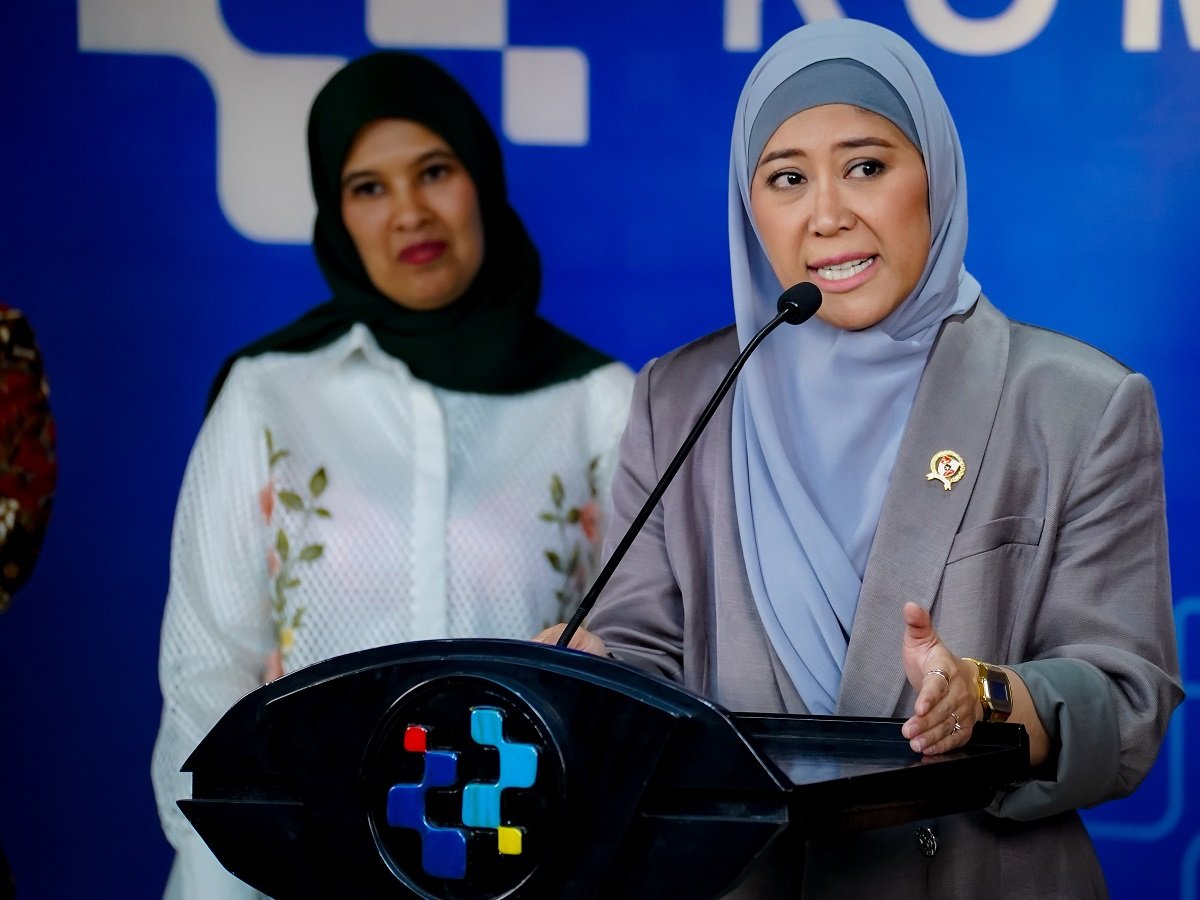
“This six-month journey shows progress, but we still have a lot of work to do. Technology continues to evolve, including AI. Child protection must also continue to evolve with these developments,” Hafid said in a press conference at the ministry’s office in Central Jakarta on Wednesday (7/10/2026).
Hafid clarified that government evaluation criteria extend beyond raw numbers to focus on functional design and risk management.
“What we look at is not just how many accounts are disabled. What’s more important is whether the platform has become safer for children. Therefore, we also look at changes in features, service design, and how the platform mitigates risks for its users,” Meutya emphasized.
The government continues to categorize Instagram and Facebook as high-risk platforms, citing the need for stronger protections across seven core risk areas: contact, content, addiction, security, consumer risks, physical and physiological impact, and mental health.
The ministry, alongside an expert panel, is defining detailed metrics for these categories to guide platform compliance.
Meanwhile, the government is still awaiting Meta’s formal report on account deactivations and mitigation measures for child users on its Threads platform.
Also Read:
Kemkomdigi Verifies 14 Apple Services Ensuring Safer Digital Space for Children
Beyond technical controls, the ministry highlighted parental literacy as an indispensable factor in safeguarding children online.
“Platforms can provide parental control features, but if parents are unaware of these features or don’t understand how to use them, protection will not be optimal. Therefore, education is also an important obligation,” explained Meutya.
As Government Regulation Number 17 of 2025 on Electronic Systems Governance for Child Protection (PP TUNAS) sets the domestic legal framework, emerging AI technology has introduced borderless digital risks. To address these threats, Indonesia joined the Global Coalition for Children’s Rights and Protection in the Age of AI, which launched its 2026–2027 roadmap targeting safety-by-design standards, AI literacy, and deepfake prevention.
“Why is there a global coalition of countries to regulate child protection in the era of artificial intelligence? Because no single country can do it alone,” Meutya said.
With approximately 70 million Indonesian children growing up in an AI-integrated landscape, the government advocates for international AI frameworks that prioritize child safety and mental health alongside technological development.
“The world is developing new rules for AI. Indonesia wants to ensure that children’s interests are not left behind in this process. Technology must evolve, but child safety must also evolve with it,” said Meutya.
Moving forward, the ministry plans to gauge policy impact through public surveys, strengthen coordination with regional governments, and maintain active dialogue with digital platforms, child safety experts, and medical professionals.
“The government can create regulations and platforms can develop features, but child protection requires the involvement of all parties. The government, platforms, parents, schools, communities, and children themselves must be part of this protection ecosystem,” he stressed.