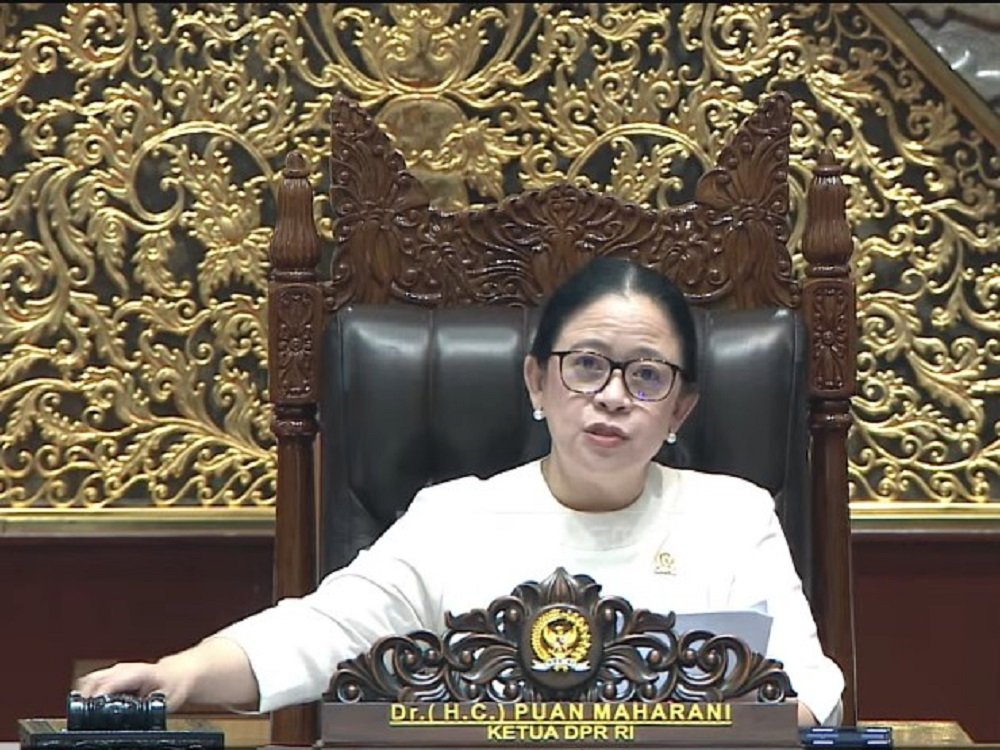
en.malangispirasi.com – Indonesia’s House of Representatives (DPR RI) officially passed the Asset Forfeiture Bill related to Corruption and Other Criminal Offenses into law during the 13th Plenary Session of the Second Sitting Period for the 2026–2027 Legislative Year on Thursday (Nov. 19, 2026).
The enactment followed unanimous approval from all parliamentary factions and lawmakers during the second-level deliberations, after reaching a first-level consensus at Commission III the previous day.
Representing the government, Minister of Administrative and Bureaucratic Reform (MenPAN RB) Rini Widyantini delivered the President’s final statement endorsing the bill’s passage into law.
Chairman of DPR Commission III, Habiburrahman, noted that the law marks a major milestone 18 years after it was first proposed, following intensive deliberations in Commission III since August 2025.
Also Read:
He emphasized that the asset forfeiture framework shifts the legal paradigm beyond merely imprisoning offenders toward recovering state losses and compensating victims.
“With this law, we regulate that public losses can be promptly returned to the public through court rulings.”
In addition to corruption, the law covers asset forfeiture for narcotics and psychotropic offenses, terrorism financing, smuggling of weapons, ammunition, and hazardous materials, human trafficking, as well as fraud or embezzlement involving information technology or causing widespread economic harm, such as fraudulent investment schemes.
The legislation accommodates both conviction-based forfeiture and non-conviction-based forfeiture mechanisms for specific circumstances, including cases where suspects have fled, died, or suffered permanent illness.
Management and Oversight Mechanisms
During a press briefing after the plenary session, Habiburrahman addressed why provisions on illicit enrichment were excluded from the law.
He cited comparative legal practices in several countries and explained that the legislation serves as procedural law rather than substantive criminal law containing sentencing norms.
Institutionally, the law separates asset management from law enforcement agencies to prevent conflicts of interest and arbitrary confiscation targets.
It also establishes an independent oversight body to guard against abuse of power, including potential extortion or the targeting of political opponents.
House Speaker Puan Maharani stated that completing the bill ahead of its Dec. 15 target was not a rushed process, but rather the result of extensive public engagement, including 87 public hearings and consultations across 15 provinces and 46 electoral districts.