EN.malanginspirasi.com – As the holy month of Ramadan 1447 H begins, most of regional governments across Indonesia have implemented strict policies prohibiting independent “sweeping” or raids on food stalls that remain open during daylight hours. These measures aim to preserve interfaith harmony, prevent social conflicts, and protect the economic rights of business owners, all while respecting the fasting traditions observed by the majority Muslim population.
The practice of sweeping food stalls during Ramadan is not a new phenomenon in Indonesia. Historically, such actions have been carried out by community organizations (ormas) or local groups under the pretext of upholding the sanctity of the fasting month. These actions often involving the confiscation of food or forced closures of stalls deemed disruptive to Muslims engaged in worship.
In recent years, especially post-reformasi era, this practice has faced increasing criticism for violating principles of religious tolerance embedded in Pancasila. Past incidents of sweeping have occasionally escalated into social tensions. Particularly in areas with significant non-Muslim populations where food stalls serve as vital livelihoods for minority communities.
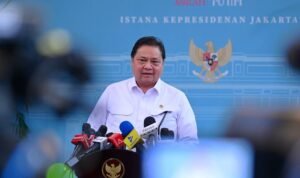
In 2026, anti-sweeping policies have been reinforced by both central and local governments. The Ministry of Religious Affairs, through Deputy Minister Muhammad Syafi’i, has explicitly urged against sweeping, reasoning that many fellow citizens do not fast—such as non-Muslims, the ill, travelers, or menstruating women—and they deserve access to food.
“There should be no sweeping at all. That’s our way of showing respect,” Syafi’i stated after the isbat session determining the start of Ramadan in Central Jakarta on February 17, 2026.
This aligns with Law No. 16 of 2017 on Community Organizations, which prohibits such groups from usurping law enforcement roles, as well as Article 28E of the 1945 Constitution guaranteeing religious freedom.
Policies at the Regional Level
In DKI Jakarta, Governor Pramono Anung has been at the forefront with a sweeping ban announced in mid-February 2026. Pramono emphasized that the provincial government does not permit any ormas or third parties to raid eateries operating during Ramadan.
“As governor, I am responsible for this and I will not allow any sweeping,” he asserted in a statement on February 14, 2026.
Chico Hakim, the Governor’s Special Staff for Public Communications, added that an official policy letter was coordinated for issuance before Ramadan, with enforcement delegated to authorities like the Public Order Agency (Satpol PP) and the National Police, not ormas.
The policy not only bans sweeping but also regulates stall operations. They may open during the day provided they install curtains or covers to avoid overt displays that might disturb fasters, with a priority on take-away services.
This mirrors rules in other regions, such as West Java or Central Java, where district/city governments often issue similar circulars to honor fasting without mandating total closures.
In Aceh, which applies Islamic Sharia, regulations are stricter, requiring daytime closures for general stalls. But sweeping by ormas is rare due to enforcement by the Wilayatul Hisbah (Sharia police).
Meanwhile in Bali or Papua, with non-Muslim majorities, sweeping is virtually nonexistent.
Support from Religious Leaders
The anti-sweeping policies have received strong backing from religious institutions. The Indonesian Ulema Council (MUI), via Vice Chairman Anwar Abbas, stated that sweeping is unnecessary as the government has already promoted mutual respect.
“The government is responsible for socializing and educating the public on respecting differences in religion and belief,” Abbas said on February 17, 2026.
The Central Board of Nahdlatul Ulama (PBNU) concurs, stressing that Ramadan should be a time of mercy, not coercion.
From an Islamic viewpoint, sweeping may contradict principles of tasamuh (tolerance) and rahmatan lil alamin (mercy for all creation). Yet, a minority of conservative groups still view it as amar ma’ruf nahi mungkar (enjoining good and forbidding wrong). Though, this stance is less dominant in 2026.
Controversies and Implications
Despite broad support, the policy is not without controversy. Critics from traditional ormas argue that the ban could dilute the spirit of upholding fasting norms. Especially in Muslim-majority areas where open stalls are seen as provocative.
Conversely, small business owners welcome it, as sweeping often causes economic harm—such as confiscating goods that are ironically used for breaking fast by the raiders.
Social implications are largely positive: fostering tolerance, reducing conflict potential, and enhancing Indonesia’s image as a diverse nation. Economically, options like take-away services help SMEs survive, amid rising food inflation ahead of Eid.
Overall, the 2026 policies reflect Indonesia’s evolution toward a more inclusive society, where fasting is celebrated peacefully without infringing on others’ rights.
Authorities are expected to monitor implementation closely to prevent violations, while encouraging public contributions to maintaining harmony.