en.malanginspirasi.com – International media and regional environmental monitors are turning their full attention to Southeast Asia as intense land and forest fires across Indonesia continue to send thick plumes of toxic haze drifting into neighboring nations.
Driven by a prolonged dry spell, agricultural burning in Sumatra and Kalimantan has escalated into a regional pollution emergency, forcing school closures in southern Malaysia and driving air quality indices into unhealthy ranges across Singapore.
The environmental fallout reached a critical point in Malaysia, where emergency protocols under the National Haze Action Plan were triggered in Johor state.
Bloomberg and CNA reported that educational authorities ordered the immediate closure of all schools, kindergartens, and childcare facilities across the Batu Pahat district after the Air Pollutant Index breached the 200 threshold, reaching a hazardous 203.
Nearby areas including Segamat, Pasir Gudang, Tangkak, and Kluang have also experienced severe atmospheric degradation, prompting officials to transition hundreds of institutions to home-based learning while warning residents to avoid outdoor exposure.
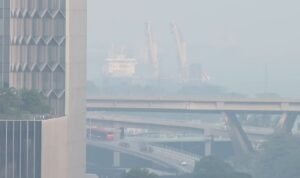
In neighboring Singapore, the National Environment Agency reported a widespread decline in air quality as all five regions of the island nation drifted into the unhealthy band.
The situation marked a sharp turn when the one-hour fine particulate matter metric in western Singapore climbed to 152, entering the high threshold for the first time in the current haze season.
Also Read:
Severe Thick Haze of Kalimantan Fires Force Evacuations and School Closures Across Indonesia
Simultaneously, 24-hour Pollutant Standards Index figures spiked to 135 in the west, 132 in central areas, 128 in the east, and 110 in the south, with northern districts also surpassing the 100 mark.
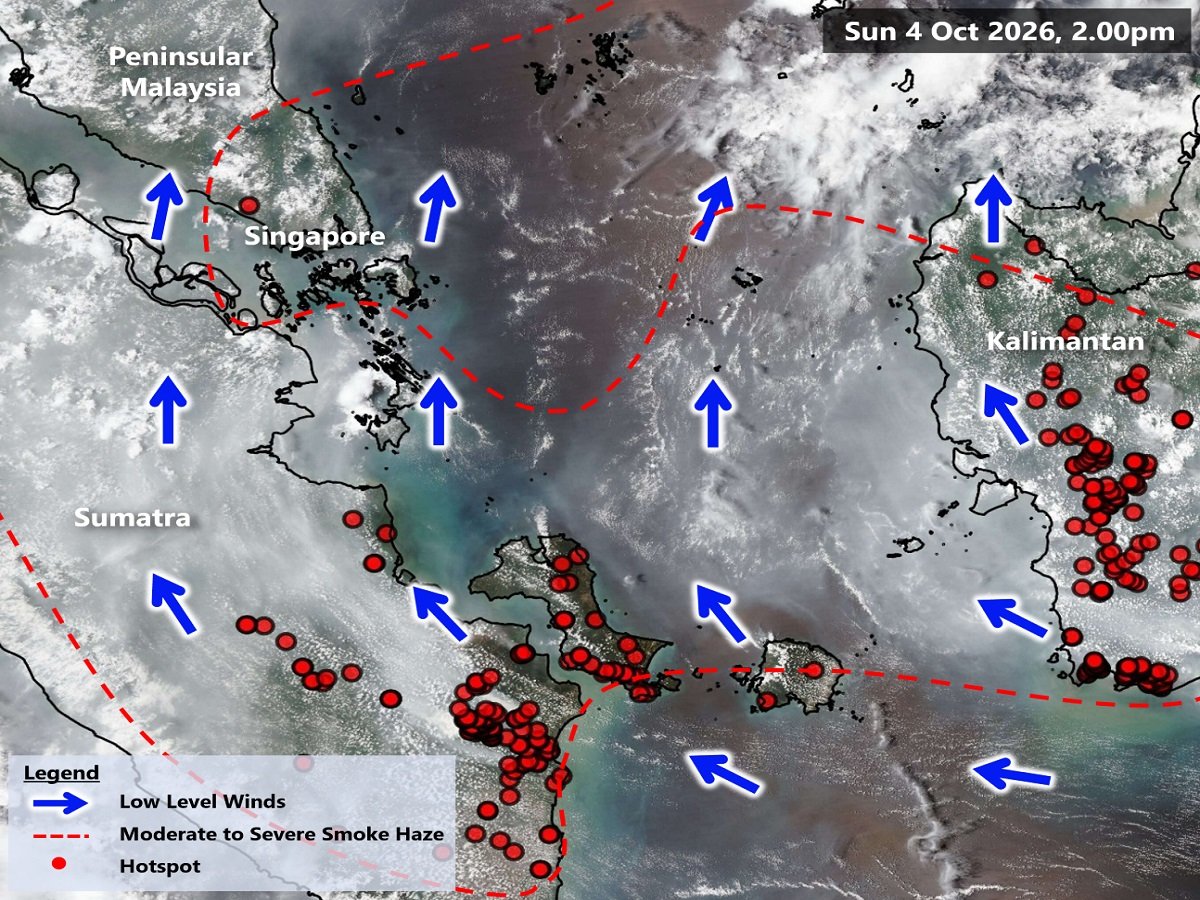
Monitoring by environmental agencies confirms that fire clusters across southern Sumatra and Kalimantan remain the main driver of the cross-border smog, supported by isolated burn sites in Java and Sulawesi.
“Moderate to dense smoke plumes were observed in parts of Kalimantan and Sumatra, with moderate smoke haze also observed over parts of Peninsular Malaysia and Singapore,” said NEA.
While northern ASEAN territories have so far escaped the worst of the pollution due to favorable atmospheric patterns, official tracking highlights a stark contrast across the continent.
“Significant haze was not observed in northern ASEAN, and the region’s hotspot count remained low,” it added.
The recurring transboundary crisis continues to draw heavy international focus, highlighting the structural challenges surrounding land-clearing practices and peatland management in Indonesia during severe weather cycles.
With regional forecasts predicting continued dry conditions and persistent winds across southern ASEAN, health authorities across Singapore and Malaysia remain on elevated alert.
“For northern ASEAN, isolated hotspots and localised smoke plumes could occasionally emerge in areas facing relatively drier conditions,” it added.
Public health directives in both affected countries advise vulnerable demographics, including the elderly, young children, pregnant women, and individuals with underlying respiratory or cardiovascular conditions, to abstain from all strenuous outdoor activities until air quality metrics return to safe baseline levels.