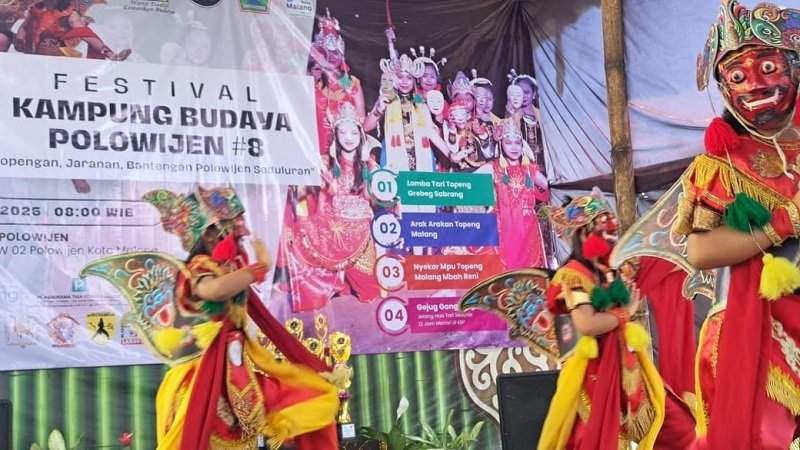
Malanginspirasi.com – In anticipation of World Dance Day on April 29th, Kampung Budaya Polowijen (KBP), a cultural village in Kota Malang, Indonesia, hosted its annual Festival of Masks, Jaranan (horse dance), and Bantengan (bull dance) on Saturday, April 26, 2025. Carrying the tagline “Sewindu Nyabrang KBP,” which translates to “Eight Years Crossing” for the cultural village, the festival served as a vibrant tribute to the artistic heritage of the region.
Isa Wahyudi, affectionately known as Ki Demang and the originator of KBP, emphasized the significance of World Dance Day as a unifying force for the diverse performance arts of Polowijen.
He highlighted Polowijen’s historical importance as a center for art and culture, particularly as the epicenter of Malang mask art.
“We collaborate, each of these art actors needs to be appreciated and elaborated on one stage, and Gejug Gongseng is the answer,” Ki Demang stated, referring to a collaborative performance style integral to the festival.
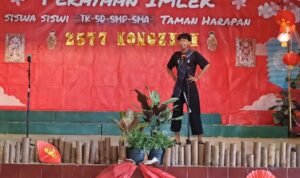
The eighth iteration of the Kampung Budaya Polowijen Festival centered around the Malang Mask Dance Competition, “Topeng Grebeg Sabrang,” which saw participation from 100 children divided into three age categories.
The competition served not only as a platform for showcasing young talent but also as a reunion for various studios actively involved in preserving mask traditions.
Participants hailed from villages like Kedungmonggo, Lowokpermanu, and Sengreng, representing the diverse geographical spread of mask-making expertise.
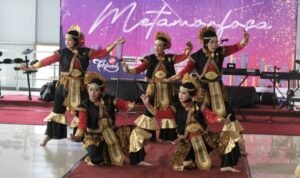
In addition to the competition, Gejug Gongseng #2 was held to commemorate World Dance Day with the theme “Topengan Jaranan Bantengan Polowijen Seduluran”, which translates to “Masks, Horse Dance, and Bull Dance of Polowijen in Brotherhood,” underscored the spirit of collaboration and unity.

The performance featured traditional dances such as jaranan tik, jaranan dor, and bantengan, as well as a rare display of pencak dor, a traditional martial art that is nearly extinct.
Kiky Tutik Sundari, the head of Srikandi PP, an organization dedicated to women’s empowerment, lauded the young generation’s dedication to preserving Malang’s unique art forms.
She advocated for greater government support, including providing adequate facilities, costumes, and performance opportunities, and integrating cultural activities into the students’ academic achievements.
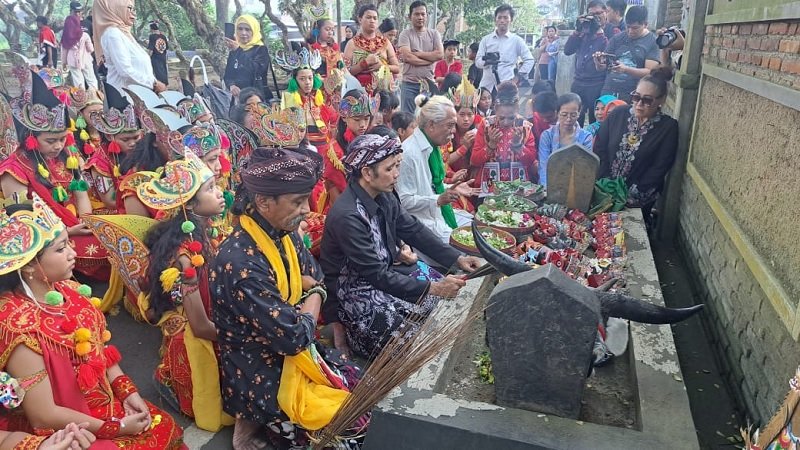
A unique and poignant element of the festival was the procession of Malang Masks to the tomb of Mbah Tjondro Suwono (Mbah Reni), a revered master of Malang mask making. This procession, involving all participants of the dance competition and performers of Gejug Gongseng, served as a tribute to the lineage of artistic expertise and a reminder of the importance of honoring tradition.
The Polowijen Festival of Masks, Jaranan, and Bantengan served as a compelling demonstration of the enduring power of traditional arts to connect communities, celebrate heritage, and inspire future generations. It was a fitting tribute to World Dance Day and a testament to the vibrant cultural landscape of Malang.