en.malanginspirasi.com – The Indonesian Ministry of Health (Kemenkes) is strengthening the readibility of healthcare facilities throughout Indonesia to address the threat of emerging infectious diseases, including Hantavirus.
The Director of Clinical Services at the Kemenkes, Obrin Parulian, stated that emerging infectious diseases remain a serious challenge for the national and global health systems.
He stated that Indonesia must increase its vigilance, even though the risk of Hantavirus spreading globally is considered low.
“Cases of emerging infectious diseases remain a very serious challenge for our health system, including at the global level,” Obrin said in a webinar on emerging infectious disease updates at the Sulianti Saroso Infectious Diseases Hospital in Jakarta as mentioned from the press release of Info Publik.
The case, he continued, on the cruise ship MV Hondius was known to be caused by the Hantavirus type HPS (Hantavirus Pulmonary Syndrome).
Based on the WHO 2026 risk assessment, the potential for global spread of the virus is low.
Also Read:
Read on How The Lecturer of UB Medical Faculty Emphasized The Awareness of Nipah Virus Threat
But in the case of MV Hondius, the risk level is categorized as moderate.
Obrin explained that in Indonesia, 23 confirmed cases of HFRS (Hemorrhagic Fever with Renal Syndrome) have been identified.
This finding demonstrates the national surveillance system’s ability to detect the disease.
“This demonstrates that, from a surveillance perspective, we should be proud of our ability to detect these cases, considering that there is no specific treatment or vaccine for Hantavirus,” he said.
He added that the case fatality rate for Hantavirus can reach 50 percent, depending on the type of virus causing the infection.
“Therefore, this remains a concern, and vigilance must be maintained, especially considering that Indonesia has many international entry points that pose a risk of becoming importation routes for cases,” he said.
Proper Service Standards and Respond from Health Care Facilities
Obrin stated that the COVID-19 pandemic has provided a significant lesson regarding the importance of health system preparedness.
He stated that health care facilities must maintain service standards and respond quickly to the threat of emerging infectious diseases, which is an essential need.
“We must truly implement our health system preparedness. Within the national health security system, there are four important operational stages that must be strengthened: prevention, detection, response, and recovery,” he explained.
The prevention phase is carried out through strengthening integrated surveillance and clinical research to improve prevention, diagnosis, and case management capabilities. The detection phase includes the ability to find cases based on syndromes and laboratory tests.
Meanwhile, the response phase is carried out through appropriate case management, including patient referrals and laboratory specimens when necessary.
The recovery phase includes restoring the function of health services impacted by the outbreak or pandemic. “These four stages are crucial and require the support of multi-sectoral collaboration, including the health sector, academia, local governments, and the community,” he said.
As a form of vigilance, the Ministry of Health, through the Directorate General of Disease Control, has issued a Hantavirus disease alert letter to all health facilities in Indonesia.
In his directives to health facilities, Obrin emphasized the importance of properly implementing Infection Prevention and Control (IPC), especially after contact with suspected Hantavirus patients.
He also requested that health facilities strengthen their detection and response capacity in accordance with applicable guidelines, including preparing standard operating procedures for managing patients with emerging infectious diseases.
Immediate Report to Activate Alert System
Furthermore, healthcare facilities are asked to immediately report any suspected cases to the local health office and the Directorate General of Disease Control (Direktorat Jenderal Penanggulangan Penyakit ) so that the alert system can be activated immediately.
Specifically for hospitals, the Ministry of Health has requested regular updates of data on the availability of medical facilities and equipment through the online hospital system.
Obrin also emphasized the importance of providing proper public education to prevent panic caused by inaccurate information regarding Hantavirus.
“Last night, I was still cross-checking with colleagues at RSPI (Infectious Diseases Hospital) that the person isolated there tested negative for Hantavirus. So, they are negative, but they are only being monitored due to close contact with cases from the MV Hondius,” he said.
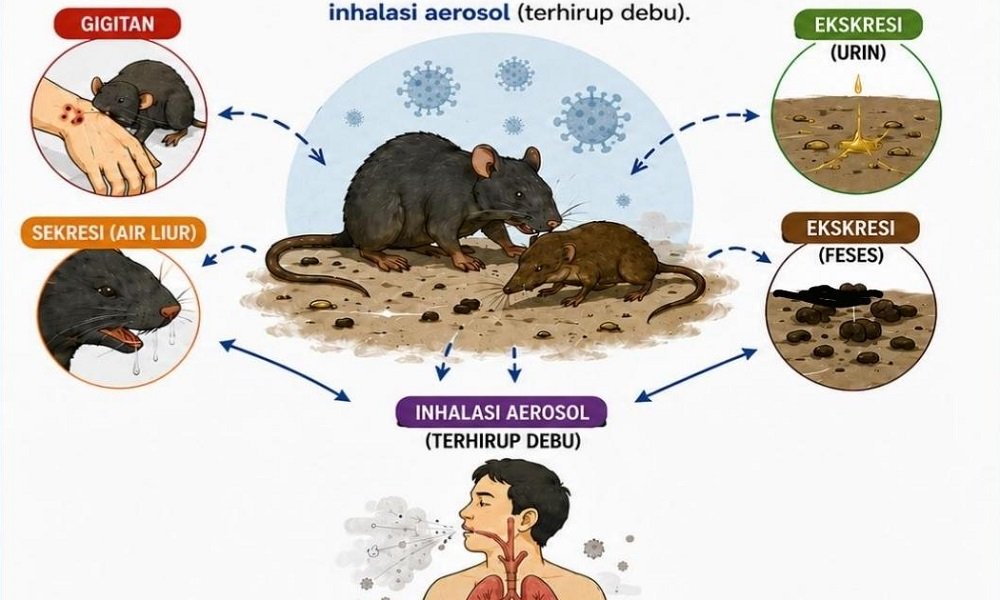
He urged the public to adhere to health protocols, avoid direct contact with rats as the virus reservoir, maintain environmental hygiene, and immediately seek medical attention at a healthcare facility if they experience symptoms suggestive of Hantavirus infection.