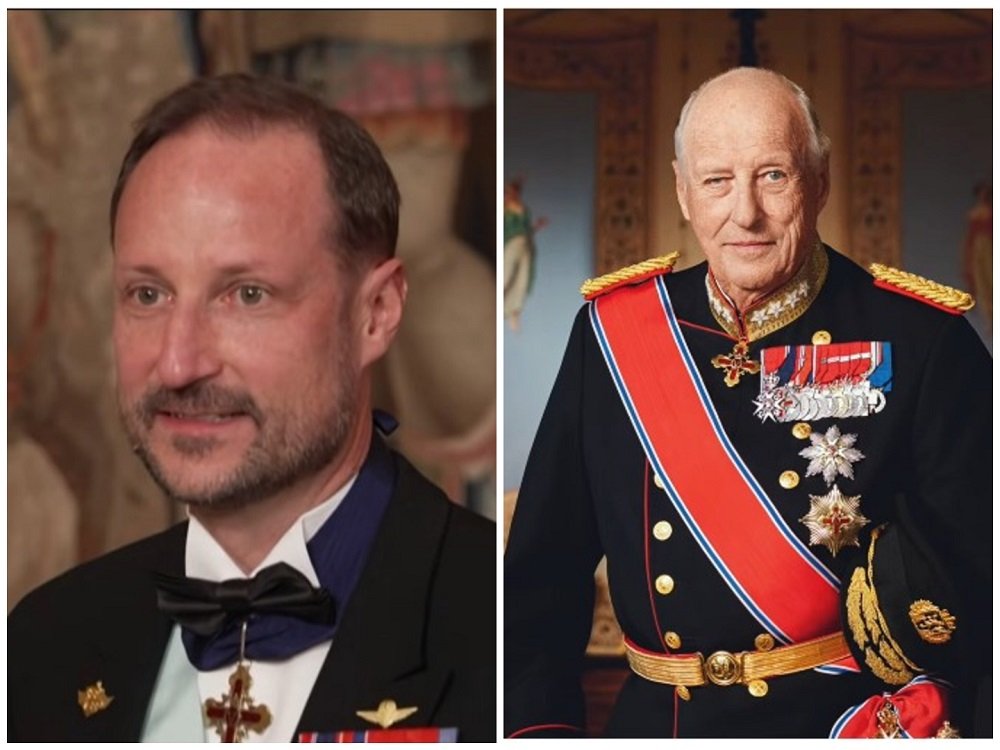
en.malanginspirasi.com – A quiet grief settled over Norway on Friday morning as the Royal Court announced the death of King Harald V at age 89.
The popular monarch passed away peacefully at 6:35 a.m. at Oslo University Hospital, where he had been receiving treatment for a bacterial infection following a rare blood condition.
His death immediately triggered the accession of his 53-year-old son as King Haakon VIII, inaugurating a new chapter for one of Europe’s most enduring modern monarchies.
As news of the King’s passing spread, mourners gathered in the rain outside the Royal Palace, laying yellow daffodils, lit candles, and handwritten notes against the iron gates.
The Norwegian royal flag was lowered to half-mast. Tributes quickly arrived from around the world, including from the United Kingdom’s King Charles III, who expressed his “most heartfelt condolences” to the Norwegian royal family and nation.
A Legacy of Modernization and Duty
King Harald V leaves behind a 35-year legacy defined by warmth, accessibility, and steady leadership through national crises.
Ascending the throne in 1991 following the death of his father, King Olav V, Harald famously challenged royal precedent early in life.
He fought for nine years to marry Sonja Haraldsen, a commoner and clothing merchant’s daughter, even threatening to remain unmarried—and thus leave the throne without an heir—if he was not permitted to marry his true love.
That perseverance modernized the royal household and set a precedent for inclusivity.
Also Read:
Prince Harry and Meghan Face Backlash Over Luxury Private Flight to UK
Over three decades, Harald transformed the crown into a unifying, empathetic pillar of contemporary Norwegian society.
His most memorable moment came after the tragic 2011 terror attacks in Oslo and Utøya. Addressing a traumatized country, the King offered words that became part of the national ethos:
“Norwegians are girls who love girls, boys who love boys, and boys and girls who love each other. Norwegians believe in God, Allah, everything, and nothing… My greatest hope for Norway is that we will take care of each other.”
Throughout his life, King Harald suffered severe health challenges, including bladder cancer and heart surgery, yet he consistently rejected the idea of abdicating like other European sovereigns.
“I took an oath to the Storting [Parliament], and it lasts for life,” he reaffirmed late in his reign.
A Transition Under Scrutiny
The newly proclaimed King Haakon VIII formally took up state duties at the palace on Friday, convening an extraordinary Council of State alongside government ministers.
By his side was his 22-year-old daughter, Crown Princess Ingrid Alexandra, who now becomes heir apparent.
Under a 1990 constitutional amendment establishing absolute primogeniture, Ingrid Alexandra is positioned to eventually become Norway’s first female monarch in over six centuries.
King Haakon VIII assumes the crown during a turbulent moment for the royal family, which has faced recent public scrutiny regarding scandal surrounding his wife, Queen Mette-Marit, and her family.
Nevertheless, the new King has long prepared for this responsibility, having served as regent during his father’s frequent illnesses.
Speaking previously on the weight of stepping into his father’s footsteps, Haakon reflected, “My father and grandfather did most things right. That puts me under pressure, but I take it as a challenge.”
State funeral arrangements for the late King Harald V are expected to be announced by the palace in the coming days.