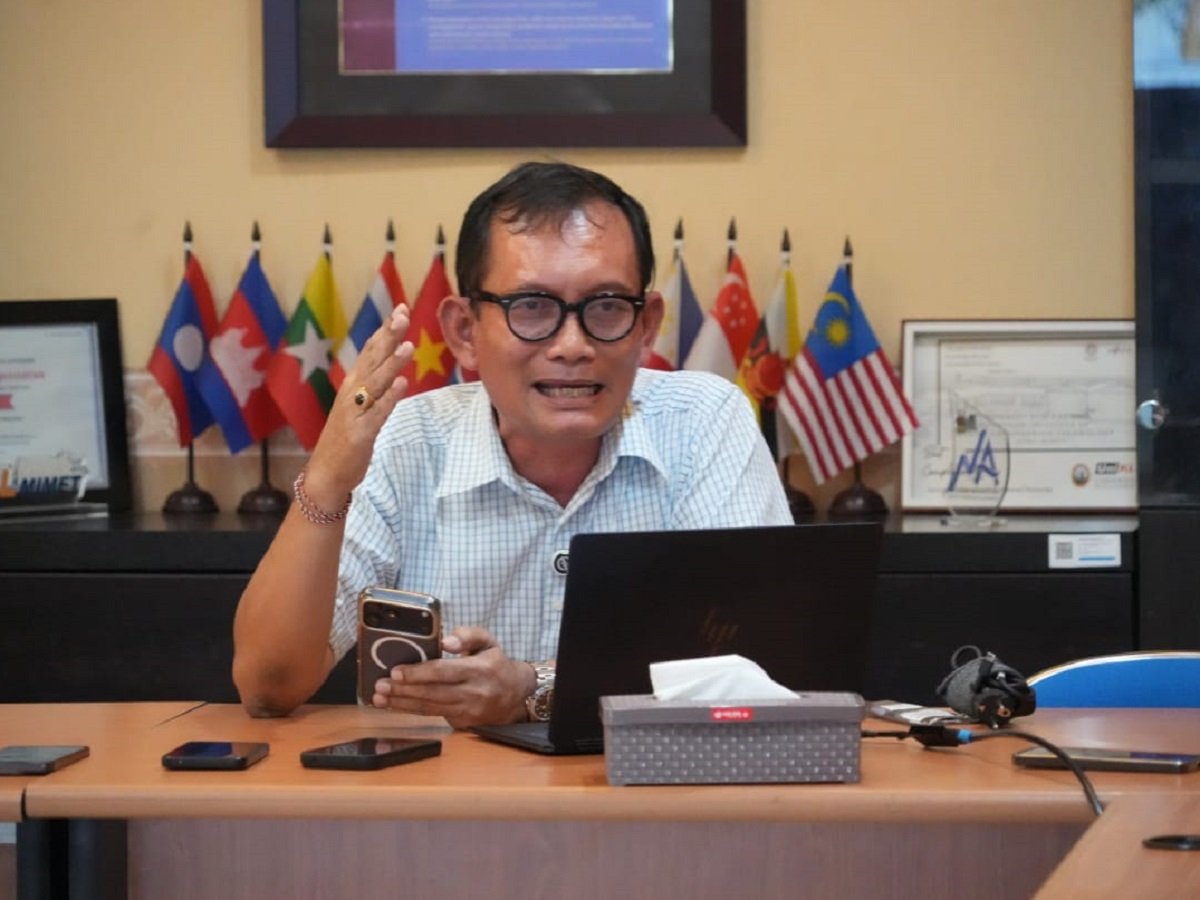
en.malanginspirasi.com – A hydrodynamics expert from the Faculty of Marine Technology at Institut Teknologi Sepuluh Nopember (ITS), Prof. Ir. I Ketut Aria Pria Utama, M.Sc., Ph.D., explained about the critical need to align vessel design with local maritime conditions, as related to the capsizing of the motor vessel (KM) Virgo Transport 8 in the Java Sea, near the Masalembo Islands on Sunday (Sept 13).
From a naval architecture perspective, the Professor of Naval Architecture at ITS noted that seakeeping performance—a vessel’s ability to remain stable and functional at sea—is frequently overlooked by ship designers operating in Indonesia. This oversight often leads to issues regarding stability and motion comfort during operations.
The capsized KM Virgo Transport 8 was identified as a 30-year-old vessel imported from Japan.
However, the academic, often affectionately referred to as IKAP, explained that from a naval engineering standpoint, a ship’s age should not be the primary issue, provided proper maintenance is maintained.
“What needs critical evaluation is whether a Japanese-designed vessel is suitable and recommended for navigating Indonesian waters, which are known for high wave conditions,” he stated.
According to IKAP, countries like Japan feature maritime topographies with relatively short inter-island distances.
This contrasts sharply with Indonesia’s open-water characteristics and heavy wave conditions, particularly in areas like the Java Sea.
“These extreme routing conditions demand distinct hull design standards,” he noted.
Also Read:
Understanding Volcanic Activity in Indonesia with ITS Geologist
Furthermore, the University of Southampton doctoral alumnus explained that roll-on/roll-off (Ro-Ro) ferries originating from four-season countries typically feature fully enclosed hulls designed to enhance safety against cold weather. KM Virgo Transport 8 falls into this Ro-Ro category.
This design differs significantly from vessels engineered for safe operation in Indonesian waters. IKAP explained that ships operating in Indonesia are often designed with side openings to conserve energy.
“This approach also reduces the tax burden associated with enclosed space volume, which can otherwise pose a risk to stability while at sea,” he elaborated.
The Bali-born academic (b. 1967) also highlighted the possibility of massive water ingress into the vessel body. Potential triggers include severe weather, high waves, or ramp doors that are improperly sealed or non-watertight.
Water accumulating on the vehicle deck without an adequate pumping system can trigger a free surface effect, or sloshing effect.
This phenomenon, the ITS Naval Architecture alumnus added, causes abnormal and unstable vessel rolling.
“This risk is exacerbated if loaded vehicles are not properly lashed down, causing them to shift and drastically alter the ship’s center of gravity,” IKAP observed.
The high casualty rate was also attributed to inadequate passenger safety education. Ideal maritime safety standards mandate thorough safety inductions or emergency procedure announcements for all passengers prior to departure.
“This is crucial to ensure passengers understand self-evacuation steps during unexpected emergencies at sea,” he reminded.
Also Read:
Indonesian Rescuers Race to Find 129 Passengers Missing After KM Virgo 8 Capsizes
The insights shared by the Head of the ITS Marine and Earth Science and Technology Study Center serve as part of broader efforts to enhance maritime safety.
This initiative aligns with Sustainable Development Goal (SDG) 9 (Industry, Innovation, and Infrastructure) through the development of safe and resilient transport infrastructure.
Adhering to safety protocols also supports SDG 11 (Sustainable Cities and Communities) by fostering safe, inclusive, and sustainable transport systems. Additionally, improving crew and passenger preparedness aligns with SDG 4 (Quality Education) by strengthening safety awareness and education during transit.