en.malanginspirasi.com – A study evaluating the potential toxicity of biodegradable microplastics on marine microalgae, initiated through the Universitas Brawijaya Student Academic Research Scheme (UB STARS), has been published in the prestigious Q1 Scopus-indexed journal Ecotoxicology (2026).
Faculty of Fisheries and Marine Science (FPIK) postgraduate student Nur Aini Azizah, S.Pi., M.P., led the project while underscoring how UB STARS funding empowers student-led research to reach international scientific publication.
The research investigates whether biodegradable microplastics—frequently promoted as eco-friendly alternatives to conventional plastics—are genuinely safe for aquatic ecosystems.
Azizah noted that while microplastics research has predominantly focused on distribution and characterization, the biological impacts of biodegradable plastic degradation products require deeper investigation.
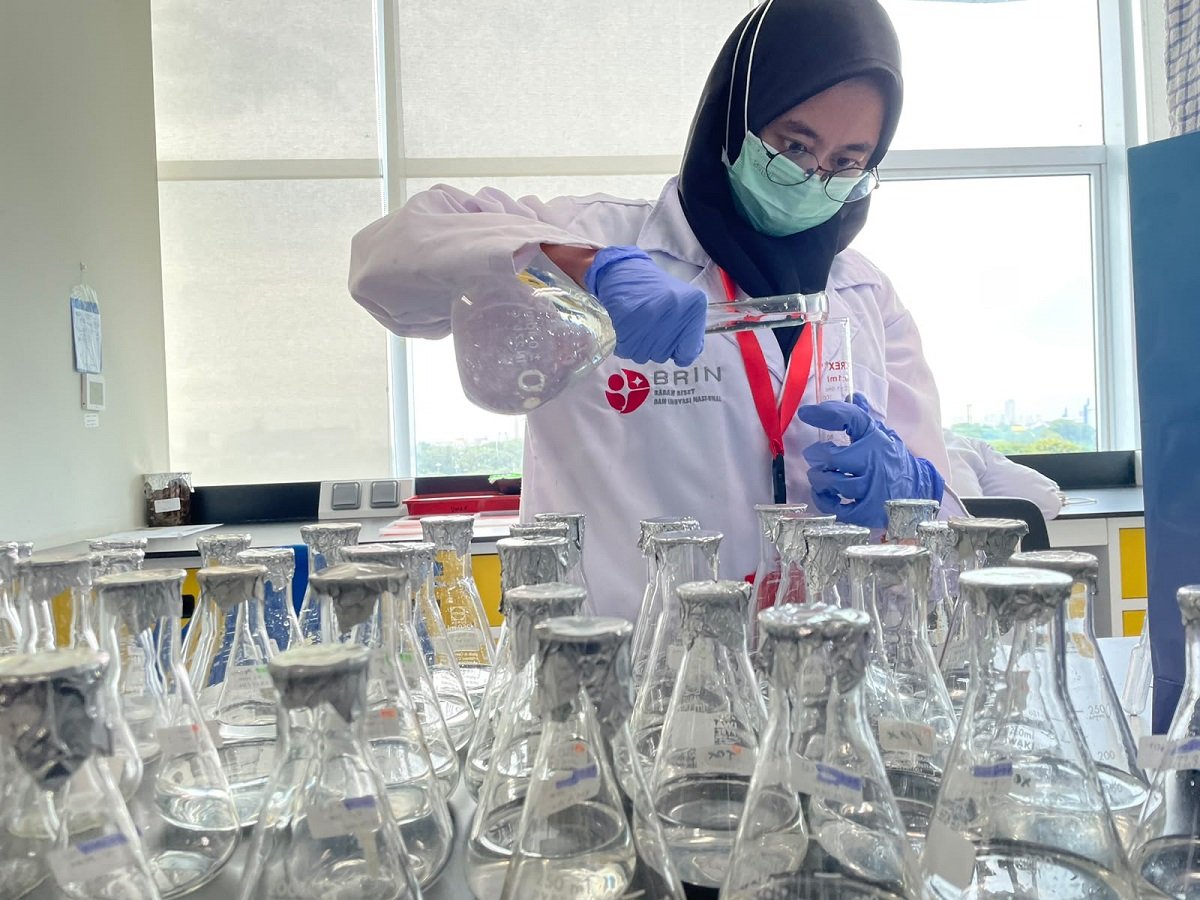
Through 96-hour laboratory bioassays, Azizah and her team examined the physiological responses of three marine microalgae species exposed to leachate from biodegradable polypropylene microplastics.
Advanced toxicity testing identified Chlorella sp. as the most sensitive species to this exposure.
The findings indicate that biodegradable plastic degradation requires rigorous testing to confirm its safety for aquatic life.
However, since tests were conducted under controlled laboratory settings, further research is necessary to evaluate ecological impacts in natural environments.
“Our objective was to determine whether biodegradable plastics, widely promoted as sustainable solutions, are truly safe for aquatic ecosystems, or if they simply transform into new forms that continue to impose environmental risks,” Azizah explained.
The study was carried out through a research collaboration involving her supervisor, Prof. Ir. Aida Sartimbul, M.Sc., Ph.D., from UB’s Faculty of Fisheries and Marine Science (FPIK), and Dr. Ir. Dwi Hindarti, M.Sc., a researcher from the National Research and Innovation Agency (BRIN).
Also Read:
Collaboration of FTAB UB and UPM Supports Dried Fruit Processing for Inclusive Business
During her research stay at BRIN, Azizah gained direct experience within a professional research institution.
She engaged with students and scholars from various universities, as well as visiting international researchers, broadening her academic perspective and research methodologies.
This research line yielded two peer-reviewed publications with distinct analytical scopes. The first article appeared in Biotropika in 2025, followed by the article in Ecotoxicology in 2026.
The peer-review and publication process for Ecotoxicology spanned approximately nine months. During this period, the manuscript underwent rejections and transfers prior to acceptance.
Azizah noted that this journey provided valuable lessons in framing research novelty, addressing literature gaps, and presenting data-driven conclusions without overstating claims.
Reflecting on the experience, Azizah highlighted that rejection is an integral component of scientific publishing. She encouraged early-career researchers to persist through manuscript revisions.
She hopes these findings will serve as a foundation for further research and inform plastic management policies in Indonesia, while supporting the development of truly environmentally safe biodegradable alternatives.
“We often fear rejection, but in academic publishing, rejection is part of the process. All we can do is write, submit, and revise until our manuscript finds its home. If we never submit, we will never find that home,” Azizah concluded.