EN.malanginspirasi.com – The United Nations Educational, Scientific, and Cultural Organization (UNESCO) entrusted Brawijaya University (UB) to translate the executive summary of the UN report on the state of global water resources in 2026.
UB Rector Prof. Widodo stated on Thursday, March 19, 2026, that this reliance represents global recognition of Indonesia’s academic capacity in contributing to the sustainable water crisis agenda.
“The trust bestowed upon UB by UNESCO is both an honor and a great responsibility,” said Widodo.
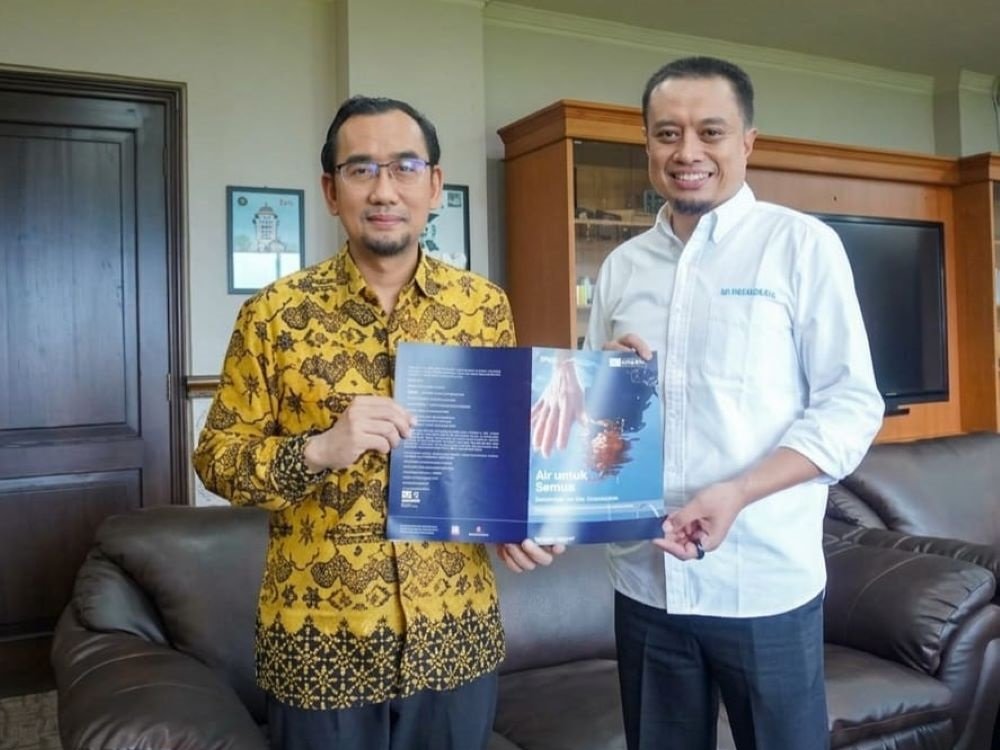
The translation was published in a book titled “Water for All,” which was launched internationally in Paris on Thursday (March 19, 2026), coinciding with World Water Day.
The book reveals a comprehensive overview of the challenges and strategies for global water resource management.
Prof. Widodo added that the initiation of the Vice Rector for Cooperation and Internationalization, emphasizes UB’s role in not only building its academic reputation but also delivering tangible benefits to humanity.
Intensive Coordination Between UB and UNESCO
Meanwhile, Vice Rector for Cooperation and Internationalization, Prof. Andi Kurniawan, S.Pi., M.Eng., D.Sc., explained that the appointment process has been ongoing since 2025 through intensive coordination with UNESCO.
“UB acts not only as an educational institution, but also as a representative of Indonesia. We have a responsibility to ensure this scientific information is accessible and understood by the wider community,” said Andi.
According to him, the UN report is one of the most crucial scientific references in mapping global water availability, so disseminating information in easy-to-understand language is crucial.
Prof. Andi added that international cooperation among universities has been limited to academic collaboration between universities.
However, UB is striving to go further by establishing partnerships with global organizations such as UNESCO, which is under the auspices of the United Nations.
“When we talk about the globalization of the role of higher education, it’s not enough to simply collaborate with foreign universities. We must join forces with strategic global institutions, and one of the most relevant to the field of education and water resources is UNESCO,” he explained.
He added that UB’s involvement with UNESCO is also inseparable from the increasing urgency of water issues at the global level.
The water crisis is now a major problem facing many countries, both in Asia, Europe, and other regions.
“Today, we see that environmental problems are increasingly visible. Scientific evidence shows that the water crisis continues to grow and is becoming a major challenge for the global community. This is no longer a local or isolated issue, but has become a global strategic issue,” Andi emphasized.
Gender Inequality Brings Impact on The Impact of Global Water Crisis
Meanwhile, Maki Katsuno-Hayashikawa, Regional Director of UNESCO in Jakarta, said the UN World Water Development 2026 report shows how gender inequality continues to influence the global water crisis.
“The availability of the Executive Summary in Indonesian helps ensure that this knowledge can inform more inclusive decisions and actions in Indonesia. Collaboration with academic institutions is key to making this happen. Brawijaya University’s contribution through translation is a concrete example of how such partnerships can help raise awareness of water-related challenges and make knowledge more accessible at the national level,” said Maki.
The book, “Water for All,” examines how gender equality plays a vital role in access to water resources and the fulfillment of the human right to sanitation.
Although women bear primary responsibility for household water management, they experience the massive impact of limited access to clean water.
They also often lack adequate land ownership rights for productive water use.
Addressing gender inequality is not only a matter of justice but also key to poverty alleviation and achieving the Sustainable Development Goals (SDGs).
Opportunities for broader, accountable, and sustainable water management are open to all levels of society by narrowing the gender gap.
Also Read:
A Student of Filkom UB Create Prosthetics from Plastic Waste for People with Disabilities
The publication of this report by UNESCO WWAP on behalf of UN-Water and translated by Brawijaya University.
UB’s translation efforts are inseparable from its involvement in the national committee for the UNESCO Intergovernmental Hydrological Programme (IHP) since 2025.
The Intergovernmental Hydrological Programme (IHP) is a UNESCO intergovernmental program focused on hydrological management and water-related issues.
In addition to the translation project, Andi revealed that UB is preparing to apply for a UNESCO Chair in water resource management, particularly for coastal areas.
This strategic step emerged after UNESCO recognized UB’s significant potential in this field.
UB will gain international recognition for the best practices it has developed so far when it works.
“By becoming a UNESCO Chair, we expect that we can formulate UB’s water management formula systematically to solve problems in the Asia Pacific region and globally,” he said.
This effort is part of the university’s broader internationalization strategy with the orientation of making tangible contributions to global strategic issues.