EN.malanginspirasi.com – D (DPR RI) has officially passed the Draft Law on the Protection of Domestic Workers (RUU PPRT) into full Law (UU) during the 17th Plenary Session of the IV Session Period of the 2025–2026 Legislative Year on Tuesday, 21 April 2026. The unanimous decision ends a more than 20-year wait for approximately 4.2 million domestic workers (PRT) who have long operated without comprehensive legal protection.
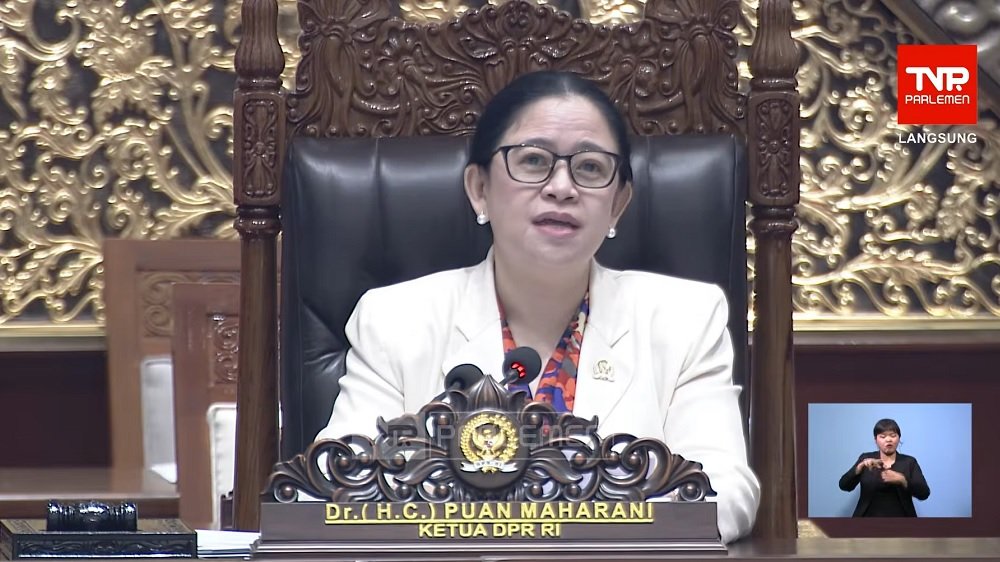
The ratification was completed through second-level deliberations and received full support from every faction. Speaker of the DPR RI, Puan Maharani, struck the gavel after all members voiced their approval.
“Starting today, this draft has officially become law,” Puan declared.
The milestone coincides with Kartini Day and comes just ahead of International Labour Day (May Day), making it a historic gift to Indonesian workers.
Deputy Speaker Sufmi Dasco Ahmad had earlier confirmed the bill would be fast-tracked to the nearest plenary as a joint commitment of Parliament and the government.
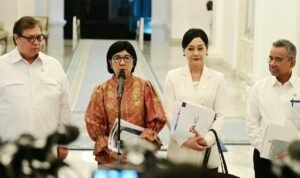
Minister of Manpower Yassierli reaffirmed the government’s strong commitment during a Level I working meeting with the DPR Legislation Body (Baleg) on 20 April 2026. He submitted hundreds of points in the Inventory List of Issues (DIM) and emphasised that domestic workers must be recognised as legitimate workers entitled to the same protections as others.
“Domestic workers must receive decent wages, humane working hours and rest periods, leave entitlements, protection from violence and discrimination, and guarantees of occupational safety and health,” Yassierli stated.
He added that the core principle guiding the new law is the international concept of Decent Work for Domestic Workers.
The new PPRT Law contains 12 chapters and 37 articles that provide comprehensive protection across three stages: recruitment, the employment relationship, and post-employment.

Key Provisions Include:
- Definition and scope: Domestic workers are defined as individuals who receive wages for household work. Unpaid work based on custom, kinship, or family ties is excluded.
- Recruitment: Employers may recruit directly or through licensed Domestic Worker Placement Companies (P3RT). Both online and offline channels are allowed, with a strict ban on charging fees or deducting wages from workers.
- Rights of domestic workers: Fair wages, clearly defined hours and rest (especially for live-in workers), weekly days off, annual leave, and full protection from physical, psychological, sexual violence, and forced labour.
- Social security: Mandatory enrolment in BPJS Kesehatan (health) and BPJS Ketenagakerjaan (employment) schemes, with primary responsibility resting on the employer.
- Oversight and dispute resolution: Central and regional governments, supported by neighbourhood associations (RT/RW) as mediators. Consensus-based deliberation is prioritised, with binding final decisions for wage disputes.
- Additional measures: Minimum age requirements, vocational training programmes, and implementing regulations to be issued within one year of the law’s enactment.
Prior to this law, domestic workers were only partially covered by a 2015 ministerial regulation widely regarded as insufficient, leaving many cases of exploitation, violence, and discrimination without legal recourse.
Warm Welcome From Civil Society
The passage was enthusiastically welcomed by civil society coalitions, labour unions, and the National Commission on Violence Against Women (Komnas Perempuan), who have driven the campaign for years. Domestic worker activists present in the plenary gallery were seen crying with emotion, describing the moment as a historic victory.
Challenges remain, however. The private, home-based nature of domestic work requires sensitive oversight and widespread public education. The government is now expected to swiftly issue implementing regulations, launch training programmes, and integrate domestic workers into existing social security systems so the law delivers real change rather than remaining on paper.
With the enactment of the PPRT Law, Indonesia now has a comprehensive legal framework that recognises the dignity of domestic workers as genuine labourers. The move strengthens human rights protections and opens a new chapter of fairer, more harmonious working relationships inside Indonesian households.