en.malanginspirasi.com – A team of Brawijaya University (UB) lecturers combined pre-treatment using ozone with hypobaric storage to help maintain the quality of cherry tomatoes during storage, developing efforts to reduce post-harvest horticultural losses through the 2026 Lecturer Work Program, which runs from June to August 2026.
This activity is carried out under the Joint Research and Publication scheme with the Batu City Cooperatives, Micro Enterprises, Industry, and Trade Office (Diskumperindag) and the Batu City Integrated Business Service Center for Cooperatives, Micro, Small, and Medium Enterprises (PLUT KUMKM).
Dr. Dewi Maya Maharani, STP, M.Sc. led the research team that includes Putri Setiani, ST, MES, PhD, Annisa Rosadilla, Kien Ratu Paramartha, Nurbianto Puji Mastoto Ika, and Yossi Hendrawan Saraswanto.
The team chose cherry tomatoes because of their high economic value and nutritional content, but they also experience rapid quality decline.
After being harvested, tomatoes continue to respire and undergo physiological changes.
If handled improperly, color changes, vitamin content decline, and microorganisms grow more rapidly.
Also Read:
This shortens the marketing time and increases the risk of losses for businesses.
To address this issue, the team used ozone in two forms: ozone gas and ozonated water. Ozone helps control microorganisms on the surface of the product.
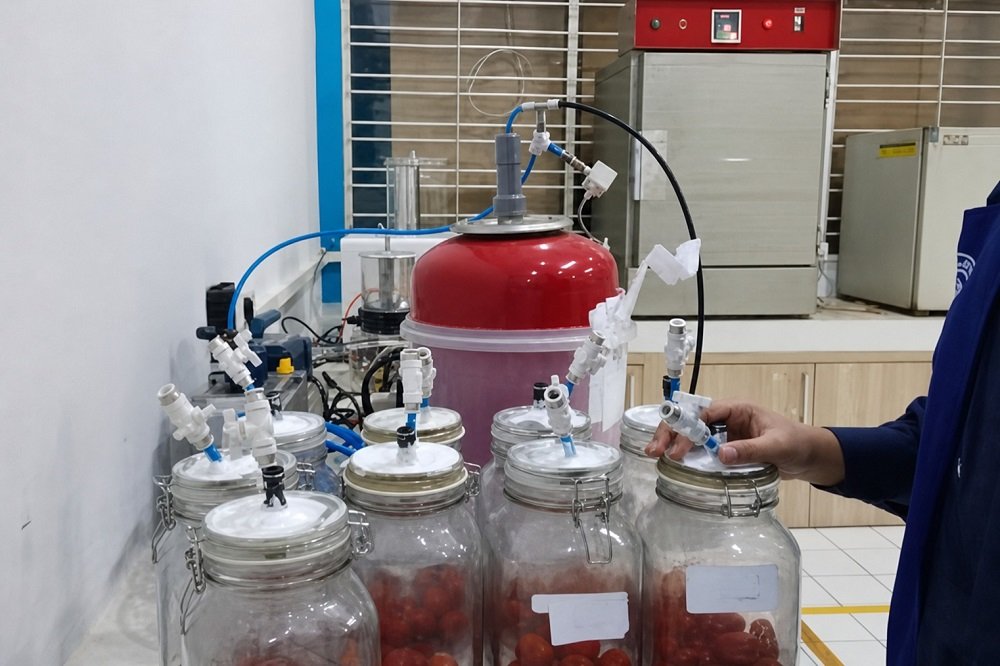
After pretreatment, the cherry tomatoes were stored at three different storage pressures: 26, 64, and 101 kPa. Pressures of 26 and 64 kPa represent hypobaric conditions, while 101 kPa serves as a reference (normal atmospheric pressure).
Under hypobaric conditions, oxygen availability in the storage space is reduced, slowing the product’s respiration rate.
During storage, the team monitored color changes, total soluble solids, water content, vitamin C content, and mold growth.
Color was observed using a computer vision setup and a camera to capture tomato images.
Total soluble solids were measured with a refractometer, while vitamin C content was analyzed using UV-Vis spectrophotometry.
Observations were conducted periodically to compare quality changes between treatment combinations.
The cherry tomato testing process used a combination of ozone treatment and hypobaric storage to evaluate quality changes during storage.
Of the series of tests, 26 kPa pressure yielded the most promising results.
Under these conditions, total soluble solids were maintained at 5.06 oBrix.
This value indicates that the characteristics of soluble components related to flavor were maintained during storage.
Ozone treatment also helped preserve vitamin C.
Cherry tomatoes treated with ozone gas had a vitamin C content of 43.99 mg/100 grams, while those treated with ozonated water produced 42.13 mg/100 grams.
In samples without ozone treatment, the content was recorded at 34.62 mg/100 grams.
The benefits don’t stop with nutritional content.
The combination of gaseous ozone and storage at 26 kPa pressure also resulted in the lowest number of fungal colonies.
This finding demonstrates that ozone pretreatment and pressure regulation can complement each other: ozone helps suppress microorganisms, while hypobaric conditions slow the physiological processes that trigger quality degradation.
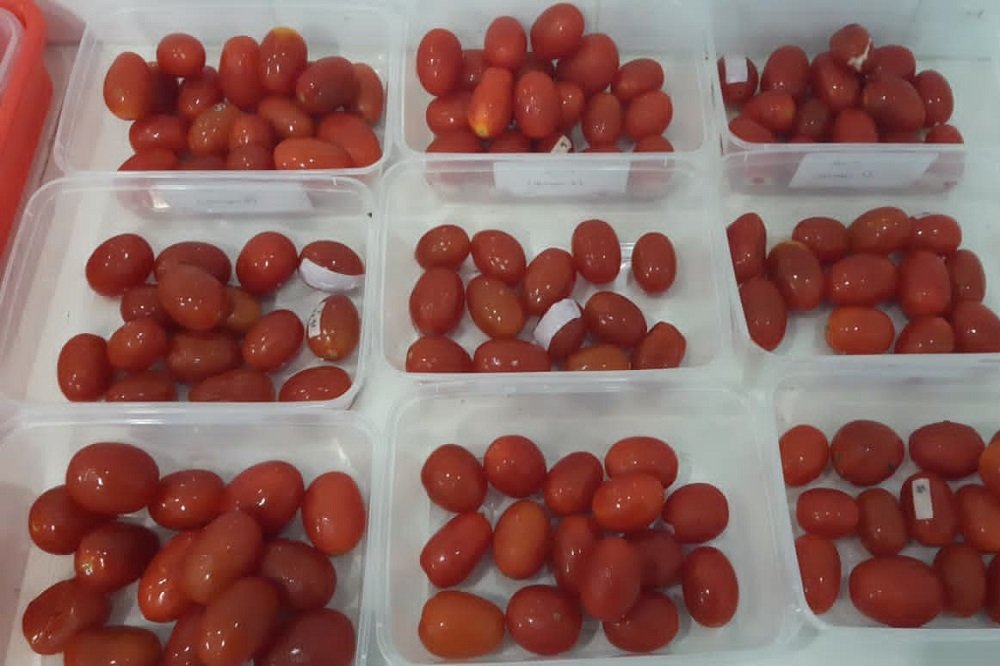
A sample of cherry tomatoes separated into treatment containers prior to quality testing.
The Main Goal of The Technology
“Our goal is not only to have a longer shelf life, but also to maintain quality and to pass on knowledge to business owners. Therefore, research results need to be packaged in language that is easy to understand and remains relevant to the needs of MSMEs,” explained Dewi, Tuesday (August 25, 2026).
In this collaboration, the Batu City PLUT KUMKM supports the provision of research materials and acts as a liaison between research results and business owners.
This role is crucial because technology is not immediately declared to have been implemented in MSMEs.
The ongoing phase involves providing scientific evidence, compiling easily understandable information, and establishing knowledge transfer channels through supporting institutions.
The research results have been presented in an article entitled “Sustainable Postharvest Preservation of Cherry Tomatoes Through Combined Ozone Pretreatment and Hypobaric Storage.”
The article has been accepted into the national journal SINTA 2 (Jurnal Keteknikan Pertanian Tropical dan Biosistem) and is scheduled for publication in late August 2026.
For the team, this acceptance marks a significant milestone, as the test results have undergone academic review before being disseminated to partners and the public.
This research also directly relates to the Sustainable Development Goals (SDGs), particularly SDG 12 on responsible consumption and production. Its focus aligns with
The target is to reduce food loss throughout the production and supply chain, including post-harvest. Collaboration between universities, local governments, and MSME support institutions also strengthens the spirit of partnership in SDG 17.
Through the “Lecturers Working” Program, research results are expected to continue to be published in scientific articles.
The knowledge generated can be used by the Batu City Office of Industry, Trade, and PLUT KUMKM to introduce alternative post-harvest handling methods to business actors.
With further development and validation, this technology has the potential to help MSMEs maintain product quality, extend marketing time, and reduce horticultural losses.