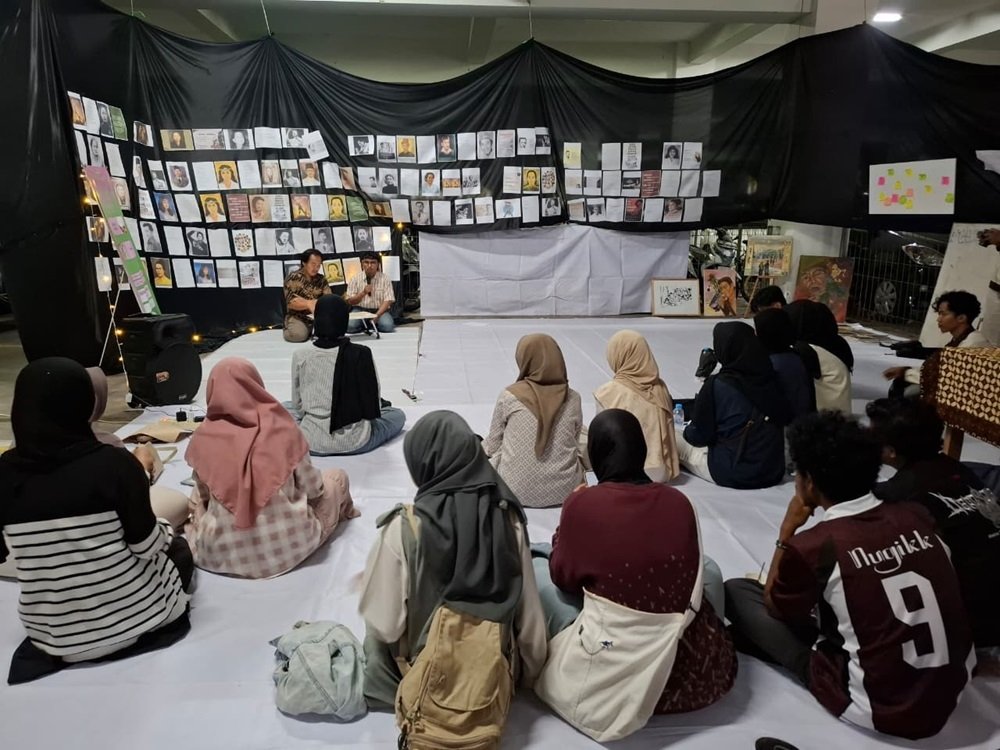
Malanginspirasi.com – On Friday, November 7, 2025, the basement of Campus I at UIN Maulana Malik Ibrahim Malang buzzed with an unusual energy. The space, typically quiet, transformed into a vibrant hub of literary enthusiasm and intellectual discourse during the “Festival Kata” event.
Initiated by the Faculty of Humanities’ Student Executive Board (DEMA) through its Research and Strategic Studies Division, Festival Kata featured a full day of literature-focused activities starting at 9:00 AM. The core program kicked off at 4:00 PM WIB with the “Literature Discussion” session.
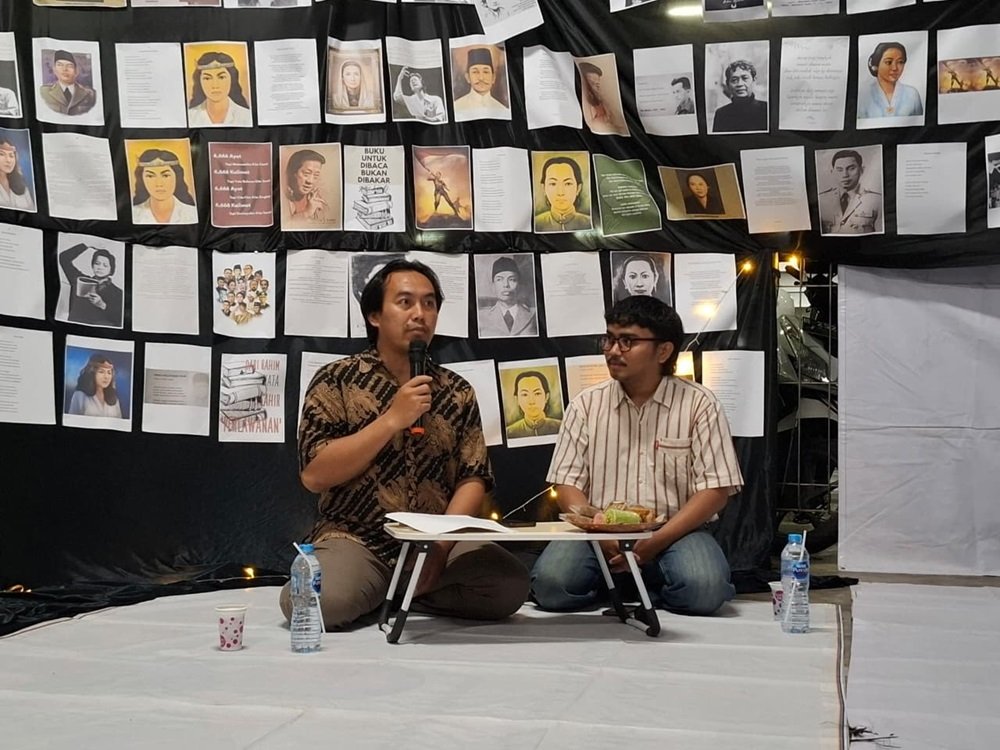
The spotlight fell on M. Anwar Mas’adi, M.A., a lecturer from the Arabic Language and Literature Program at UIN Malang, as the main speaker.
Moderating the session was Lalu Ahmad Albani Atsauri, a recent graduate of the same program who earned his bachelor’s degree in October 2025.
Exploring W.S. Rendra: The “Peacock” of Indonesian Poetry
Anwar Mas’adi centered his presentation on W.S. Rendra, the iconic Indonesian poet and playwright born into a literary culture and famously nicknamed the “Peacock.” He traced Rendra’s life journey—from his school days and university years to his bold career as a socially conscious poet.
Rendra was born in Solo, Central Java, on November 7, 1935. He began his education at a people’s school (SR), then attended Catholic St. Yosef Junior and Senior High School in Solo.
In the 1950s, he pursued studies at the Faculty of Literature and Culture at Gadjah Mada University (UGM). His background in both literature and education shaped his critical thinking and social awareness.
Spotlight on Iconic Poems: Simplicity and Depth
The discussion delved into several poems, including “Kangen,” “Permintaan,” and “Balada Terbunuhnya Atmo Karpo.”
- “Kangen” and “Permintaan”:
These stand out for their simple language packed with emotional depth. “Kangen,” one of Rendra’s most famous works, originated from friends’ requests for a love poem to gift someone.
“Permintaan” appears in his collection “Sajak-sajak Cinta”.
“Why does Rendra write poems that are so simple yet, in my view, extraordinarily meaningful? His diction isn’t overly sentimental—it’s not forced into pretty arrangements. He places simple sentences precisely, without coercion,” Mas’adi noted
“The language is straightforward; it’s easy to understand, and readers often smile. That’s the strength of Rendra’s poetry,” he added.
This approach challenged rigid poetic rules, such as mandatory four-stanza structures with A-B-A-B rhyme schemes.
- “Balada Terbunuhnya Atmo Karpo”:
In contrast, this long narrative poem tells a dramatic tale of Atmo Karpo, a poor man oppressed by social injustice. Driven to rebellion, he is hunted as a criminal by those in power.
Despite his fierce resistance, he is ultimately killed by his own son, Joko Pandan, amplifying themes of destruction and suffering.
Through powerful symbolism and vivid imagery, Rendra provokes reflection on justice, sacrifice, and human conflict’s complexities.
Audience Engagement and Event Resilience
Despite heavy rain pounding the campus, the one-hour session proceeded smoothly. The audience—mostly students from Arabic Language and Literature and English Literature programs—listened attentively and participated eagerly.
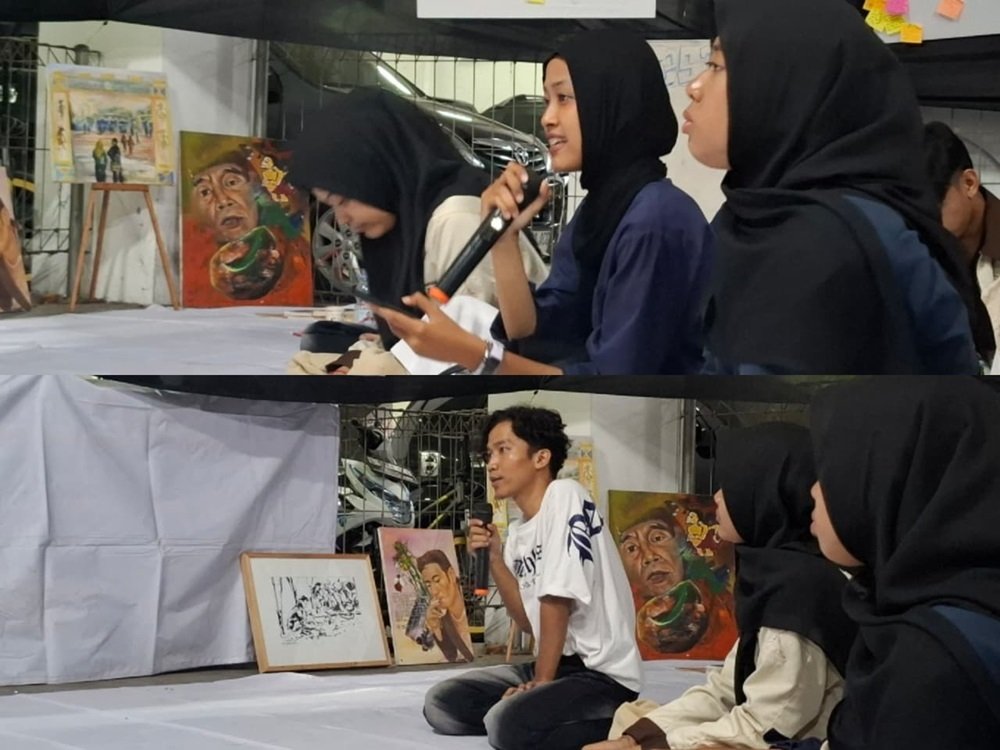
The Q&A segment was lively, with questions exploring Rendra’s relevance in the modern era and lessons for young people from his idealism.
“Festival Kata” provided a vital platform for Humanities students of UIN Malang to deepen their appreciation of Indonesian literature and foster critical, inspiring discussions. Events like this reinforce the role of campuses in nurturing intellectual growth and cultural dialogue.