en.malanginspirasi.com – The Ministry of Primary and Secondary Education has recommended that schools in areas severely affected by the eruption of Mount Anak Krakatau temporarily suspend face-to-face learning and shift learning activities to home learning starting Monday, September 7, 2026.
Abdul Mu’ti, the Minister of Primary and Secondary Education, stated that this policy is primarily aimed at several sub-districts in Lampung and Banten that have been severely impacted by volcanic ash.
However, its implementation will still be adjusted to the actual conditions in each region.
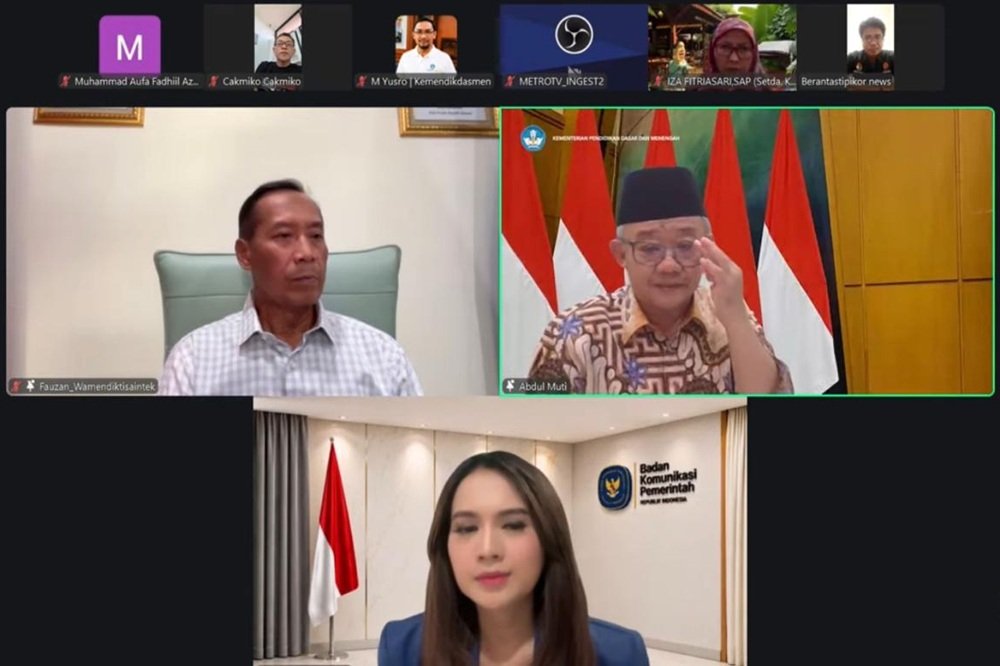
“In areas that are severely impacted, we recommend that learning be conducted at home via internet. If learning at home is not possible because not all homes have internet access, then it can be held in a specific, safe location within the school area,” Abdul Mu’ti said during an online press conference on the latest situation update following the eruption of Mount Anak Krakatau on Sunday (September 6, 2026).
According to Abdul Mu’ti, the central government has not uniformly stipulated which sub-districts must implement distance learning (PJJ).
This is because volcanic ash conditions are still dynamic and can change depending on wind direction and volcanic activity.
Also Read:
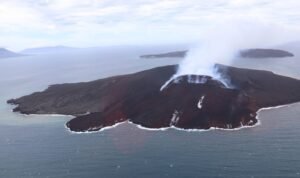
Anak Krakatau Volcano Erupts with Towering Ash Plume and Continuous Lava Fountains
Therefore, local governments are the ones who are most aware of the conditions on the ground and have the authority to determine learning patterns according to the risk level in their areas.
“The authorities in those areas know the situation best. Each district and city government can provide up-to-date information to the public,” he said.
The minister emphasized that the safety and health of students and educators must be the primary consideration in determining whether in-person learning can take place.
If the local government declares an area in a dangerous condition, schools are asked not to hold in-person learning.
Conversely, if conditions are deemed still conducive, learning can continue with strict health protocols.
Schools are asked to limit, or even eliminate, outdoor activities, including sports.
This step is necessary to reduce exposure of students and teachers to volcanic ash.
For in-class learning, schools also need to minimize the entry of ash into classrooms by securing doors, windows, and other areas that could allow volcanic ash to enter.
“If the relevant government declares the area very dangerous, learning should not be held in schools. If it is still conducive, it should still be implemented with very strict health protocols,” he concluded