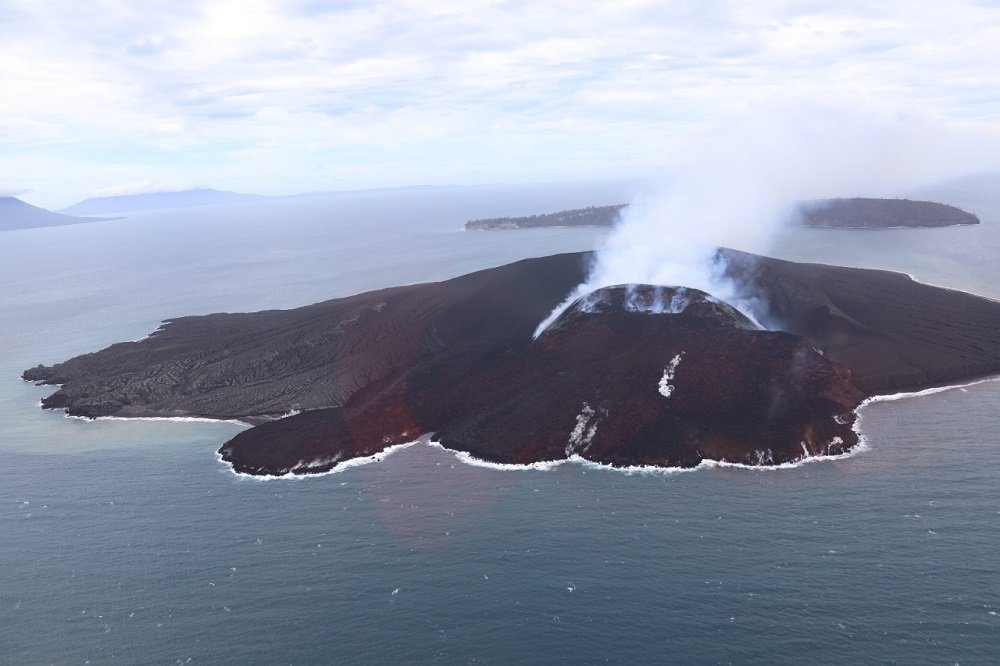
en.malanginspirasi.com – Anak Krakatau volcano in Sunda Strait, Indonesia erupted late on September 4, 2026, beginning around 23:07 WIB.
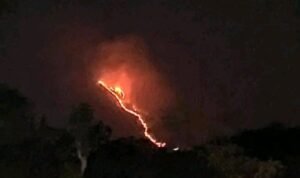
It sent a towering ash plume as high as approximately 15 km (about 50,000 feet) above sea level and producing continuous lava fountaining accompanied by strong tremors.
The mountain which emerged from the caldera left by the catastrophic 1883 Krakatau eruption, remains at alert Level III (Siaga).
Authorities are enforcing a 3 km exclusion zone around the active crater. Officials have advised coastal residents in Banten and Lampung provinces to prepare for possible ashfall and to stay clear of the restricted area.
Monitoring continues for additional hazards, including the risk of flank collapse. No tsunami or major damage has been reported so far.
Also Read:
Eruption of Mount Sinabung, Sending 3,500-Meter Ash Plume Skyward in North Sumatra
According to MAGMA Indonesia (the official volcanic monitoring system of the Geological Agency under the Ministry of Energy and Mineral Resources), the continuous eruption phase that started at 23:07 WIB was interpreted as lava fountaining (“lava air mancur”).
Seismic records for the day included multiple eruption earthquakes (some lasting thousands of seconds), harmonic tremors, low-frequency events, and continuous tremor, consistent with heightened magmatic activity.
Visual observations earlier in the day noted gray-to-black crater emissions rising 50–400 meters above the summit.
Darwin Volcanic Ash Advisory Center (VAAC) tracked the high-level ash plume, initially noting rapid increases in altitude late on September 4 and confirming layers reaching up to about 15 km moving primarily westward, with a secondary lower layer drifting south.
SIGMETs were issued for relevant flight information regions, though no widespread airport closures or major flight disruptions had been reported in initial updates.
Anak Krakatau has a well-documented history of activity, including the deadly 2018 sector collapse and tsunami.
The current Level III status, in place since early July 2026 following renewed unrest, underscores ongoing vigilance.
Local disaster management agencies continue to urge the public to follow official guidance, avoid the exclusion zone, and prepare for ashfall impacts while remaining calm regarding tsunami risks, as eruptions do not automatically trigger such events.
Authorities are maintaining close surveillance of the volcano as the situation develops. Residents and visitors in the surrounding regions are advised to stay informed through official channels from the Geological Agency and local BPBD offices.