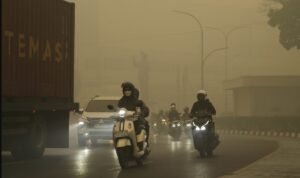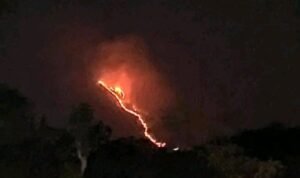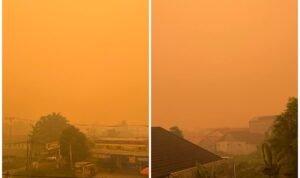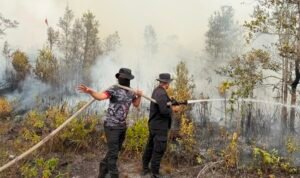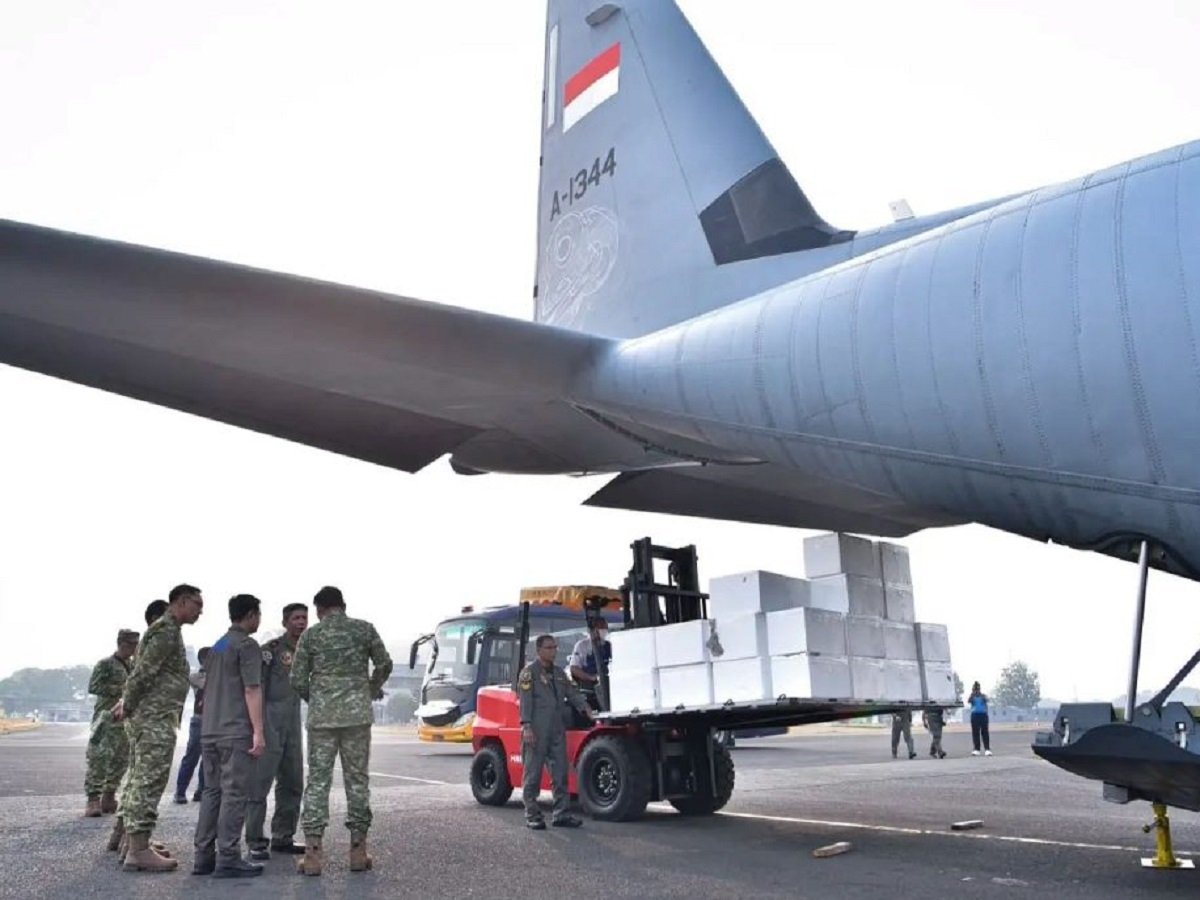
en.malanginspirasi.com – The Meteorology, Climatology, and Geophysics Agency (BMKG), in collaboration with relevant stakeholders—including the National Armed Forces of Indonesia (TNI), the National Board for Disaster Management (BNPB), the Ministry of Forestry, the Ministry of Defense, and the National Research and Innovation Agency (BRIN)—is implementing dry ice seeding as part of Weather Modification Operations (OMC) to help disperse dense smoke haze resulting from forest and land fires in the Sumatra and Kalimantan regions.
This technique targets atmospheric inversion layers that trap smoke near the surface, particularly when clouds suitable for rain-inducing seeding are scarce.
Head of the Meteorology, Climatology, and Geophysics Agency (BMKG), Teuku Faisal Fathani, explained that dry ice seeding serves as a tactical measure to address atmospheric conditions that hinder the dispersion of smoke.
Under certain circumstances, dense smoke from wildfires becomes trapped in the atmospheric layer near the surface—extending up to 6,000–7,000 feet or even higher.
Also Read:
Meanwhile, the Deputy for Weather Modification, Tri Handoko Seto, explained that an inversion layer acts like a lid, restricting vertical air movement.
To overcome this, the Weather Modification Operation (OMC) involves the precise aerial dispersal of dry ice above the inversion layer.
The sublimation of the dry ice triggers a sudden drop in temperature, which helps to restore convective air currents.
“This allows the smoke to move vertically upward and disperse into the atmosphere. Furthermore, the process enhances the potential for cloud formation, which can subsequently be targeted for further seeding within the OMC,” said Seto, during a BMKG press briefing in Jakarta on Tuesday (October 20, 2026).
He emphasized that the use of dry ice in this operation serves a different purpose than cloud seeding intended to induce rainfall.
The BMKG specifically targets the inversion layer—which traps smoke—and intervenes in the isothermal layer to alter atmospheric stability in the upper atmosphere.
This approach serves as a tactical alternative when sky conditions are dry and there are few clouds suitable for cloud seeding.
Benchmarks for Success
The BMKG evaluates the success of dry ice interventions using several measurable parameters, primarily improvements in visibility and a reduction in the concentration of PM2.5 pollutant particles in the air.
These indicators help illustrate changes in atmospheric conditions and air quality in affected areas, including locations critical to vital infrastructure such as airports.
Seto noted that monitoring conducted over several days of operations has shown signs of improvement in various affected regions.
In Palembang, for instance, visibility gradually improved following the intervention.
Nevertheless, the BMKG continues to monitor and analyze data to assess the ongoing impact of these operations.
“Over the course of several days, the dry ice interventions have shown positive results. Visibility in affected areas has gradually improved—as seen in Palembang a few days ago. Such conditions are essential for supporting the operations of the task force’s aerial fleet, including water-bombing helicopters and patrol aircraft, while also helping civil aviation return to more normal, safe operating conditions,” he stated.
Improved visibility is a crucial factor for the smooth execution of aerial forest and land fire-fighting operations.
When conditions are favorable and meet safety requirements, the aerial fleet can carry out firefighting and patrol missions more effectively.
However, the overall success of these interventions remains dependent on atmospheric conditions and the progression of fires on the ground.
Interagency Synergy Strengthens Forest and Land Fire Response
Atmospheric modification (OMC) via dry ice seeding is one component of a broader strategy to address forest and land fires; it is not the sole solution for extinguishing fires or eliminating haze.
This effort must go hand in hand with ground-based firefighting, patrols, law enforcement, and the involvement of the community and non-governmental organizations in preventing and extinguishing fires.
In its implementation, the Meteorology, Climatology, and Geophysics Agency (BMKG) develops atmospheric intervention strategies based on meteorological analysis and field conditions.
The Indonesian National Armed Forces (TNI) and the Ministry of Defense support the deployment of aviation assets; the National Board for Disaster Management (BNPB) coordinates disaster response support; the Ministry of Forestry handles forest and land fires on the ground; and the National Research and Innovation Agency (BRIN) contributes through research and scientific studies.
This collaboration strengthens inter-agency coordination, ensuring that all response efforts complement one another.
“Atmospheric intervention (OMC) is not the only measure for addressing forest and land fires. Ground-based firefighting, patrols, law enforcement, and the voluntary efforts of the community and NGOs also play a crucial role. All parties share the same goal: to end forest and land fires as quickly as possible. Therefore, every effort must be aligned, mutually supportive, and sustainable,” he asserted.
Furthermore, Head of the BMKG, Faisal, explained that inter-agency synergy is a vital asset in addressing the dynamics of forest and land fires in Sumatra and Kalimantan.
The BMKG will continue to optimize its support—grounded in atmospheric analysis provided through the OMC—in coordination with firefighting and prevention measures on the ground.
This ensures an integrated response to the fires, helping to mitigate the impact of haze on the public and on transportation activities.