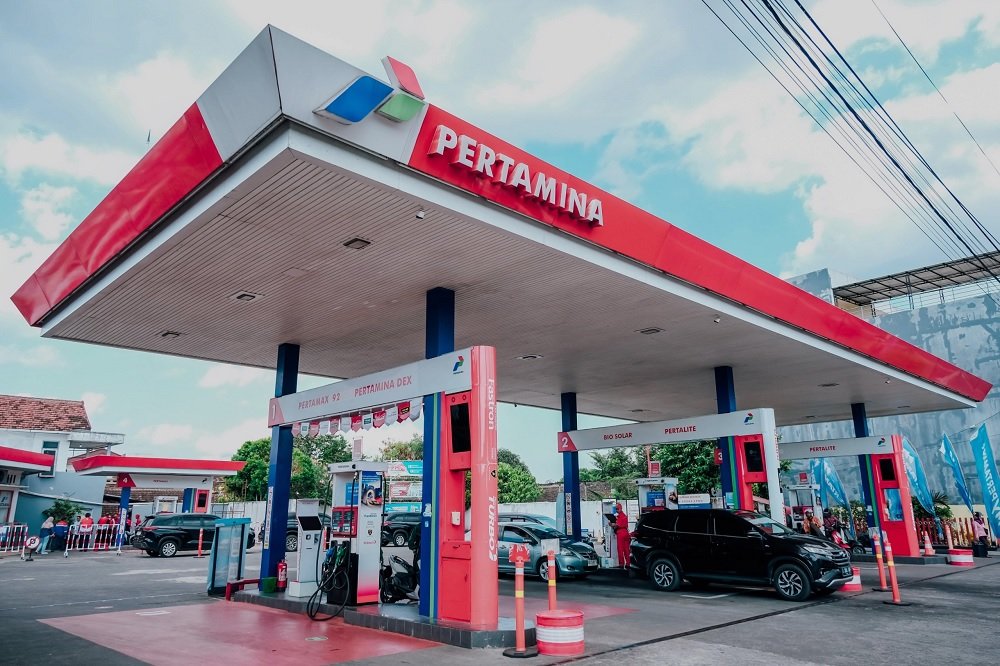
EN.malanginspirasi.com – Despite the sharp spike in global oil prices caused by the Israel–US–Iran conflict—with Brent crude now trading between US$78 and US$82 per barrel, well above the State Budget (APBN) assumption of US$70—the Indonesian government has confirmed it can still fully maintain fuel subsidies at least until Eid al-Fitr (Lebaran) 2026. Pump prices for Pertalite and Biosolar will therefore remain unchanged in the near term.
The 2026 energy subsidy budget of Rp210.1 trillion retains sufficient fiscal headroom. This has been achieved through targeted spending efficiencies and the strategic reallocation of funds from lower-priority programmes, including the new capital city (IKN) project, ceremonial initiatives, and selected components of the Free Nutritious Meals (MBG) programme.
Read Also:
To Avoid 3.6% Deficit, Indonesia’s Finance Minister May Trim Non-Essential MBG Spending in 2026
National fuel reserves remain secure for the months ahead. In an interesting counterbalance, the elevated global oil prices have actually increased state revenues from domestic oil and gas production (lifting migas). Strong political consensus further underpins the policy: the Minister of Energy and Mineral Resources (ESDM), the Coordinating Minister for Economic Affairs, and the Minister of Finance have all publicly reaffirmed that subsidised fuel prices will stay stable through Lebaran.
The government has not ruled out future adjustments, however. Should the Middle East conflict drag on and push Brent crude to US$90–100 per barrel, price changes could become necessary.
Each US$1 rise in the global oil price adds approximately Rp6.8 trillion to the state budget burden. Without further significant reallocations, the fiscal deficit risks breaching the 3% of GDP ceiling.
Mitigation Steps Already in Place
To safeguard the subsidy system, the government has prepared several protective measures:
- Stricter distribution controls via the MyPertamina app to prevent subsidised fuel from leaking to luxury vehicles and non-eligible users.
- Accelerated rollout of biodiesel blending and renewable energy programmes to reduce long-term reliance on imported crude.
- Non-subsidised fuels such as Pertamax will continue to follow market prices, ensuring the subsidy burden remains focused on lower-income consumers.
Until Eid al-Fitr 2026, Indonesian drivers using subsidised fuels can be confident that pump prices will not increase.
This stability, however, is not indefinite. The government is monitoring the situation on a daily basis. If the regional conflict intensifies further, partial price adjustments or more substantial budget reallocations may become unavoidable to preserve fiscal sustainability.