en.malanginspirasi.com – The Meteorology, Climatology, and Geophysics Agency (BMKG) has warned the public to be vigilant regarding increased air pollution during the strong El Niño phenomenon expected in 2026.
This condition is linked to reduced rainfall, which causes atmospheric cleansing processes—or “washout”—to occur less frequently, allowing pollutants to linger in the air for longer periods.
Dwi Atmoko, Head of the Air Pollution Information Team at BMKG’s Directorate of Applied Climate Services, explained that El Niño is a phenomenon occurring when sea surface temperatures in the Central and Eastern Pacific regions are warmer than normal.
Conversely, sea surface temperatures in the Indonesian region tend to be cooler. This condition reduces evaporation in Indonesia and triggers atmospheric subsidence, which inhibits cloud formation.
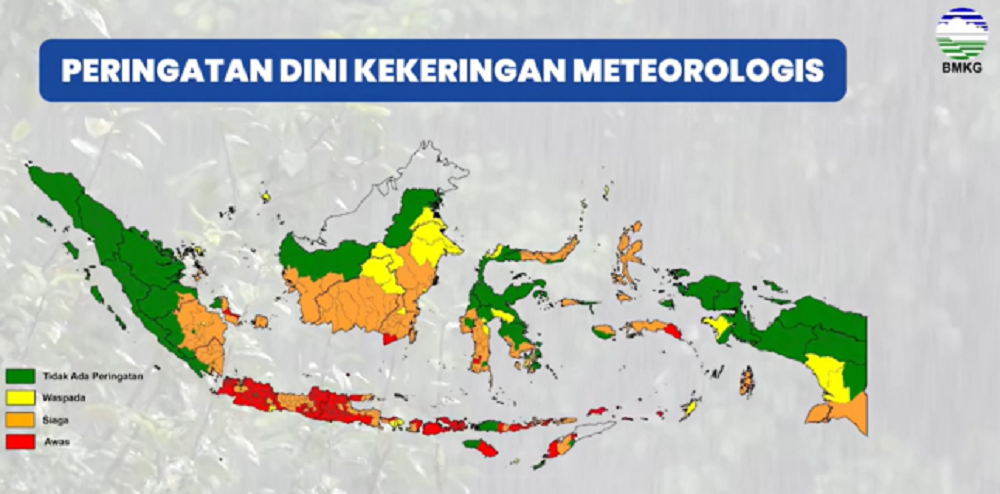
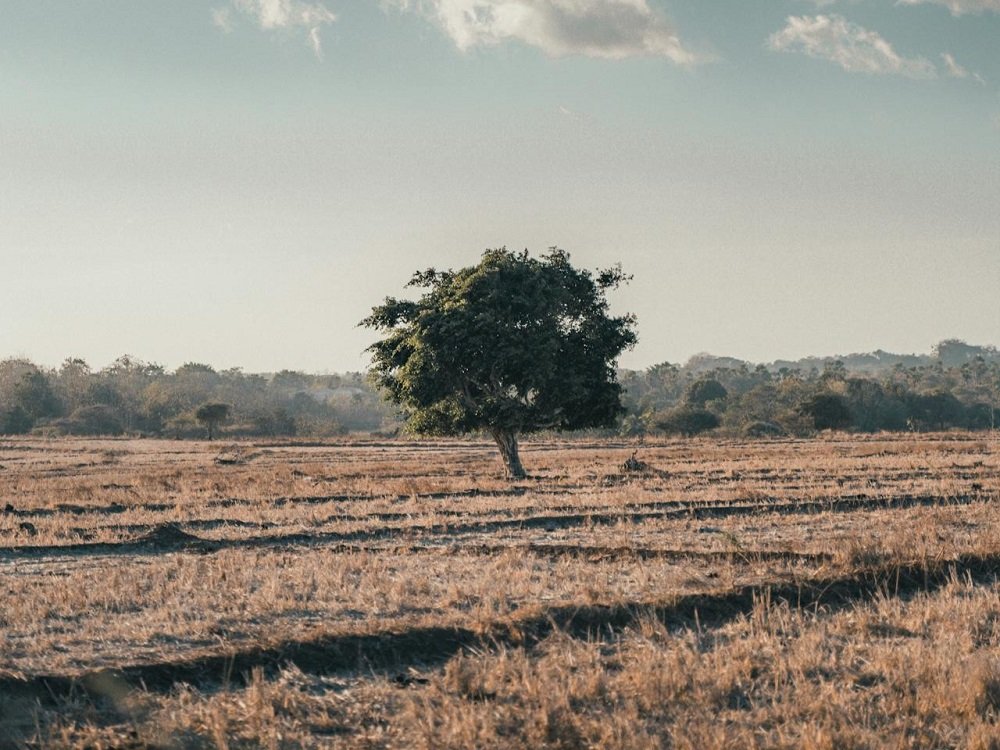
“During an El Niño season in Indonesia, cloud formation is not extensive, resulting in less frequent rainfall. The potential for drought also increases,” said Dwi during a KemenCast dialogue in Jakarta on Saturday (August 29, 2026).
According to him, these conditions not only lead to drought but also affect air quality. Naturally, the atmosphere possesses mechanisms to clear out pollutants, one of which is rainfall.
Also Read:
BMKG Claims El Niño 2026 May Persist Until Early 2027
Dwi explained that rain helps wash pollutants out of the atmosphere. Additionally, there is a “scavenging” process, where pollutant particles become part of cloud formation.
However, during an El Niño-intensified dry season, cloud formation and rainfall are inhibited. Consequently, atmospheric cleansing or washout processes occur less frequently.
“Emission sources continue to release emissions, while the processes for cleansing the atmosphere are not robust. As a result, pollutants remain in the atmosphere, leading to higher levels of air pollution,” he explained.
Dwi noted that BMKG monitors changes in sea surface temperatures every 10 days, a period known as a *dasarian*.
Based on the latest monitoring in August 2026, the sea surface temperature anomaly—a key indicator of El Niño—was recorded at 2.26.
“A value greater than positive 2 indicates a strong El Niño. So, we are currently experiencing an El Niño event of strong—indeed, very strong—intensity,” he said.
Impact of El Niño up to February 2027
According to BMKG predictions, El Niño is expected to persist until around December 2026.
Its impacts may still be felt through January and February 2027, even as the intensity gradually wanes.
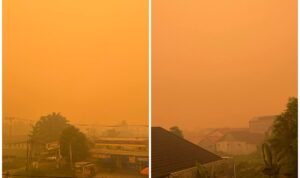
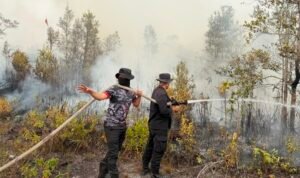
Dwi noted that several regions are already experiencing the effects of these conditions. In Kalimantan, for instance, numerous hotspots have emerged, increasing the risk of forest and land fires.
These fires further degrade air quality by generating various pollutants, including PM2.5 and carbon monoxide (CO).
“Looking at data from several BMKG air quality monitoring stations in Pontianak, for example, PM2.5 concentrations have already reached ‘unhealthy’ and even ‘very unhealthy’ levels,” he revealed.
Dwi stated that the September–October–November 2026 period is likely to see high to very high El Niño impacts, while conditions are expected to begin weakening from December through January and February.
However, the impacts do not vanish immediately because the ocean is slow to both gain and lose heat. This characteristic means the influence of El Niño can still be felt even as the phenomenon itself begins to subside.
“So, even after the peak of El Niño has passed, if sea surface temperatures in Indonesia do not warm up quickly, cloud formation remains suppressed or inhibited. Consequently, El Niño’s effects can still be felt through January and February, albeit with diminishing intensity,” he explained.
Beyond its impact on air quality and health, El Niño has a wide-ranging spectrum of effects. Dwi highlighted the food agriculture sector as one area affected, as reduced rainfall can disrupt rice paddies and horticultural plantations.
The energy sector is also potentially affected, given that a number of hydroelectric power plants rely on river discharge.
As rainfall decreases, river discharge levels may also drop. Additionally, the plantation sector could face strain due to increasingly limited water availability.
Raw water availability is a matter of concern, as many water utility companies rely on sources such as lakes, rivers, and rainwater.
Reduced rainfall can impact water supplies, ultimately affecting the ability to meet public needs—including water for drinking and daily activities.
Dwi urges the public to monitor developments regarding El Niño, air quality, and drought conditions, as well as climate information, through official BMKG channels.
This information is accessible via the BMKG website, the BMKG climate information page, the “Info BMKG” social media accounts, and the “Info BMKG” mobile application.