EN.malanginspirasi.com – The Meteorology, Climatology, and Geophysics Agency (BMKG) Climatology Station for East Java has issued an early warning to residents of Malang Regency to heighten vigilance ahead of the 2026 dry season, which is forecast to be significantly drier and longer than in previous years.
The alert was delivered in response to a predicted 50–60 percent chance of El Niño strengthening during the middle to late part of the year.
Sadono Irawan, Head of Emergency and Logistics at the Malang Regency Regional Disaster Management Agency (BPBD), conveyed the warning to reporters in Malang on Wednesday, 25 March 2026.
He cited information from Anung Suprayitno, Head of the East Java Climatology Station, emphasising that the forecast serves as an early warning so that all stakeholders and the public can immediately implement mitigation measures to minimise the risk of drought and related disasters.
“Most areas of East Java, including Malang Regency, are predicted to enter the start of the dry season in May 2026, covering 56.9 percent of the total area,” Sadono said, quoting BMKG data.
A smaller portion of the region is expected to begin the dry season earlier in April or later in June. The peak of the dry season in Malang Regency is forecast for August to September 2026, with Malang falling into one of the 53 Seasonal Zones (ZOM) experiencing the most intense drought conditions.
Characteristics of the 2026 Dry Season
Sadono explained that this year’s dry season has two main features: it will be drier than normal and longer in duration. Rainfall during the period is predicted to fall into the “below normal” category, driven by the strengthening El Niño phenomenon. The dry season is expected to last between 16 and 24 dasarian (roughly 5 to 8 months) across various zones.
The onset of the dry season in Malang Regency will occur gradually:
- April (third week): Bantur, Donomulyo, Kalipare, and Pagak sub-districts.
- May: Bululawang, Dampit, Dau, Gedangan, Gondanglegi, Jabung, Karangploso, Kasembon, Kepanjen, Kromengan, Lawang, Ngajum, Ngantang, Pagelaran, Pakis, Pakisaji, Poncokusumo, Pujon, Singosari, Sumbermanjing, Sumberpucung, Tajinan, Tirtoyudo, Tumpang, Turen, Wagir, Wajak, and Wonosari sub-districts.
- June: Ampelgading sub-district.
Potential Disasters and Risks
According to BPBD risk assessments, the 2026 dry season carries a high potential for two major hazards: drought and forest/land fires.
- Drought risk: 22 sub-districts are classified as high-risk, namely Donomulyo, Kalipare, Pagak, Bantur, Sumbermanjing, Dampit, Tirtoyudo, Ampelgading, Poncokusumo, Wajak, Turen, Sumberpucung, Kromengan, Ngajum, Wonosari, Lawang, Singosari, Karangploso, Dau, Pujon, Ngantang, and Kasembon.
- Forest and land fire risk: 26 sub-districts are at risk, including Donomulyo, Kalipare, Pagak, Bantur, Gedangan, Sumbermanjing, Dampit, Tirtoyudo, Ampelgading, Poncokusumo, Wajak, Turen, Kromengan, Ngajum, Wonosari, Wagir, Pakisaji, Tumpang, Jabung, Lawang, Singosari, Karangploso, Dau, Pujon, Ngantang, and Kasembon.
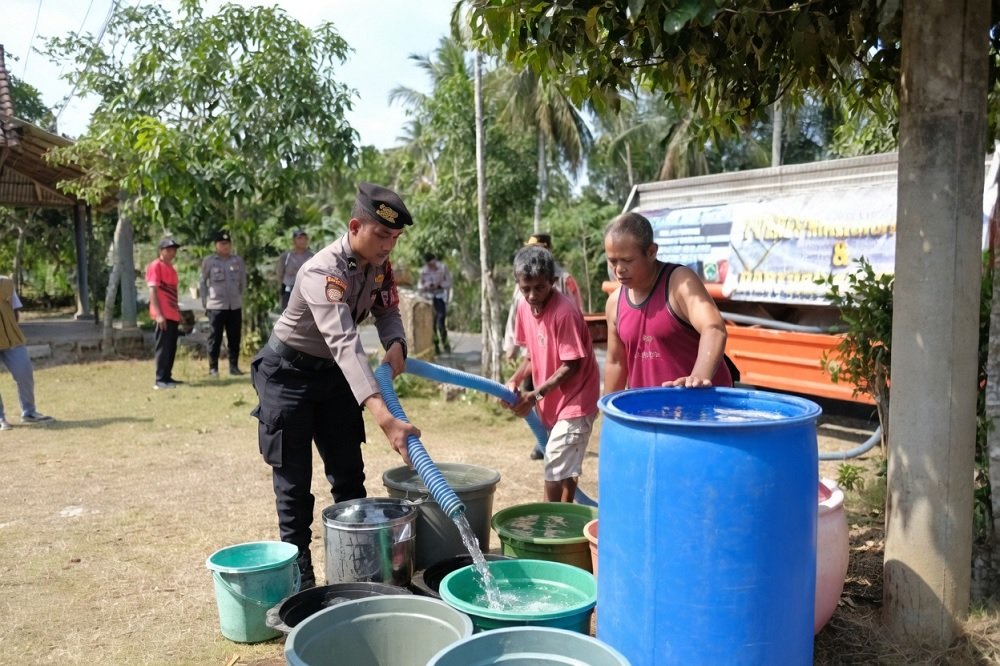
Sadono provided historical context to illustrate the threat. In 2019, 18 villages across 11 sub-districts faced clean-water crises, affecting Jabung, Donomulyo, Singosari, Sumbermanjing Wetan, Kalipare, Lawang, Sumberpucung, Pagak, Bantur, Gedangan, and Pujon. In 2023, the impact spread to 22 villages in 8 sub-districts.
BMKG urges immediate anticipatory action, especially in the agriculture and food sectors. Farmers are advised to adjust their planting calendars and switch to drought-resistant or short-duration crop varieties, such as secondary crops (palawija), to prevent crop failure. Optimising land use through horticultural crop diversification is also recommended.
“Harvest rainwater during the remaining wet season to fill reservoirs, retention basins, or water tanks as reserves for consumption and irrigation. Use water wisely and efficiently for daily needs,” Sadono urged.